

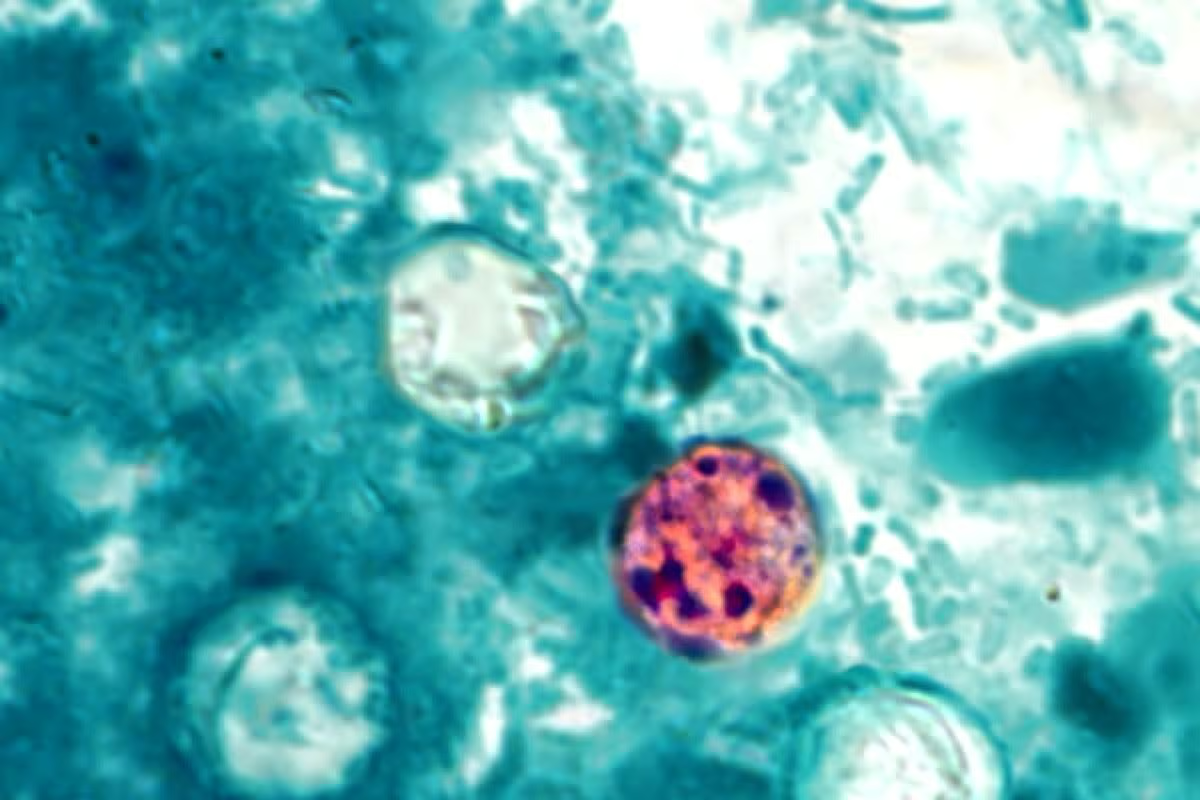
Is Pittsburgh hit by the US’s worst outbreak of cyclosporiasis, the disease sickening thousands with explosive diarrhea? Is there any treatment? And are there specific products you should avoid eating to reduce the risk of parasites causing illness?
Experts believe the cases in Kentucky, Michigan, Ohio and West Virginia are linked. But there are not many details yet about the source of the disease, and cases are likely underreported.
Here’s what we know about cyclosporiasis cases in Pittsburgh and how you can protect yourself.
How many cases of cyclosporiasis are there in the Pittsburgh area?
One of 11 people in the Pittsburgh area with identified cases of cyclosporiasis was hospitalized in Allegheny County as of July 15, according to county health officials.
According to TribLive, during an Allegheny County Health Department meeting on July 15, department director Dr. Yulia Wan gave an update on local cases, revealing that one person was in the hospital.
“We know this is an ongoing outbreak investigation, so all this information is changing very quickly, and everyone is working as fast as they can to update the numbers,” Wan said, noting that the numbers recorded by the Centers for Disease Control were lagging behind national reports.
“We know there are already over 3,700 cases in Michigan. However, the CDC website only reports 1,600 for all 35 states,” Wann said. “These numbers are rising very quickly, and we’re trying to stay ahead of the information here in Allegheny County.”
Statewide, the Centers for Disease Control has reported 11 to 30 identified cases since May 1 this year, noting that the actual number of cases is likely higher because some people recover without medical care and are not tested for the parasite.
What is cyclosporiasis? Which product is linked to a parasite causing explosive diarrhea?
Cyclosporiasis is an intestinal disease caused by the microscopic parasite Cyclospora catenensis, also known as Cyclospora, according to the CDC. This disease is usually not life threatening.
The parasite is spread when people eat food or drink water contaminated with feces. People may be at increased risk of infection if they live or travel to tropical or subtropical areas of the world where cyclosporiasis occurs regularly.
In the US, outbreaks of cyclosporiasis have been linked to a variety of fresh produce. Officials have not determined the source of the current outbreak, although health officials in Michigan are investigating lettuce as a possible source. Taco Bell removed ingredients such as cilantro and lettuce from some restaurants in what the fast food chain said was a precautionary move.
What should I do if I have cyclosporiasis? Guidance for the Pittsburgh area
The Allegheny County Health Department advises anyone who believes they may have cyclosporiasis to contact their health care provider.
Healthcare providers are being asked to report cyclosporiasis cases to the county health department.
How do I know if I have cyclosporiasis? Symptoms and tests
Symptoms of cyclosporiasis may include:
- Explosive, watery diarrhea (most common)
- loss of appetite
- weight loss
- cramps
- Swelling
- gas rise
- nausea
- Tiredness
Less common symptoms may include:
- vomit
- body pain
- Headache
- low grade fever
- other flu-like symptoms
Symptoms usually begin about a week after becoming infected and can last from a few days to a month or longer without treatment. Some symptoms, such as diarrhea, may go away and then come back.
According to the CDC, the disease is diagnosed by testing stool samples.
How is cyclosporiasis treated? Does it clear itself?
According to the CDC, the preferred treatment for cyclosporiasis is trimethoprim-sulfamethoxazole (TMP-SMX), sold under the brand names Bactrim, Septra, or Cotrim.
According to the Cleveland Clinic, sulfamethoxazole and trimethoprim are types of antibiotics used to treat bacterial infections. Available in tablet form, it belongs to a group of drugs called sulfonamide antibiotics.
While cyclosporiasis infection can often resolve on its own in healthy individuals, symptoms may last for several weeks.
How to protect yourself from cyclosporiasis
According to the CDC, the best way to prevent cyclosporiasis is to avoid food or water that may be contaminated with feces.
According to health officials, heating food to a temperature of 158 degrees or higher kills the parasites.
The CDC also recommends safe food-handling practices when handling produce to reduce the risk of exposure to parasites, including:
- Refrigerate cut, peeled or cooked fruits and vegetables as soon as possible (within two hours).
- Wash hands with soap and water before and after handling or preparing raw fruits and vegetables.
- Wash all fruits and vegetables thoroughly under running water before eating, cutting or cooking.
- Scrub hard fruits and vegetables, such as melons and cucumbers, with a clean produce brush.
- Cut away any damaged or bruised areas on fruits and vegetables before preparing and eating them.
Sarah Moniuszko and Melina Khan contributed to this report. Finch Walker is a Pittsburgh Connect reporter for the USA TODAY Network. Reporting by Finch Walker and Chad Murphy, USA TODAY Network/USA TODAY.