

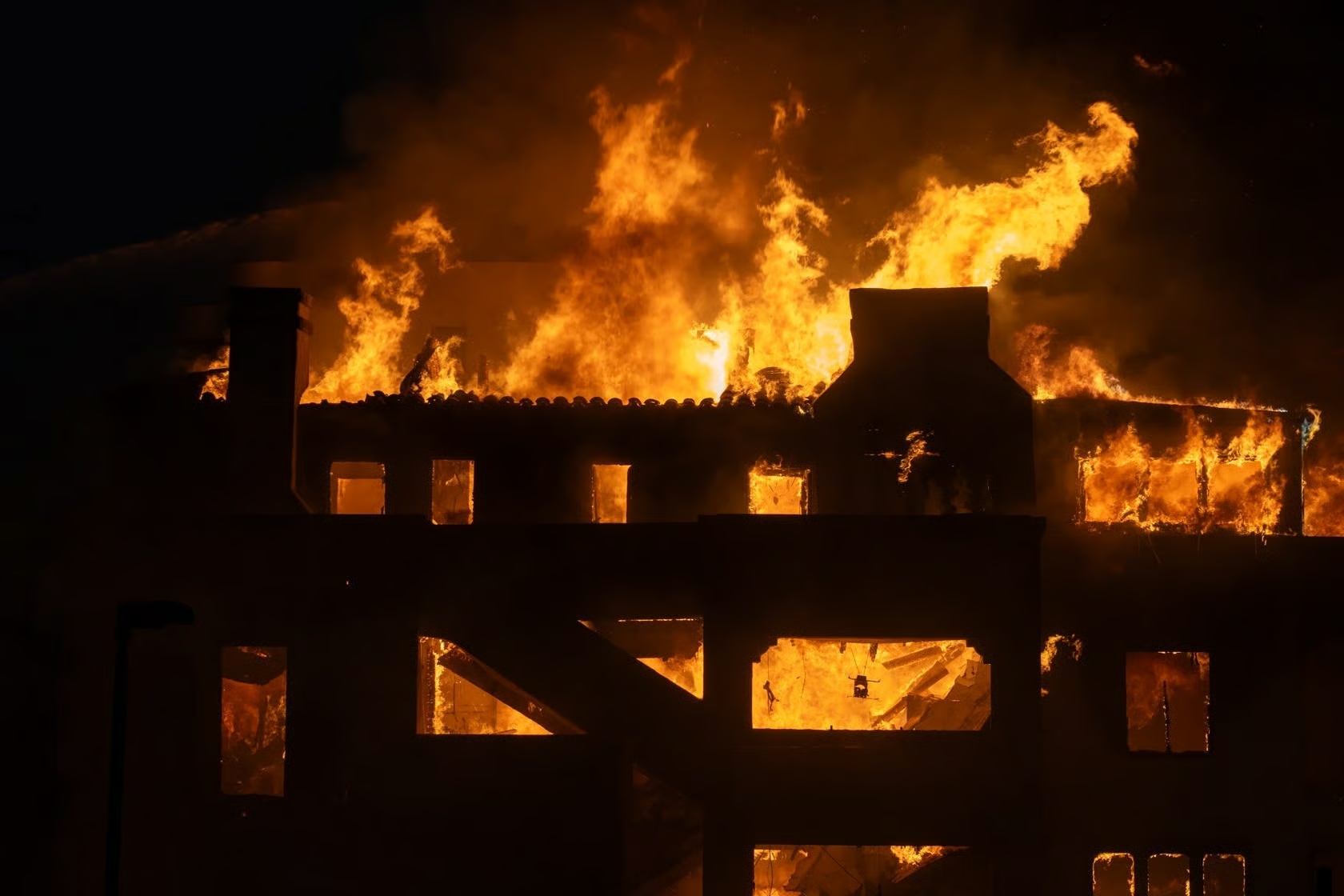
California regulators have taken the first steps to take legal action against State Farm, alleging the insurer mishandled claims filed by survivors of the 2025 Los Angeles wildfires.
The California Department of Insurance announced on May 4 that it had completed its investigation into the insurance company, noting that the department had found “widespread violations” that could impact thousands of survivors and “a pattern of unlawful behavior in more than half of the claims.”
Ultimately, the state claims State Farm may have violated California law, which could result in the state seeking “the largest penalty since this century’s disaster,” according to the announcement.
Under state law, an insurance agency may face a fine of up to $5,000 per violation or $10,000 for a willful violation; In this case, the department is seeking a fine of approximately $2 million.
Additionally, State Farm denied the allegation, claiming that the department was threatening to suspend for a year the insurance agency’s ability to serve customers in California.
California Insurance Commissioner Ricardo Lara said, “Our investigation found that State Farm delayed, underpaid and buried policyholders in red tape at the worst moment of their lives. This is unacceptable, and we are taking decisive action to hold them accountable.”
State Farm rejected the state’s claims of mishandling cases or intentionally underpaying customers, arguing that the discrepancies in files randomly reviewed by the state were primarily due to “administrative and procedural errors.”
The insurance company called the state’s actions “reckless” and a “politically motivated attack” that harmed California’s homeowners insurance market.
“California’s homeowners insurance market is one of the worst in the country, and State Farm has worked to be part of the real solution,” State Farm said in a statement. “The Department’s approach is increasing uncertainty in a marketplace that already lacks predictability, discouraging participation and leaving Californians with fewer coverage options when they need them most.”
Patterns of delay and denial
In particular, State Farm criticized California’s investigation, claiming that the state used “a thin sample to justify broad allegations.”
The California Department of Insurance reported that it had selected 220 random claims from approximately 11,300 cases filed by State Farm policyholders. According to the state, of the 38,835 claims filed with insurance agencies related to the Los Angeles wildfires, State Farm filed about a third.
Of the 220 cases reviewed by examiners, the state found that State Farm violated state law 398 times in 114 claims cases.
- The state claims State Farm failed to meet required deadlines for investigating claims, slowing down the process for policyholders. “State Farm failed to initiate an investigation of claims within 15 days, failed to approve or deny claims within 40 days, and failed to pay approved claims or provide written notice of the need for additional time within 30 days as required by law.”
- Among several claims, California argues that State Farm offered “unreasonably low settlements” and underpaid policyholders.
- The department claims State Farm created an “adjuster roulette” by failing to hire adjusters within statutory deadlines and repeatedly rehiring them.
- State examiners found that nearly half of all consumer complaints are claims of smoke damage. The state claims that State Farm failed to provide “required written denials for sanitary and environmental testing, misclassified testing costs, and misrepresented policy provisions related to inspections.”
- Examiners found that State Farm failed to respond or provide notice to many policyholders when additional time was needed to determine claims.
However, State Farm claims that California is misrepresenting the situation, as “most of the issues cited were administrative or process-related – such as notices or letters sent after statutory requirements, documentation, or payer information – not widespread failures to pay covered claims.”
The insurance company argues that the state is using “administrative” errors “as a political weapon, creating headlines rather than providing facts and real consumer protection.”
Lara said the department would move forward with its legal action seeking penalties and would sponsor two laws aimed at strengthening “disaster-related consumer protections.”
Lara said, “The Los Angeles fires were one of the most devastating disasters in our state’s history. Survivors deserve a fair, timely recovery, not obstacles and delays.” “We are taking a two-pronged approach: legal action to address State Farm’s conduct, and legislative action to ensure it never happens again.”
How might this affect California customers?
If California moves forward with potentially suspending State Farm’s license for a year, it could impact homeowners searching for new plans across the state.
The Insurance Commissioner has the authority to suspend or revoke an agent’s license if he or she believes that it would be against the public interest to continue allowing those companies to conduct insurance transactions in California.
State Farm insures more than 1 million homes across California — more homes than any other carrier in the affected Los Angeles area — meaning a potential suspension could add to the stress that many home insurers are already facing.
For years, insurance companies have refused or removed policyholders from their plans after severe wildfires, making the region too expensive to cover. Many families found coverage through California’s plan of last resort, the FAIR Plan – a nonprofit insurer option for residents who are struggling to find a company willing to cover their property. But that plan is also reaching its limits, with more than 646,000 homeowners now enrolled in basic policies.
Since the initial exodus of insurers from California, many companies have begun accepting new customers – but only after raising their prices. Companies like the Automobile Club and the Travelers Interinsurance Exchange have recently filed requests with the Department of Insurance to increase home owners insurance rates: 11.2% and 6.9%, respectively.
It’s unclear how State Farm’s potential suspension might ultimately affect the broader insurance market.
Reporting by Noe Padilla, USA TODAY/USA TODAY Network via Reuters Connect.