

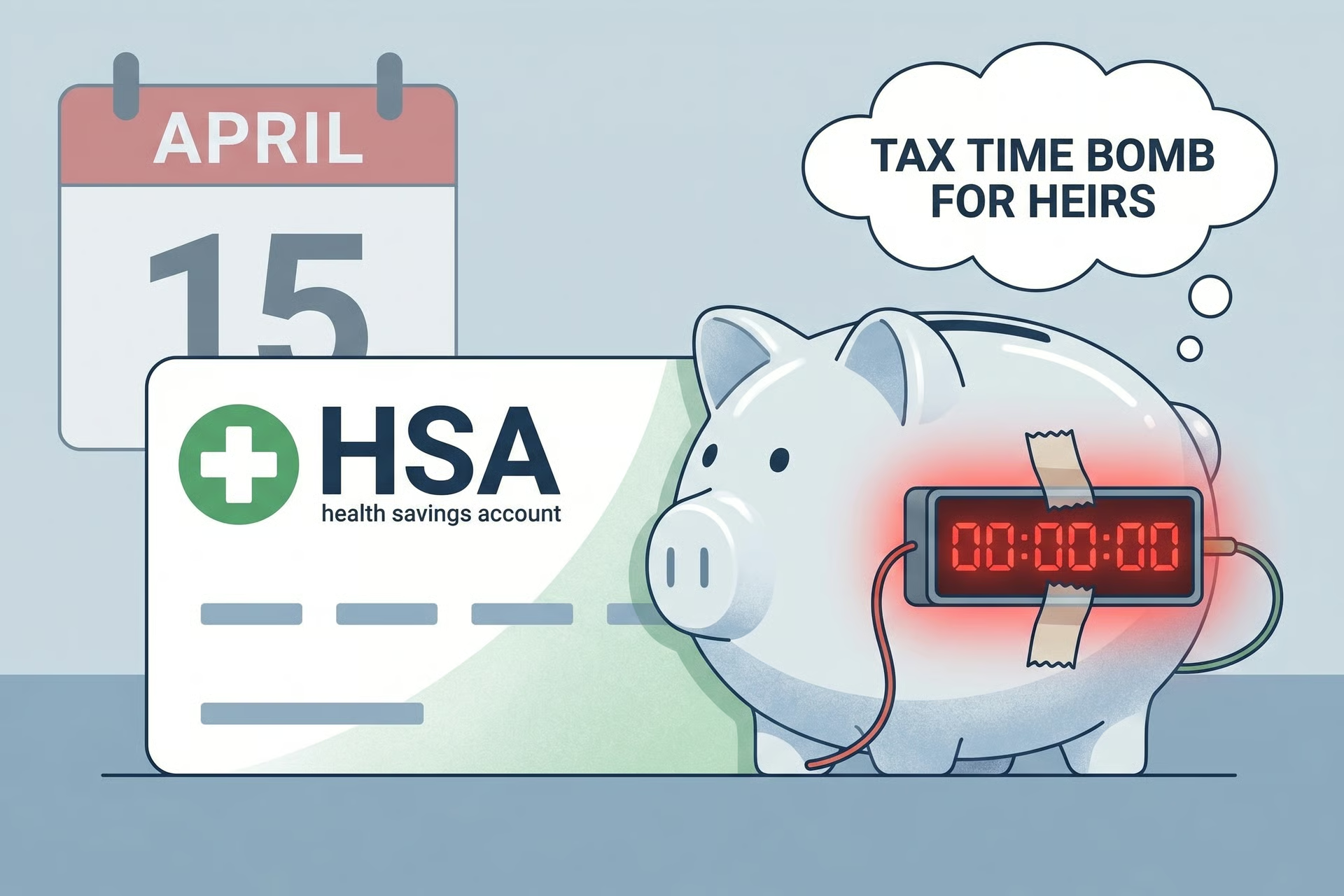
The triple tax advantage of health savings accounts makes them one of the most powerful savings tools for old age, but they also can blow up your inheritance taxes if you plan to leave unspent money to a nonresident spouse, advisors said.
Because HSAs are medical savings accounts intended to help individuals with high-deductible health plans save for current and future out-of-pocket health care expenses, they do not follow the same rules as other savings vehicles such as brokerage and retirement accounts after death.
Depending on who inherits the HSA, it may lose its tax-advantaged status. All money left over will become taxable income to the beneficiary immediately – the year you die.
“We coach clients on how to maximize an HSA – funding medical expenses out of pocket, contributing and investing the HSA and growing it,” said Jaime Eckels, partner at Plante Moran Wealth Management. “Now, they have to be trained that it’s time to take advantage of it.”
What happens to HSA when you die?
When a spouse inherits an HSA, it remains active and the spouse assumes ownership without any consequences. Spouses can take tax-free withdrawals for qualified medical expenses, just as the deceased spouse did.
If the beneficiary is someone else, the HSA loses its tax-advantaged status on the day of your death. The account is closed, and the total fair-market value of the funds, minus any unpaid qualified medical expenses that the HSA used to pay within a year of your death, becomes taxable income to the beneficiary for that year. There is no step-up basis like 10 years for emptying a brokerage account or an inherited retirement account to spread taxes.
Advisers said non-spousal beneficiaries become even more relevant given the growing number of widows and widowers and people who choose to live alone.
According to the US Census Bureau, more than five million men and more than one million women in the US were widowed in 2022.
Separately, more than 15 million adults ages 55 and older, or about 16.5% of the population, were childless in 2018, a U.S. Census Bureau report released in 2021 said. A survey of more than 2,500 adults by the nonprofit Pew Research Center showed that from 2018 to 2023, the share of adults under 50 who said they were unlikely to ever have children increased from 37% to 47%.
Why are HSAs still worth using?
Despite potential drawbacks upon death, HSAs remain a preferred savings vehicle among financial advisors because contributions are tax-free, the money grows tax-free and, if used for qualified expenses, withdrawals are tax-free. Companies may also contribute to an employee’s HSA.
There is no expiration date on when you can withdraw funds for qualified medical expenses already incurred, as long as the account was active at the time. So if you’ve been paying medical bills out-of-pocket for years and saved your receipts, you can withdraw that exact amount as a reimbursement from your HSA tax-free at any time — even using those funds for a vacation or to make a big purchase.
“Think of an HSA as a piggy bank for medical expenses that can grow similar to an individual retirement account,” said Richard Pon, a certified public accountant in San Francisco.
At the end of 2024, 39.3 million HSAs existed, helping cover more than 59.3 million Americans, according to a survey by HSA advisors Devenir and the American Bankers Association’s Health Savings Account Council.
President Donald Trump’s signature tax and spending plan passed last summer opened HSAs to millions of Americans by allowing them to qualify for plans with more Affordable Care Act insurance plans, direct primary care arrangements and telehealth coverage.
How to defuse the HSA tax bomb
Advisors said people who have a large HSA balance should reduce it and plan how to distribute the balance. Options that retirees may consider include:
- Use tax-free HSA funds to pay medical expenses. For example, HSAs can be used to pay Medicare premiums, long-term care premiums, and dental and vision bills.
- Use unreimbursed medical receipts from previous years to extract as much tax-free money as possible. Once the money is gone, you can use it for larger purchases or invest it in a brokerage account or something else that can be passed on to a beneficiary with lower tax consequences, Eckels said.
- If you’re planning to name beneficiaries, consider who they are, how much they earn and where they live, said Derek Miser, investment adviser and chief executive of Miser Wealth Partners. “Understanding those dynamics could be a way to divide the tax burden,” he said. For example, you might not want to leave a large HSA to a high-income individual who lives in a state with high state and local taxes.
- If a potential heir is in a higher tax bracket but you are not, withdraw some HSA money and pay the taxes if you don’t have enough unreimbursed medical expense receipts to make a tax-free withdrawal. “Once you’re over age 65 (years old), you can use the money for non-medical expenses and don’t pay withdrawal penalties, but you do pay taxes,” Eckels said. If your tax rate is low, it may be beneficial to protect your heirs from the tax hit.
- Designating a charity or donor advised fund (DAF) as the beneficiary allows the money to grow tax-free, Miser said. DAFs offer additional flexibility because the money can be distributed over time and among different charities, he said.
Whatever you do, always name a beneficiary, Eckels said. Without it, he said, the HSA would be taxed on the deceased person’s final tax return and would not be able to be used to pay final medical expenses billed after death.
Medora Lee is the money, markets and personal finance reporter at USA TODAY. You can reach him at (email protected) and subscribe to our free Daily Money newsletter for personal finance tips and business news every Monday to Friday.