

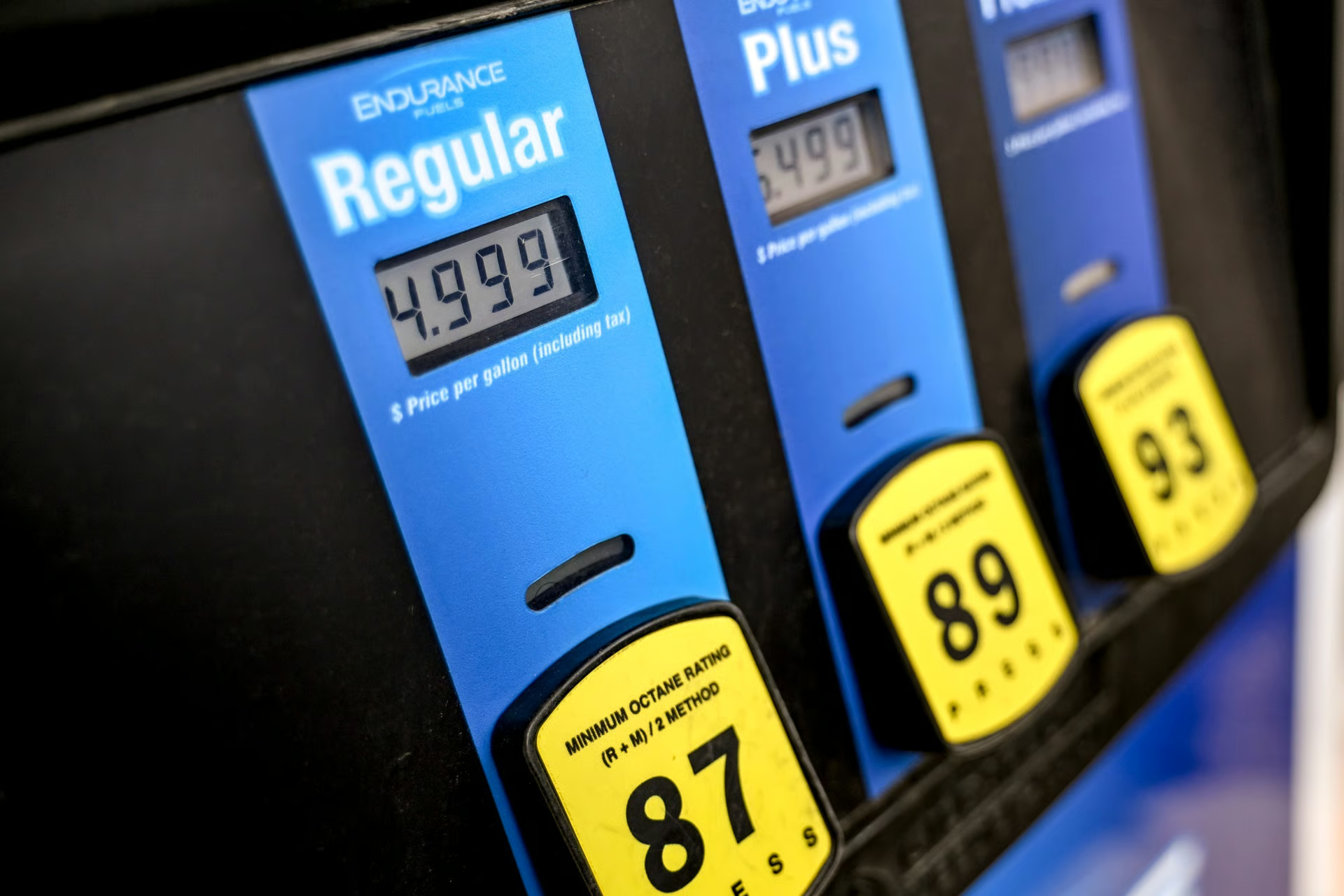
Rising gas prices are changing the driving behavior of many Americans, according to a new survey released by ABC News, The Washington Post and Ipsos. The survey, conducted among 2,560 U.S. adults between April 24-28, found that 44% of respondents have reduced driving due to higher gas prices.
The findings come as gas prices rose to an average of $4.55 per gallon on May 7, up from $4.30 a week earlier on April 30, according to AAA.
“US Gas Price Scorecard for May 6 – $3.99/gal is no longer the most common price in the US, and the top 10% of gas stations now average more than $6/gal,” Patrick de Haan, head of petroleum analysis at GasBuddy, wrote in an X post.
De Haan said in a May 4 blog post that gas prices are expected to rise in the coming weeks due to the US-Iran war.
“The market is also digesting a wave of new developments – including OPEC+ increasing production for June and President Trump outlining a plan to free stranded vessels – that could help restore some supply,” he wrote. “However, with so many moving pieces, the outlook remains highly fluid, and although some local relief may emerge, broader price volatility is likely to persist in the near term.”
The USA TODAY Cars team analyzed how American drivers are adjusting their behavior to deal with higher gas prices.
Americans are cutting back on driving
When asked whether they thought gas prices would get better or worse next year, the majority of survey respondents – 50% – said they would get worse. In a follow-up question about the impact of gas prices, 44% said they had cut down on driving.
According to the U.S. Department of Energy, historically, there has been an inverse relationship between the number of miles Americans are willing to drive and gas prices and overall economic uncertainty. “The long-term increase in (vehicle miles traveled) has seen flat growth or decline in the three periods caused by oil price increases in 1974, 1979, and 2008,” the agency said.
“The VMT decline that began in 2008 continued long after oil prices recovered, largely due to the economic slowdown,” the agency added. “Starting in 2012, VMT began to rise again as the US economy recovered while petroleum prices remained relatively low.”
The agency said the other recent period of prolonged decline in American driving was the beginning of the COVID-19 pandemic in 2020.
“The rate of growth slowed between 2017 and 2020. Due to the COVID-19 pandemic, VMT in 2021, which represents February 2020 through January 2021, was the lowest since 2002,” the Energy Department said. “VMT has reached its highest level since 2021, largely due to the trend of hybrid work schedules.”
Americans are changing their holiday plans
The survey also found that 34% of respondents said they were changing travel or vacation plans in light of current high gas prices.
The US Travel Association found the following price increases for travelers:
- Gas prices rose 9.2% year over year and 21.5% from February, the largest source of upward pressure on the index.
- Airline fares rose 14.9% compared to March last year, continuing the increase seen since the end of 2025.
- Meals away from home increased 3.8% year over year, in line with the multi-year trend in restaurant and hospitality pricing.
- Hotel prices rose 2.1% year over year, reversing the decline recorded in January and February.
- Entertainment costs rose 2.0% from a year earlier, down from the sharp monthly gains seen at the end of 2025.
Americans are cutting household spending
The survey found that 42% of adults said they were cutting back on household expenses due to higher gas prices.
According to the US Bureau of Economic Analysis, personal consumer spending increased by $195.4 billion in March 2026 – but $81.3 billion of that increased spending went to gas and other energy expenses. The next biggest jump was in health care, up $21.3 billion.
Here’s how much U.S. spending increased per category in March:
- Gasoline and other energy goods: $81.3 billion
- Health care: $21.3 billion
- Motor vehicles and parts: $17.6 billion
- Financial services and insurance: $14.6 billion
- Other non-durable goods: $9.9 billion
- Food and beverages: $6.9 billion
- Transportation services: $6.7 billion
- Other services: $6.6 billion
- Recreational goods and vehicles: $5.5 billion
- Furnishings and durable home appliances: $5 billion
- Final expenditure of non-profit institutions: $4.2 billion
- Food services and accommodation: $3.5 billion
- Clothing and shoes: $2.9 billion
- Other durable goods: $2.7 billion
- Housing and utilities: $500 million
Americans are considering electric cars due to rising gas prices
Even as nearly half of the survey respondents said they are trying to cut expenses, 15% said they are now considering buying an electric car.
And even when they’re not ready to buy new or used EVs, Americans are choosing to lease them more often. Hertz spokeswoman Lauren Luster told USA TODAY that about 30% of its renters are now choosing to rent EVs instead of gas-powered vehicles. The company saw a nearly 25% increase in EV reservation requests from rideshare drivers between February and March.
Car Rental Gateway, an online platform that operates in the US, also reported a 16% increase in electric and hybrid car rentals in March.
The findings come at a time when sales of new electric cars are declining but sales of used EVs are rising. According to Cox Automotive, carmakers sold 82,629 new electric vehicles and 42,924 used EVs in March 2026. March new EV sales were down 24.7% from March 2025, but up 20.2% from February 2026. Used EV sales increased 27.7% year over year and 53.9% from February 2025.
Cox said Tesla was the largest seller of both new and used EVs in March, selling 41,055 new EVs and 15,385 used plug-in models. The average price of a new EV in March was $54,508; A typical used EV sold for $34,653.
Reporting by Keith Lang, USA TODAY/USA TODAY Network via Reuters Connect