

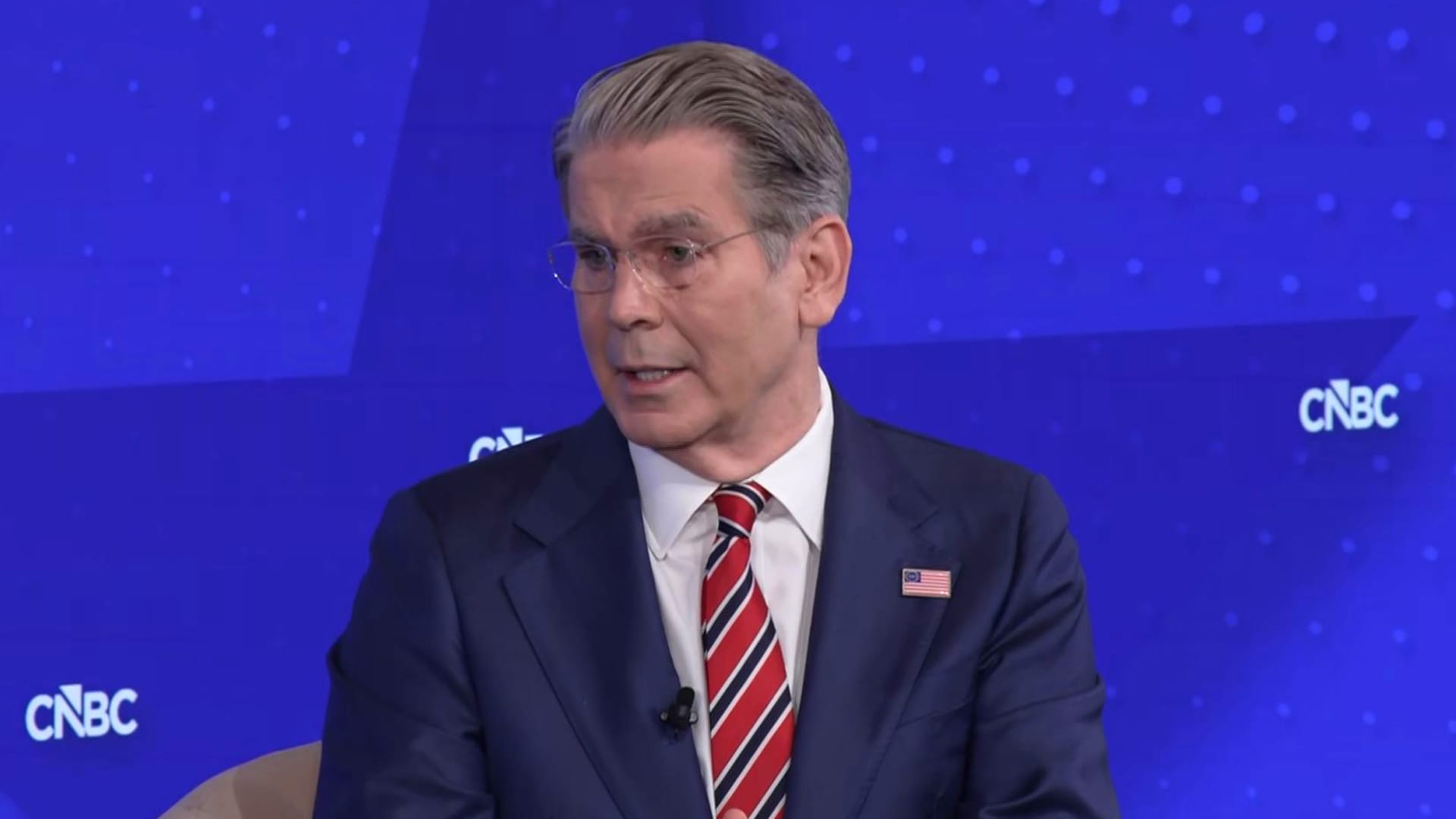
Banks in the US may not like the idea of being forced to collect citizenship data on customers, but Treasury Secretary Scott Besant says they had better be prepared for the task.
“If the Treasury and banking regulators say it’s their job, then it’s their job,” Besant told CNBC’s Sarah Eisen. Invest in America Forum Washington D.C. on Tuesday. In.
An executive order that had been discussed for months moved one step closer to reality earlier this week when Besant said in a Interview With the semaphore that the EO is “in process.”
The planned EO is another issue in President Donald Trump’s broader effort to tie his immigration policy to the collection of information in the United States, including voting and census efforts.
Citizenship documents are not required to open a bank account in the US. Banks are required to verify identity.
The US, like many countries, uses “Know Your Customer” rules for bank accounts to prevent money laundering and other forms of financial crime, verify customer identity, assess risks, and monitor transactions to prevent fraud. Laws including the Bank Secrecy Act (BSA) and the USA Patriot Act also promote efforts to verify customers. Banks collect Social Security numbers, or an Individual Taxpayer Identification Number (ITIN), names, dates of birth, and addresses, among other documents.
But Besant is not satisfied with this. “Why can unknown foreign nationals come and open a bank account?” he said on the CNBC program. “The job of our bank officers is to know your customer. How do you know your customer if you don’t know whether they have legal or illegal status, whether they are a US citizen or a green card holder?”
In foreign countries, citizenship information is often required for banking access, but there is no universal mandate. Besant told Eisen, “Every other country does this. Every other country. …There should be strict rules.”
Republicans have voiced support for the idea.
Senator Tom Cotton (R-AK) introduced a bill In March, FDIC or NCUA-insured banks and credit unions will be required to verify that anyone opening an account is a U.S. citizen, permanent resident, or in the country on a valid visa, with additional verification checks on legal status.
Besant has previously said that Real ID will not be considered a legal document under this new executive order.
Last October, Cotton wrote to the treasury “Urging the Treasury Department to review existing regulations that allow illegal aliens to obtain financial services and access to the U.S. banking system.”
In addition to legal questions, some policy experts and banks have warned that the economy would suffer if people were denied access to the banking system and deposit accounts, as well as a potentially large increase in administrative costs for banks.
Allowing non-citizens, including undocumented immigrants, to legally open bank accounts using a document such as an ITIN means they can pay taxes and avoid becoming part of the “unbanked” who exist in an entirely cash economy. being unbanked Often associated with a reduced ability to move up the social ladder and contribute to economic development.
For banks, center-right think tank American Action Forum estimated The citizenship verification requirement could involve 30 million to 70 million paperwork hours and a cost of $2.6-$5.6 billion. “Verification in progress New Accounts are just the tip of the iceberg; Lack of details makes it difficult to estimate the cost of verification current account holders,” it wrote in a March analysis.
“Illegal immigrants do not have a right to be in the banking system,” Besant told CNBC.
