

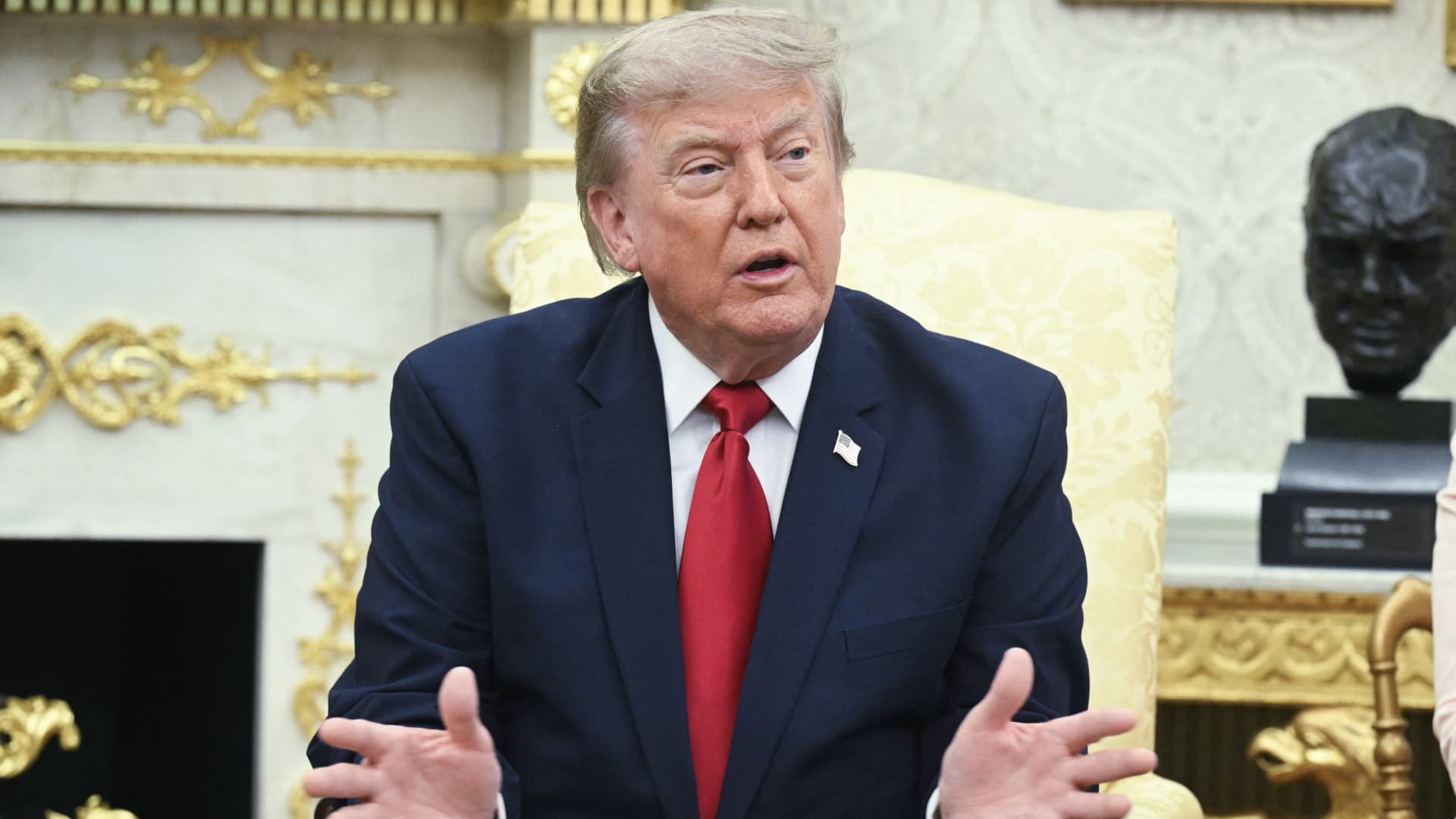
U.S. President Donald Trump speaks during a meeting with Iraqi Prime Minister Ali al-Zaidi in the Oval Office of the White House on July 14, 2026 in Washington, DC.
Saul Loeb AFP | getty images
US President Donald Trump warned on Tuesday that US military strikes on Iran would intensify next week if Tehran does not cooperate in peace talks in the coming days.
In an interview with Fox News on Tuesday evening, Trump indicated that the conflict was likely to intensify rather than subside as the fragile ceasefire agreed last month continues to break down.
“We will hit them very hard tonight,” he said. “We’re going to attack them hard tomorrow night. We’re going to attack them very hard the night after tomorrow.”
He said US forces would target key Iranian infrastructure next week without any diplomatic success.
“It’s going to be really bad for them next week because the power plants will be coming in next week,” he said. “Next week the bridges will come. We’re going to knock out all their power plants. We’re going to knock out all their bridges unless they come to the table and negotiate.”
This interview of Trump comes after the US Central Command launched more attacks against Iran on Tuesday. Meanwhile, Tehran has launched attacks on several Gulf countries.
Trump earlier this week threatened to impose a 20% levy on goods shipped through the Strait of Hormuz, before dropping that demand on Tuesday. The President said the Gulf countries would invest in America as repayment.
The escalation in fighting comes after the US launched strikes on dozens of Iranian targets in response to last week’s attacks on commercial ships passing through the Strait of Hormuz.
Trump later said that the ceasefire between Washington and Tehran was “over”.
Oil prices edged higher on Wednesday morning on concerns about safe transit through the Strait of Hormuz – a vital oil shipping route in the Middle East. Front-month global benchmark Brent crude futures remained above the $85 per barrel mark.
Speaking to CNBC’s “Squawk Box Europe” on Wednesday, Jacob Larsson, chief safety and security officer at international shipping body BIMCO, said it is “not easy” for the industry to deal with the current situation.
“All these messages are going back and forth and completely changing directions, adding to the confusion and complexity of the whole situation,” he said. “If you take a step away and look at it from above, the overall environment we’re seeing is increased uncertainty, increased risk, and with that comes higher prices.”