

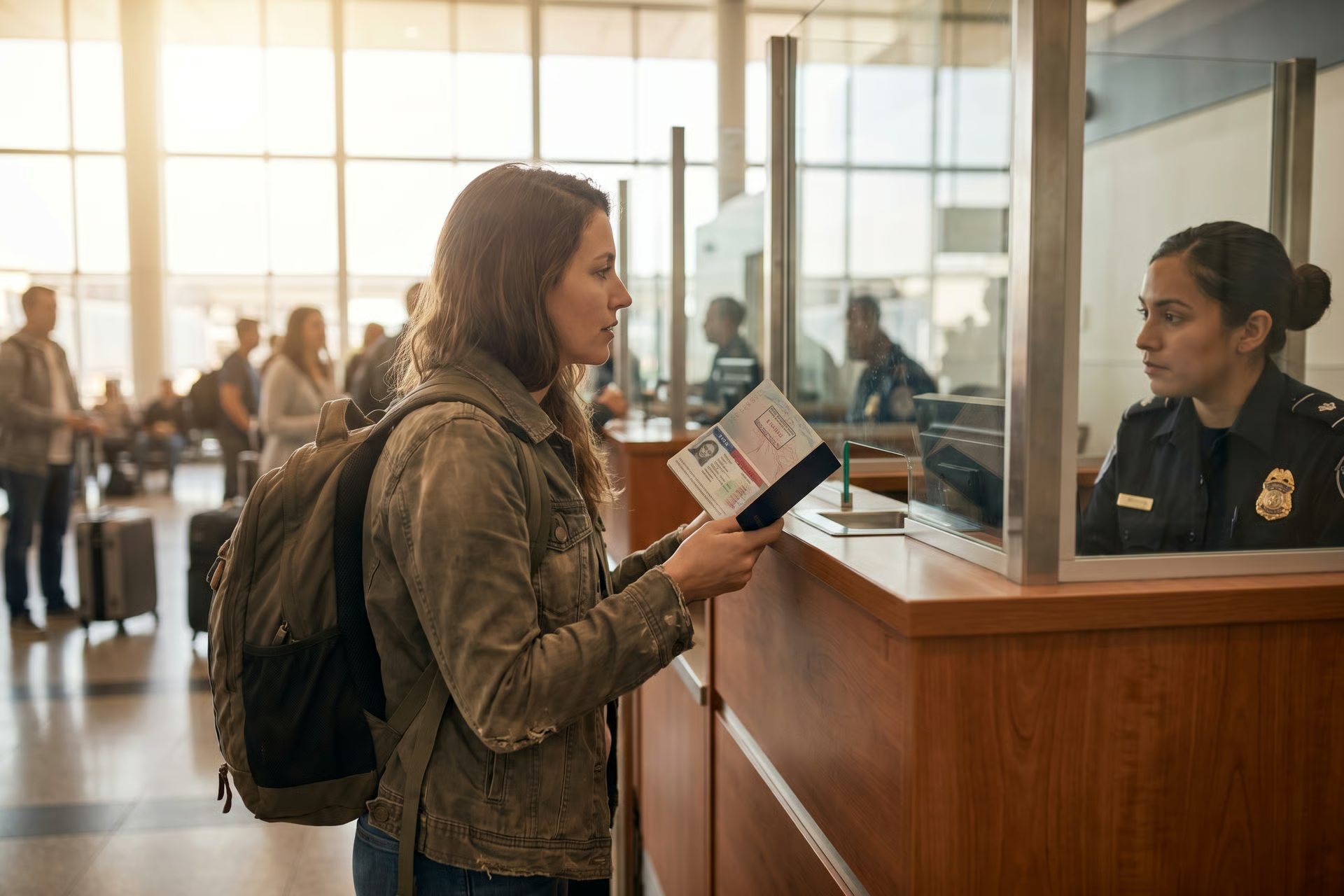
Getting a visa to visit the US may soon take less time – but will cost more money for some travelers.
Starting July 1, travelers applying for B1 and B2 nonimmigrant visas for business and tourism will be able to pay extra to get ahead of others in the queue for a visa interview.
According to the State Department, it is part of a “proof-of-concept” pilot program designed to assess demand for expedited services, which it will introduce by the end of the year.
How the Fast-Track Program Works
According to a temporary final rule published in the Federal Register on June 9, “Applicants to identified positions will have the opportunity to move up in the appointment line by paying a $750 fee without providing written justification or seeking personal intervention through the priority appointment request or referral processes.”
Those who pay the additional fee will be able to secure a visa interview appointment within 10 business days, rather than waiting for the next available opening, which may vary by week and location. For example, the next available appointment for a B1/B2 visa interview is 16 months away in Abu Dhabi and less than half a month away in Istanbul.
The $750 fee is on top of the standard $185 application processing fee for a nonimmigrant visa, totaling approximately $935.
Critics question the value
That’s a lot of money in many countries, New York-based immigration attorney Michael Catalliotti told USA TODAY. “I would argue that’s a lot of money in this country, but it’s a lot of money in many of the countries where people are applying for these visas,” he said.
The State Department notes that “premium” additions will be optional, limited in quantity, and available only at designated posts on its website. It further states, “This service will not expedite any processing step, including the time required for administrative processing.”
“There is no indication that they are going to approve these applications,” Catalliotti said, adding that it is interesting that the option is only available for B1, B2 visas. “There are a number of other categories where it would make more sense to accelerate and increase the pace, like work-based visas where someone is coming here as an international scholar or someone with ‘exceptional ability’ who is phenomenal in their industry, someone with a particular vocation, all those different areas.”
After the pilot period ends on December 31, the State Department will assess whether the service is worth continuing or adjusting.
