

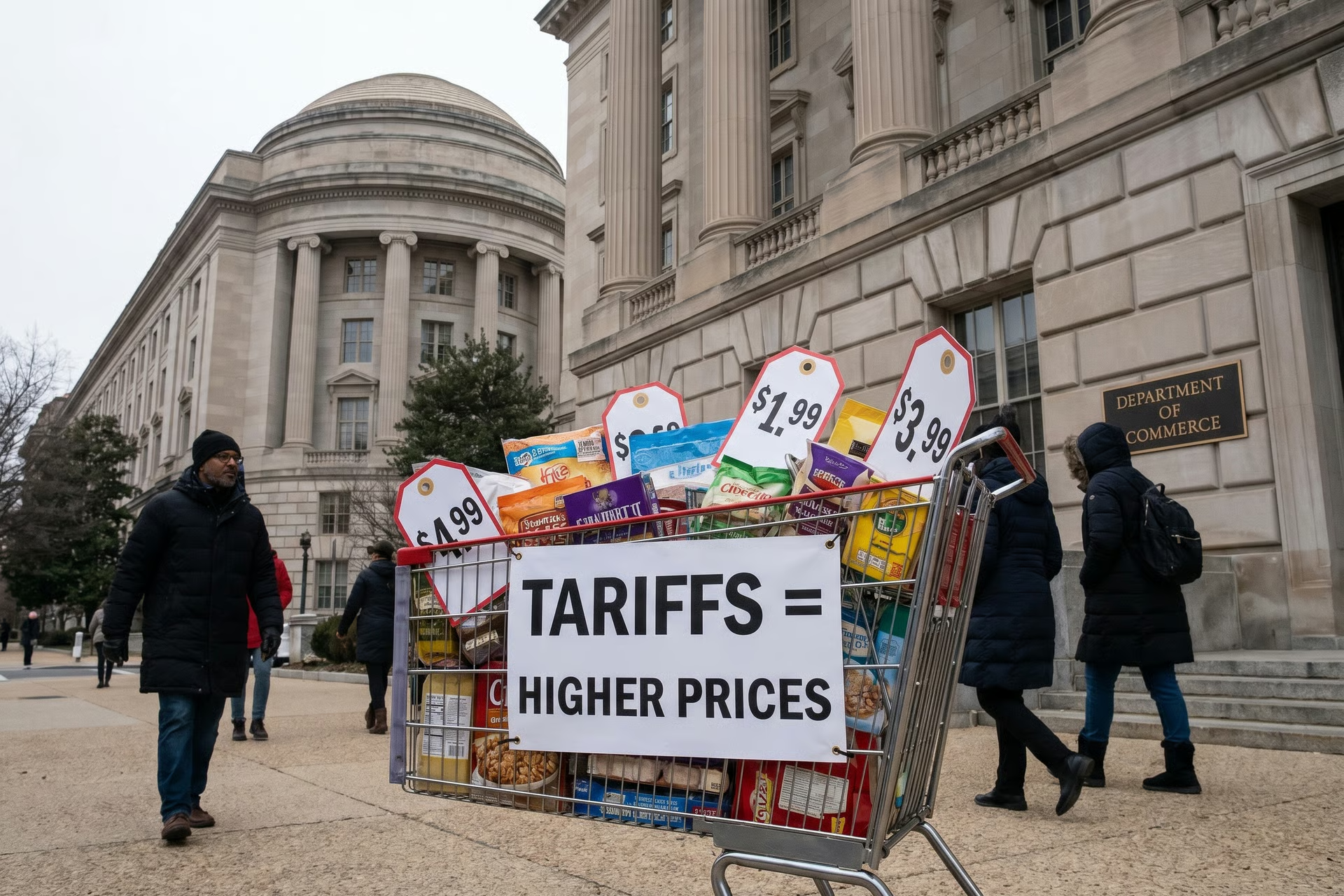
A federal court dealt another blow to President Donald Trump’s trade agenda, ruling against a 10% tariff imposed to replace tariffs struck down by the Supreme Court — but consumer prices are still unlikely to fall as the Iran war continues and the administration looks for other ways to impose tariffs.
The Court of International Trade ruled 2-1 on May 7 that Trump’s February decision to use Section 122 of the Trade Act of 1974 to impose a 10% levy was unlawful. Although the two justices in the majority blocked the administration from collecting these tariffs from Washington state and two companies that had sued over the policy, they will remain in place for most importers until the appeals process is complete.
US Trade Representative Jamieson Greer confirmed on May 8 that the administration planned to appeal the decision and was optimistic about its prospects.
“President Trump is focused on imposing tariffs to protect our economy,” Greer said on Fox Business Network’s “Mornings with Maria.” “We will obviously follow the law and do what the courts tell us to do, but their policy is not changing.”
Boston College economics professor Brian Bethune believes the appeal is far-reaching.
“They tried to do it with the IEEPA tariffs. It didn’t work,” Bethune said, referring to previous tariffs implemented under the International Emergency Economic Powers Act. “There is actually little chance of a Hail Mary in this case because the terms of section 122 do not apply at all.”
Why weren’t the tariffs eliminated?
Either way, the administration still has several other avenues to impose the tariffs — a cornerstone of Trump’s economic policy. One path involves the use of Section 301 of the same 1974 act, which requires investigations but allows the administration to impose tariffs in response to foreign government actions that burden or restrict U.S. commerce. Greer had previously announced Section 301 investigations into several countries and the European Union.
When the appeals process and investigation are resolved, it is unclear whether the effective tariff rates will be lower, higher, or equal to the levels seen last year, when Trump used the International Emergency Economic Powers Act to issue tariffs on nearly every US trading partner. In February the Supreme Court ruled those tariffs illegal.
Drew DeLong, head of corporate statecraft at Kearney Foresight, an internal think tank at global management consulting firm Kearney, said that if the Section 301 investigation plays out as the administration intends, the tariff rates effective at the end of this year should be close to their levels in late 2025, and possibly higher.
Why can’t a court ruling against tariffs mean lower prices?
In a victory for importers who paid IEEPA fees, refunds ordered by the court as a result of a previous ruling reducing tariffs are set to begin this month. Still, there is no guarantee that prices will go down just because importers are getting refunds.
“Only time will tell, but I think businesses are wary of the constantly changing tariff landscape and will proceed with caution as a result,” Matthew Seligman, attorney and founder of Greyhawk Law, told USA TODAY.
According to John Groton, head of energy, materials and utilities at Thrivent, while the tariffs “no doubt” drove inflation higher than it is today, they aren’t the only things driving up prices.
The oil shock resulting from the Iran war has already created a pain at the gas pump for American drivers, but Groton said disruptions to supply chains for fertilizers, metals and freight will make groceries, housing and other consumer goods more expensive the longer the conflict drags on.
“There’s a lot of focus on gasoline. That (price increase) happens immediately. Unless you have an EV or you’re buying gas once a week, it’s super visible,” Groton said. “It takes time for bleeding to occur in most other areas.”
Meanwhile, preliminary results from a May 8 University of Michigan survey of consumers showed that the measure of consumer sentiment had fallen to 48.2 – a new record low.
“About one-third of consumers automatically mentioned gasoline prices and about 30% mentioned tariffs,” said Joan Su, consumer survey director. “Overall, consumers are feeling impacted by cost pressures due to rising prices at the pump.”
Analysts expect inflation to increase again in April. The Labor Department’s Consumer Price Index report due on May 12 will tell whether these forecasts are correct.
Reporting by Rachel Barber, USA TODAY/USA TODAY Network via Reuters Connect