

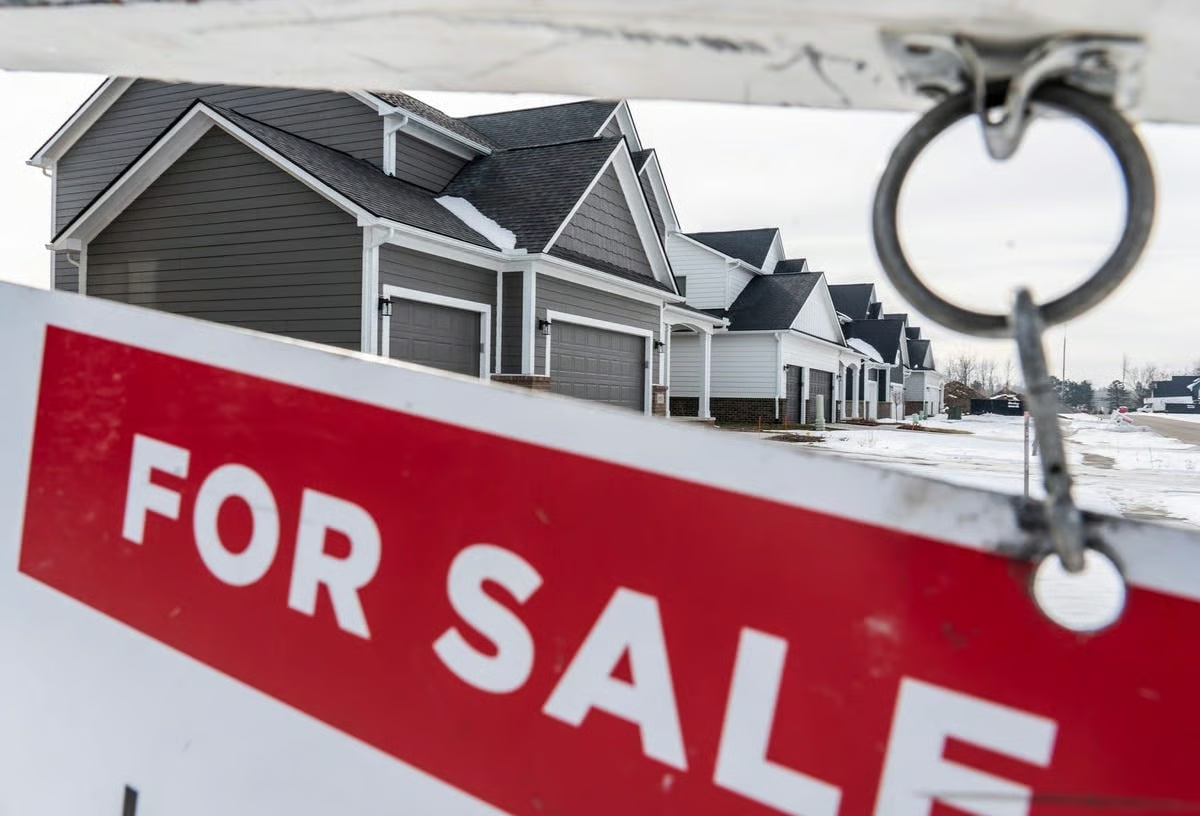
February showed promise for the spring housing market. Existing home sales increased, mortgage rates fell below 6% for the first time in years and home prices were not rising as fast as they had been.
But in March all this came to an end.
Data released by the National Association of Realtors shows that in March, existing home sales declined 3.6% month-on-month and 1% year-on-year to 3.98 million nationally.
That was the slowest pace of home sales in March since 2009, NAR said. This is also the slowest pace in the last nine months.
March sales by region
Regionally, the Northeast had the lowest percentage of existing home sales at 11%. The South recorded the highest at 47%, while the West and Midwest recorded 19% and 23%, respectively.
Pending home sales nationwide increased 1.5% month-over-month in March, but they declined 1.1% year-over-year, NAR said.
“It remains a really tough housing market for home buyers, and we’re seeing a lot of stagnation,” said Kate Wood, senior writer and loan expert at NerdWallet. “Because of current events in March, such as the conflict in Iran, this is something that has created a lot of uncertainty in people’s outlook.”
The median home price also reached a new record high in the month of March, reaching $408,800 nationally.
lock-in effect
Wood said basic economics would suggest that rising interest rates will force sellers to lower home prices because demand is low due to lack of affordability. But this is not happening due to severe shortage of inventory in the market.
And this is likely a result of the lock-in effect, where homeowners with lower mortgage rates are not selling their homes. Even if someone wanted to make a lateral move rather than upgrade, it would be very difficult to do so while keeping their budget the same, Wood said.
Data from the Federal Housing Finance Agency for 2024 estimate that for each percentage point that current interest rates are higher than a homeowner’s interest rate, the likelihood of listing their home for sale decreases by 18.1%.
This means that if a homeowner has a 3% interest rate compared to the current interest rate of 6%, they are approximately 60% less likely to put their home up for sale.
“We’re in a situation where homeowners, especially those with particularly low rates, have a double benefit. They have lower mortgage interest rates and they bought their home at a lower price,” Wood said. “At the same time, people who are trying to buy in today’s market are now, in some sense, at a double disadvantage because mortgage interest rates are so high and because homes are priced so high.”
Tips for Buyers in a Tough Market
If you’re a first-time buyer and want to compete for a home in this tough market, Wood suggests you work with knowledgeable professionals who can properly guide you through the process.
He also recommends being strategic about what you’re asking from sellers, and determining whether the seller is prioritizing something you can deliver, like a quick closing.
You should also make sure that your finances are ready. Wood said that includes already having a mortgage pre-approval and having all your financial paperwork together when you start shopping.