

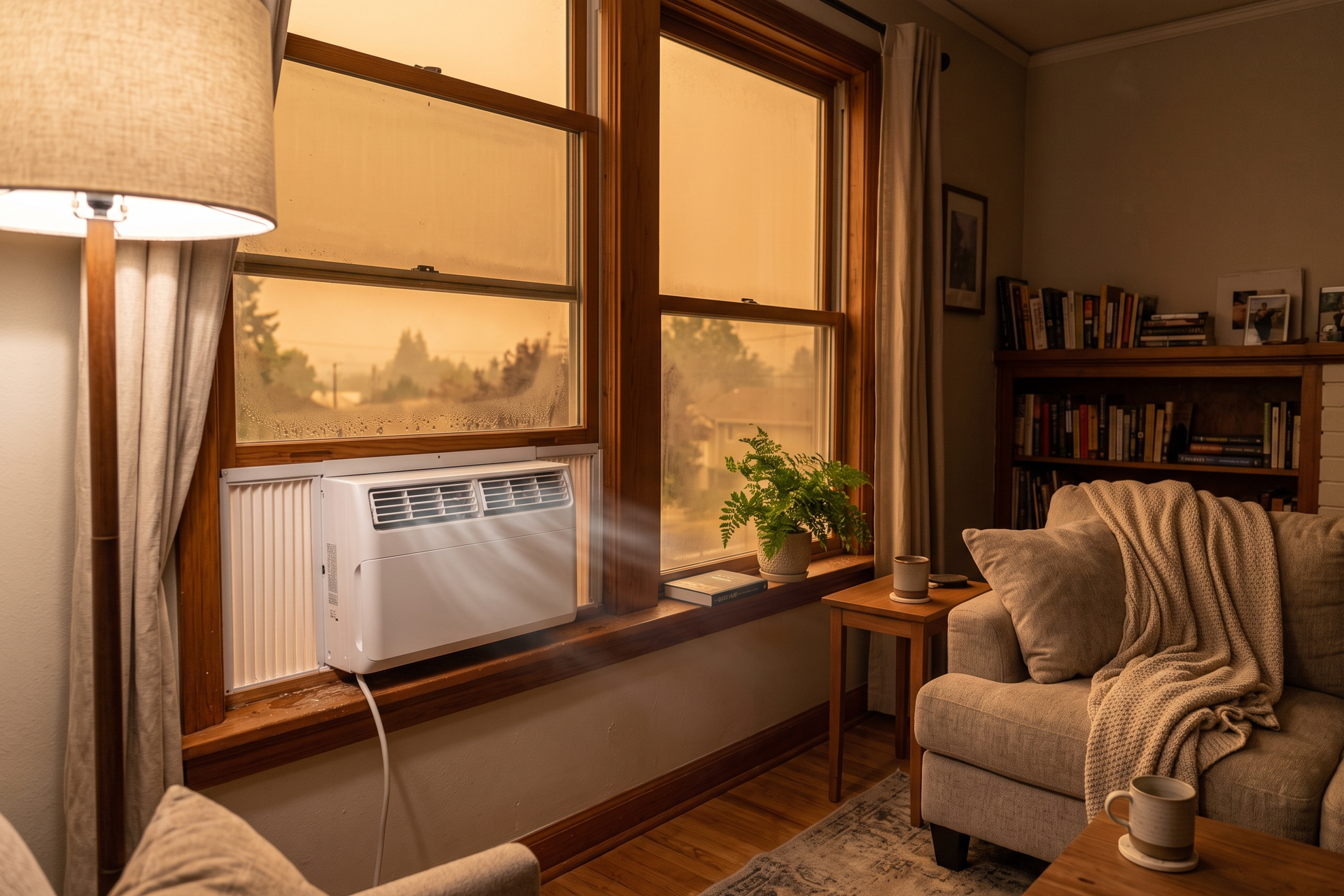
As Canadian wildfires spread smoke across the country, residents in affected areas may want to turn up their air conditioning units to escape the heat outside.
With temperatures still high in most areas, wildfires that broke out earlier this summer in Canada and Minnesota have made cooling off more difficult. According to the Canadian Interagency Forest Fire Centre, there are 858 wildfires currently burning across the country, 200 of which are in Ontario.
According to the American Red Cross, hazardous smog in the United States is currently affecting 115 million people from the Midwest to the East Coast. Additionally, the extreme heat is pushing the smoke closer to the ground, making breathing quite risky.
The gases and fine particles found in wildfire smoke can make people sick, especially people with asthma, chronic obstructive pulmonary disease (COPD), heart disease, those who are pregnant, and children. Symptoms of smoke inhalation include coughing, trouble breathing, wheezing, asthma attacks, stinging eyes, itchy throat, runny nose and irritated sinuses, headache, fatigue, chest pain and fast heartbeat.
According to US government agencies, while air conditioning can provide relief from harsh conditions, people should use it with caution.
How to use your air conditioner during a wildfire
The U.S. Environmental Protection Agency recommends not using fresh air intake air conditioning (HVAC) systems. According to the agency’s recommendations, people with a central HVAC system should switch it to “recirculate” mode.
Additionally, people should check if their HVAC filter is in good condition, fits in the filter slot and is changed at the frequency recommended by its manufacturer.
Individuals with window air conditioning units should learn how to close the outdoor air damper, a valve or movable plate that is used to regulate, redirect, or block airflow. If the damper cannot be closed, people should consider using a fan. The seal between the air conditioner and the window should be as tight as possible.
Individuals who have a portable air conditioner that has a single hose, usually out the window, should use it as little as possible.
Additionally, according to the Centers for Disease Control and Prevention, high-efficiency filters, such as MERV 13 or higher, are recommended to help clean air.
Michelle Del Rey is a trending news reporter at USA TODAY.