

Most Americans want to keep working even in retirement. But only a few retirees actually work.
The findings, from a new survey, reflect a perennial gap between expectations and reality for American retirees.
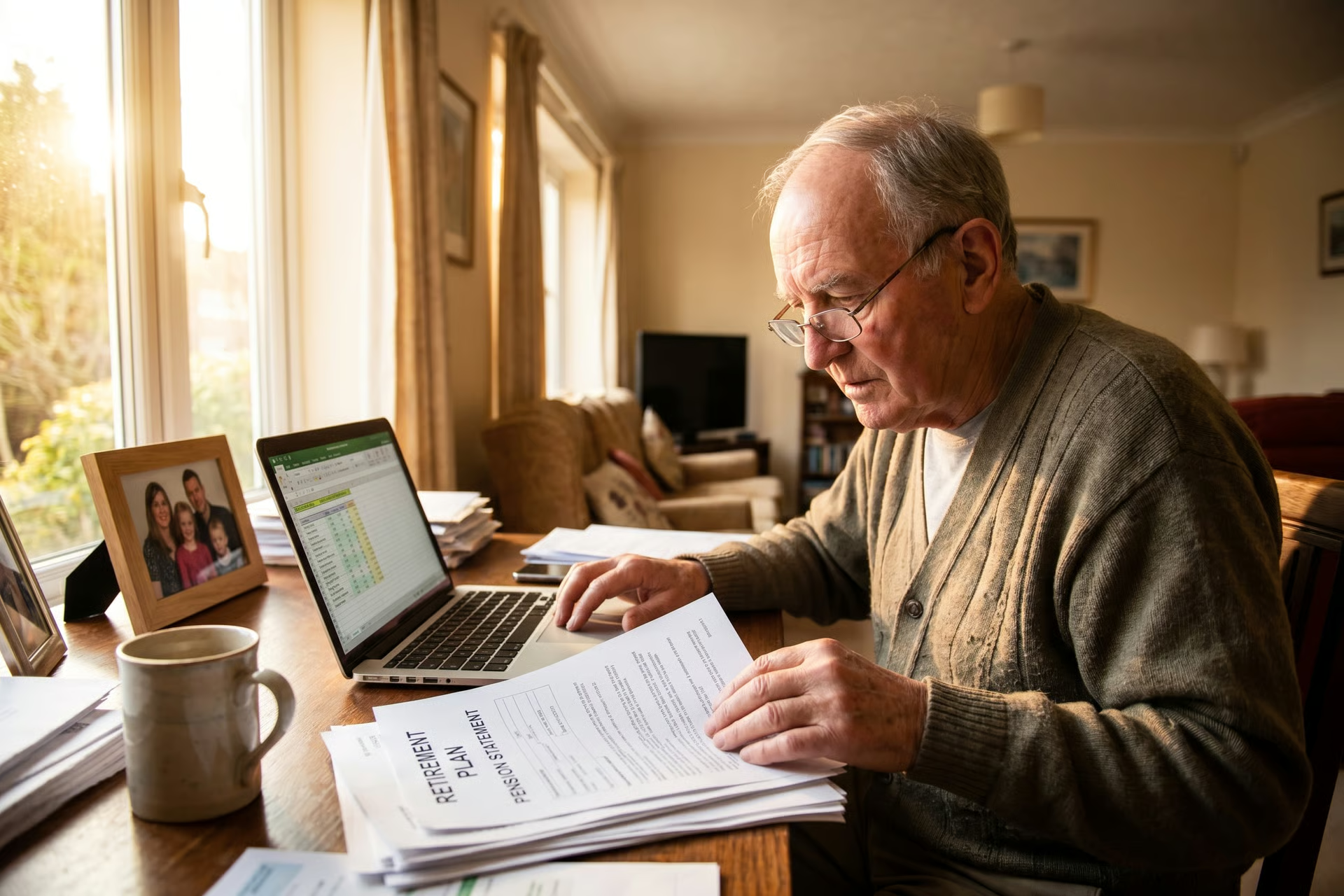
Nearly three-quarters of American workers plan to work for pay after they retire, according to the Employee Benefit Research Institute’s 2026 Retirement Confidence Survey. But the survey found that only 31% of retirees are actually working.
In previous EBRI surveys dating back to 1999, the findings are remarkably consistent. Year over year, 70% to 80% of workers say they expect to keep working and receiving a salary after they retire. Nevertheless, the share of working retirees has never exceeded 34%.
Experts say false expectations about working in retirement indicate fundamental misunderstandings about both retirement and the labor market.
Most of us don’t retire on our own terms
Many American workers envision easing into retirement at their own pace: cutting their hours, working part-time or remotely, or remaining as a consultant to the company that once employed them full-time.
Other workers envision themselves working full-time into their retirement years, receiving a salary until age 70, and continuing to work until they quit.
However, in reality, most employees do not retire on their own terms. Retirement often comes suddenly and unexpectedly, caused by health setbacks or corporate downsizing.
And once you retire, returning to the workforce is rarely easy.
“People expect to make a gradual change by reducing hours, but what they end up doing is stopping completely,” said Craig Copeland, director of wealth research at EBRI, a research and education nonprofit.
In many cases, Copeland said, to keep working in retirement, “you have to find a completely new job.” “And it’s harder to find a brand new job when you get older.”
When work is part of your retirement plan
Working into retirement seems like a paradox: In theory, you’re either working or retired, not both.
The continued desire to work into retirement, expressed in the EBRI survey and others, reflects a widespread hope among American workers that they can fund their retirement by continuing to work.
Many American workers fear they are not saving enough. According to the EBRI, nearly two-fifths of workers are not confident in their financial security through retirement. In recent years, at a time of increased inflation and myriad economic uncertainties, retirement confidence has been declining.
The EBRI survey is based on responses from 2,544 Americans in January.
In the EBRI report, 75% of workers said they expect to leverage work as a source of income in retirement. Paid work ranks fourth among all expected retirement income sources in the survey, behind Social Security, workplace and personal retirement savings.
“This is one of the ways they’re planning for retirement, and that’s to continue working and bringing in income,” Copeland said.
Yet, only 27% of current retirees report that they are receiving income from paid work.
Working in Retirement Is Harder Than It Seems
One barrier to working in retirement is the relative lack of part-time work: Transitioning from a full-time to a part-time schedule in a professional field is not as easy as it may seem, Copeland said.
Another problem is that older Americans have difficulty finding new jobs.
“It can be very difficult to re-enter employment when you’re looking for a job at an older age,” said Maura Porcelli, senior director of workforce at the National Council on Aging.
Other retirement surveys show the extent to which Americans rely on paid employment to fund their retirement.
In a recent report from the Transamerica Center for Retirement Studies, 48% of pre-retirement Americans said they planned to work in retirement, while 32% said they did not, with another 19% unsure.
“Many workers are planning to work into retirement for reasons related to financial and healthy aging,” said Katherine Collinson, CEO of Transamerica Center. “However, the experience of retirees shows that life happens,” including health issues, family responsibilities or job loss that suddenly take people out of the workforce.
Some of the contradictory data may reflect uneven societal attitudes about retirement, Collinson said. For example: If a corporate employee takes a retirement package, remains in retirement for a year or two and then finds a full-time job in a related field, is that person still retired?
“Semantically, when people identify themselves as ‘retired’, are they endorsing a societal expectation that they will no longer work?”. He said.
Here’s why American retirees return to work
American retirees continue to work for many reasons: to stay active and engaged, to postpone receiving Social Security or to spend down retirement savings, to make ends meet.
Recent evidence shows that more and more retirees are working out of necessity. A February report from AARP found that 7% of American retirees are recently re-entering the labor force by becoming “unretired.” The most common reason was to earn more money.
“I think we’re in this period of economic uncertainty right now,” said Carly Roszkowski, vice president of financial resiliency programming at AARP. “People are worried about depleting their retirement savings. They’re worried about the price of gas, the price of groceries.”
In an ideal world, Roszkowski said, retirees would work not because they need to, but because they want to.
“Many people feel they still have a lot left to give,” he said. “They want to be challenged, they want to feel purpose, they want to give back.”
