

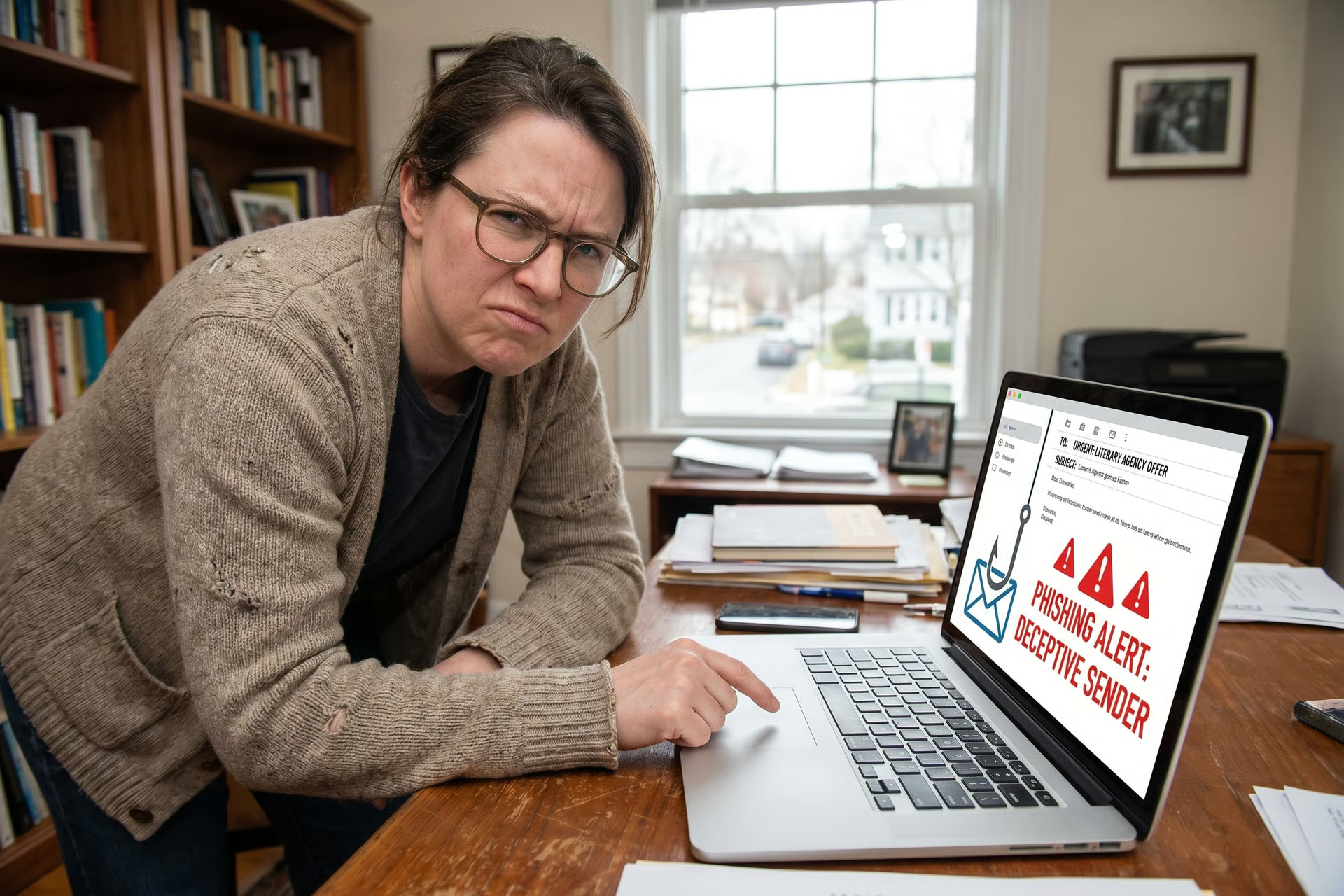
For $200, your book could get a national newspaper feature in USA Today. Email your manuscript to bestselling author Colleen Hoover and she will help you get it published.
If it sounds too good to be true, that’s because it is. They are real-life examples of recent scams plaguing the publishing industry – targeting authors’ wallets and original works.
Scammers impersonate famous authors. Others bill themselves as book clubs and offer to get your book in front of hundreds of readers for a fee. Some tease a shortcut to a Hollywood adaptation deal. These days, emails often open with flowery, highly specific praise about the book. Artificial intelligence has mined the book’s copy and polished its words into a genuine, emotional appeal.
Hoover, the author of books that have had A-list Hollywood adaptations including “It End’s With Us” and “Verity,” warned fans about a scam in late March. An aspiring author had sent Hoover his manuscript, along with a copy of a fraudulent email impersonating Hoover on the email chain. The author had been communicating with the impersonator for three months, thinking it was Hoover.
“But any moment now, that manuscript will likely be uploaded under a fake name and put up for sale to the world,” Hoover wrote on Facebook. “This author spent a year writing this book and now he’s shared it with a scammer and there’s nothing I can do for him.”
AI makes publishing scams more frequent and aggressive
Victoria Strauss, a writer based in Amherst, Massachusetts, co-founded the watchdog group Writers Beware in 1998 to sound a similar alarm. But she said it “has gotten worse over the years.” Last year, a federal grand jury indicted three men for scamming elderly authors out of nearly $44 million by convincing them they would turn their books into Hollywood hits for a fee.
“Right now, most scams are coming from overseas, and previous scams specifically targeted self-published authors,” says Strauss. “This new wave of AI scams is targeting everyone. I’ve only published traditionally, so I’ve never received a scam request until now.”
Hoover says she’s seen similar scams throughout the 15 years she’s been a writer, though “the added element of AI” makes it harder to tell what’s real. She used to pay a company to thwart and report copycats, but she said it has gotten so out of control that it’s no longer possible for her to live with.
Hoover writes, “There’s one me and thousands of them, and I’ll spend my entire career fighting it.” “Awareness is important.”
Why ‘I Loved Your Book’ Could Actually Be an AI Scam?
Those “authentic-sounding details” praising a book are actually what cause some writers to fall into these traps. “These scams have a very good understanding of the psychology of the author, which is what makes them so insidious,” says Strauss.
Author Katherine C. Kelly, who lives in Rosenberg, Texas, was working to rebuild her readership after health struggles, including cancer. Earlier this year, his inbox was flooded with “promotional” offers. His book was offered to be presented to about 800 readers at an event in London – for a contribution to their refreshment budget. He told Kelly to “contribute whatever amount you feel comfortable with.” He sent about $50. It was all she could afford after mounting medical bills.
Another “book club” wanted up to $200 for a customized “book trailer” to show participants. In both cases, the strangers she emailed asked about her health struggles and offered sympathy. He stopped answering.
On April 20, she received an email imitating USA Today Books. The notice came from (email protected) from “Alex Morgan, Senior Editor, Book Features” offering a national newspaper feature for $200. USA TODAY will never charge for any feature, and any authentic email will end up on usatoday.com or usatodayco.com – not Gmail.
Writers’ Hollywood dreams hit by scams
Nicole Loofas, a self-published author based in Vallejo, California, received an email from a producer claiming to be working with Shonda Rhimes, the award-winning showrunner of “Grey’s Anatomy,” “Scandal” and “Bridgerton.” The email stated that Rhimes was interested in adapting his book.
“You have a ray of hope,” says Lufas. “Maybe I’m the exception, not the rule.”
She called the alleged producer, who was working under the name of a real Shondaland employee. He told Loofas that he would have to write the script himself – or pay someone to hire him. Just then he ended the call.
How to Avoid Scams as a Writer
Strauss says that “Knowledge is a writer’s best tool and best defense.” Here are some best practices:
- Be skeptical of any paid publication or promotion service. Agents take commission from book sales; They do not charge upfront fees. Traditional publishers do not charge for their services. If you are asked to pay for the exposure, be cautious.
- Double check email addresses. Agents and publishers affiliated with a firm will usually have a company address, not a Gmail or other free email. Keep an eye out for minor misspellings.
- Be wary of cold emails from dear writers. Check out their website and social media. Does the email match the address listed there? Is there a publicist or agent you can verify with? Are they asking for money?
Hoover says she would never offer services or connections in emails to her agents. “Writers don’t have time to reach out to other writers and readers and make friends that way,” she writes. “The best place to authentically meet authors is through social media or at a book signing, so you know they’re the real deal.”
Reported by Claire Mulroy, USA TODAY.
