

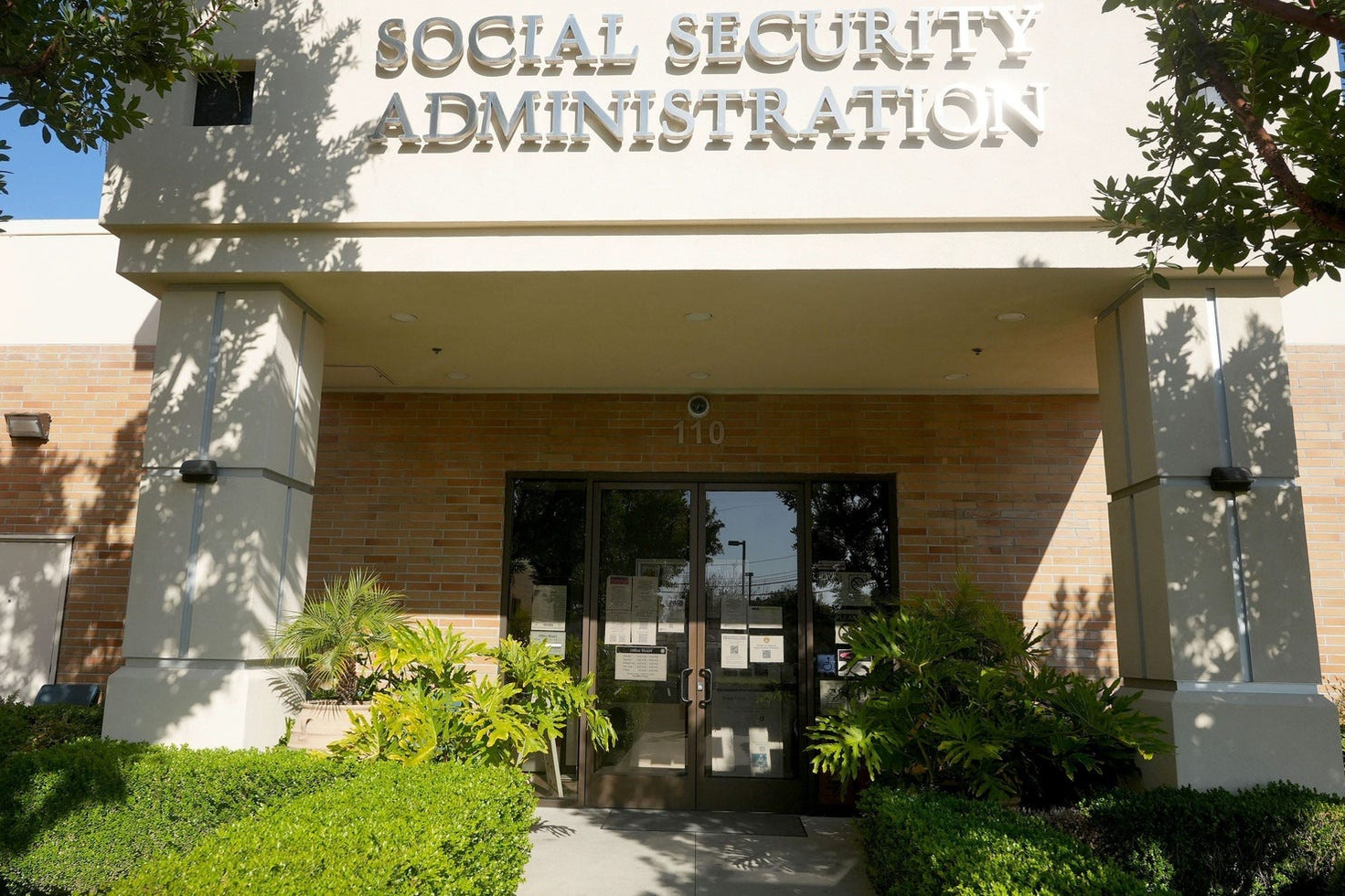
According to the non-partisan, nonprofit Committee for a Responsible Federal Budget think tank, if Congress does nothing to increase the money used to pay beneficiaries, newly retired, average dual-income couples planning to retire in six years should expect to receive $16,900 in annual Social Security benefits.
The trust fund that supplements incoming payroll taxes to pay monthly Social Security benefits is expected to be exhausted by the end of 2032, according to the program’s trustees. When this occurs, the law requires benefits to be reduced by an estimated 22% to ensure that the program’s costs do not exceed its revenues. That’s when today’s 61-year-olds will reach their normal retirement age and when today’s youngest retirees turn 68.
“Social Security’s bankruptcy is no longer a threat to future lawmakers,” the CRFB report said. “Senators elected this year will remain in office when Social Security’s retirement funds are exhausted.”
Is a 22% Social Security cut the worst?
Analysts say the longer Congress sits idle, the worse the situation will be for Social Security recipients.
“These cuts are projected to increase over time due to the growing gap between Social Security’s costs and dedicated revenues,” the CRFB said. “By the end of the century, annual profit reductions are expected to reach 35%.”
There will also be cuts in Social Security due to cuts in Medicare and increases in premiums.
Worse, reduced Social Security benefits would come at the same time Medicare would have to implement its cuts.
The fund that helps fund Medicare Part A, which pays for services such as inpatient hospital stays, skilled nursing and other acute care services, and hospice care for Medicare beneficiaries, is expected to expire around mid-2033. At that time, the fund will be able to reimburse providers only 89 cents for every dollar of Part A services provided. That means making up the shortfall would require an 11% cut in spending or a substantial tax increase, said Sienna Correia and Erica Socker in a blog last month for Georgetown University’s Medicare Policy Initiative.
However, cuts to Medicare Part A are only part of Medicare’s issues, he said. “Perhaps an even more important part of the story relates to spending in the rest of the Medicare program,” the researchers wrote. Medicare also covers Part B for outpatient care, doctor visits, preventive services and medical supplies, and Part D for drug coverage.
Part B and Part D are not in danger of bankruptcy because they are financed through a combination of Medicare beneficiary premiums and federal general revenues, primarily corporate and individual income taxes. As the cost of providing services covered by Parts B and D increases, so do the premiums paid by beneficiaries and the tax revenues needed to fund the Medicare program.
The program’s trustees said that in 2026, the standard monthly Part B premium will increase by about 10% to $202.90, exceeding $200 per month for the first time, and is projected to increase an average of 6.6% over the next 10 years. Part D premiums will increase even faster.
“As the cost of Part B and D benefits increases over time, a larger portion of beneficiaries’ Social Security benefits will go toward paying these higher out-of-pocket costs,” Correa and Socker said. “The combined average premiums and cost-sharing paid by beneficiaries for Parts B and D is about one-quarter of the average Social Security benefit in 2026. By 2050, premiums and cost-sharing will rise to more than one-third of the average benefit.”
What can Congress do for Social Security?
A bipartisan group of senators introduced legislation this week to fast-track any Social Security-savings bill. A bipartisan, seven-member Social Security advisory board will draft a bill to keep the program’s trust fund solvent for at least the next half-century and introduce it to congressional leaders in the House and Senate before being considered by committees that can hold hearings and amend the legislation. To become law, the bill would still need 60 votes in the Senate and a majority vote in the House.
Although analysts applauded the bill, the board still needs to develop a plan, even if there is no shortage of ideas. Over the years, analysts have presented several ideas but none have gained traction.
Ideas range from boosting the payroll tax to raising the full retirement age, which helps fund Social Security. The CRFB proposed a $100,000 limit on total annual Social Security benefits for a couple at full retirement age and a $50,000 limit for a single retiree starting this year, and former Social Security Administration Commissioner Martin O’Malley said lawmakers should raise the limit on earnings subject to Social Security payroll taxes rather than cutting benefits.
Even some USA TODAY readers have expressed their views:
- Air Force veteran David Worley, 78, echoes O’Malley’s sentiment. “The least painful approach that seems to me is to eliminate the income limits altogether, allowing for huge salaries throughout the year,” he said. “I took a look at the 2024 payroll data. There were 134.8 million taxpayers, 16% of whom made more than $200,000. That’s 21.6 million taxpayers. These are the people who probably won’t miss this increase in their taxes because they’ve been paying taxes most of the year until they hit the cap.” Worley said he conservatively calculated the move could add $41.5 billion to the fund.
- Joseph Jason Jr., 70, a retired mid-level Fortune 500 manager, suggests allowing Americans to choose a one-time tax-free Roth conversion that would waive their rights to any Social Security benefits for the rest of their lives. “Those of us who are fortunate enough to participate will have to defer payments of at least $1 million from the Social Security fund over a lifetime,” he said. He acknowledged that the government would lose tax revenue, but said he thinks the benefit of keeping Social Security effective for those who need it outweighs the tax loss.
No matter how many ideas come forward, it is up to Congress to choose one and implement it. But “I believe our elected officials will stay away from any changes that would potentially impact the votes,” Jason said.
Medora Lee is the money, markets and personal finance reporter at USA TODAY. You can reach him at (email protected) and subscribe to our free Daily Money newsletter for personal finance tips and business news every Monday to Friday.