

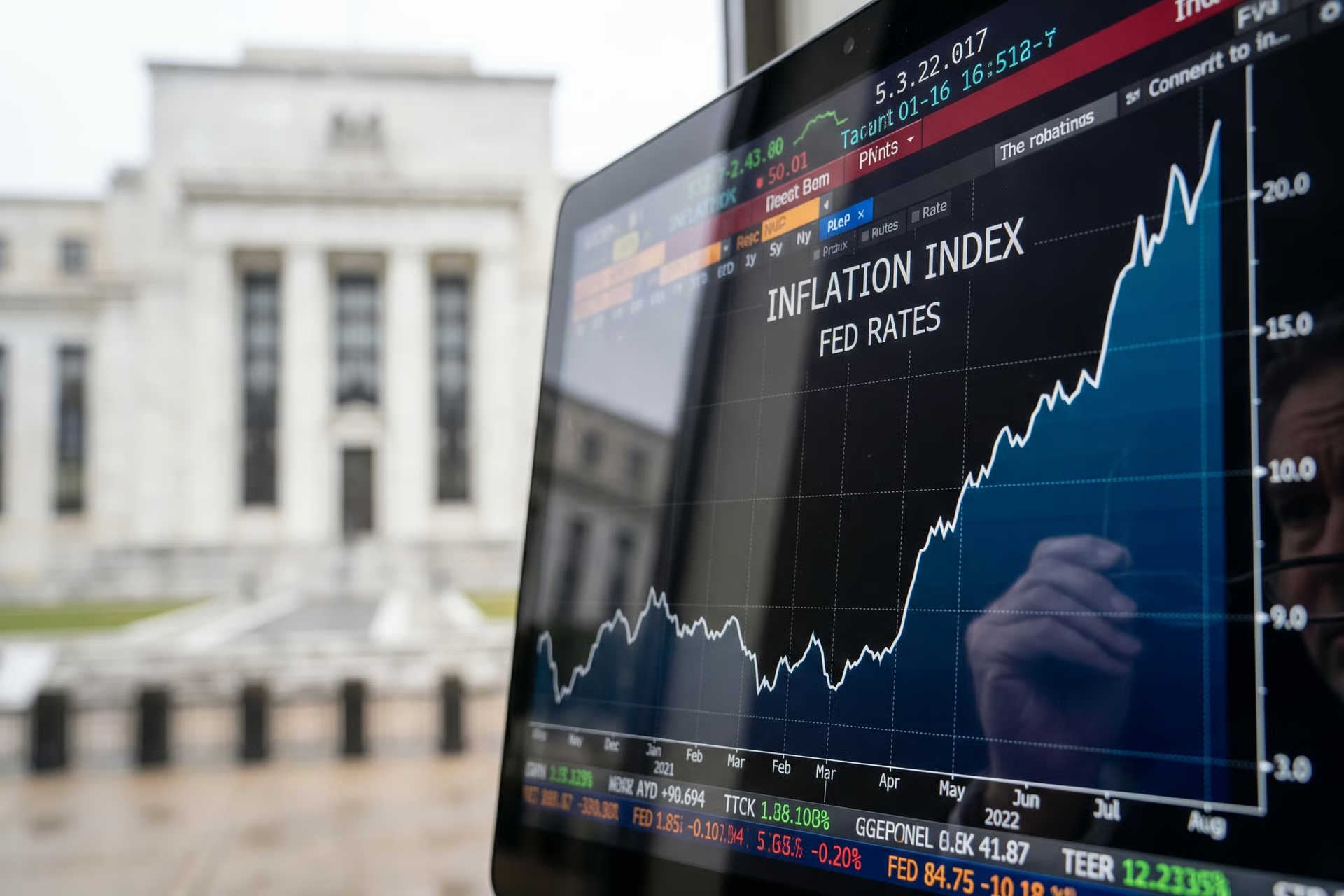
The first inflation report released since Kevin Wersh was sworn in as Federal Reserve chairman confirmed what most Americans already knew: Costs are still rising, and the central bank’s biggest challenge may be rising prices.
The Commerce Department said on May 28 that the Fed’s favorite inflation indicator, the personal consumption expenditures price index, rose 3.8% year-over-year in April. This reading is roughly in line with forecasters’ expectations and represents the highest annual increase since May 2023.
That’s up from 3.5% in March and 2.9% in February before the Iran war began, which resulted in supply chain disruptions that raised the cost of some goods and pushed up prices at the gas pump.
The department estimates that “core” PCE, which excludes volatile food and energy prices, rose 3.3% year-over-year in April — still well above the Fed’s 2% target.
Why does this inflation marker matter to the Fed?
The Fed typically raises its benchmark interest rate to help curb inflation by making borrowing more expensive and lowers it to stimulate economic growth and hiring. Concerns about stability in the job market prompted policymakers to cut rates three times last year, but they remain on the sidelines so far into 2026.
As the nominee, Warsh appeared to support lowering borrowing costs, but the former Fed governor rejoins the central bank at a time when the U.S. job market is experiencing growth. The Labor Department estimates that employers added 115,000 jobs in April and an increase of 185,000 jobs in March. While most of those gains are concentrated in a few select sectors like health care, those two reports have inspired some cautious optimism about whether hiring will pick up again in 2026.
Also, the Commerce Department on May 28 revised down its preliminary estimate for economic growth in the first quarter of 2026. It estimates U.S. gross domestic product grew 1.6% from the previous quarter – which is 0.4% below last month’s advance estimate.
what analysts are saying
“We are a long way from stagflation, but rising inflation coupled with slowing growth is the opposite of what we want on both dimensions,” Chris Zaccarelli, chief investment officer at Northlight Asset Management, said in a note to USA TODAY.
Forecasters expect policymakers to hold the benchmark rate steady at a range of 3.5% to 3.75% at their next meeting in mid-June, but they have also begun to consider the possibility of a rate hike later this year or early 2027.
“The rising inflation report is not a surprise,” Scott Helfstein, head of investment strategy at Global X ETFs, said in another note to USA TODAY. “The market has already shifted expectations on interest rates this year 180 degrees from cuts to hikes. So, this inflation report should be factored into asset prices. That’s good news. Investors can focus on fundamentals and the real economy instead of trying to make Fed moves.”