

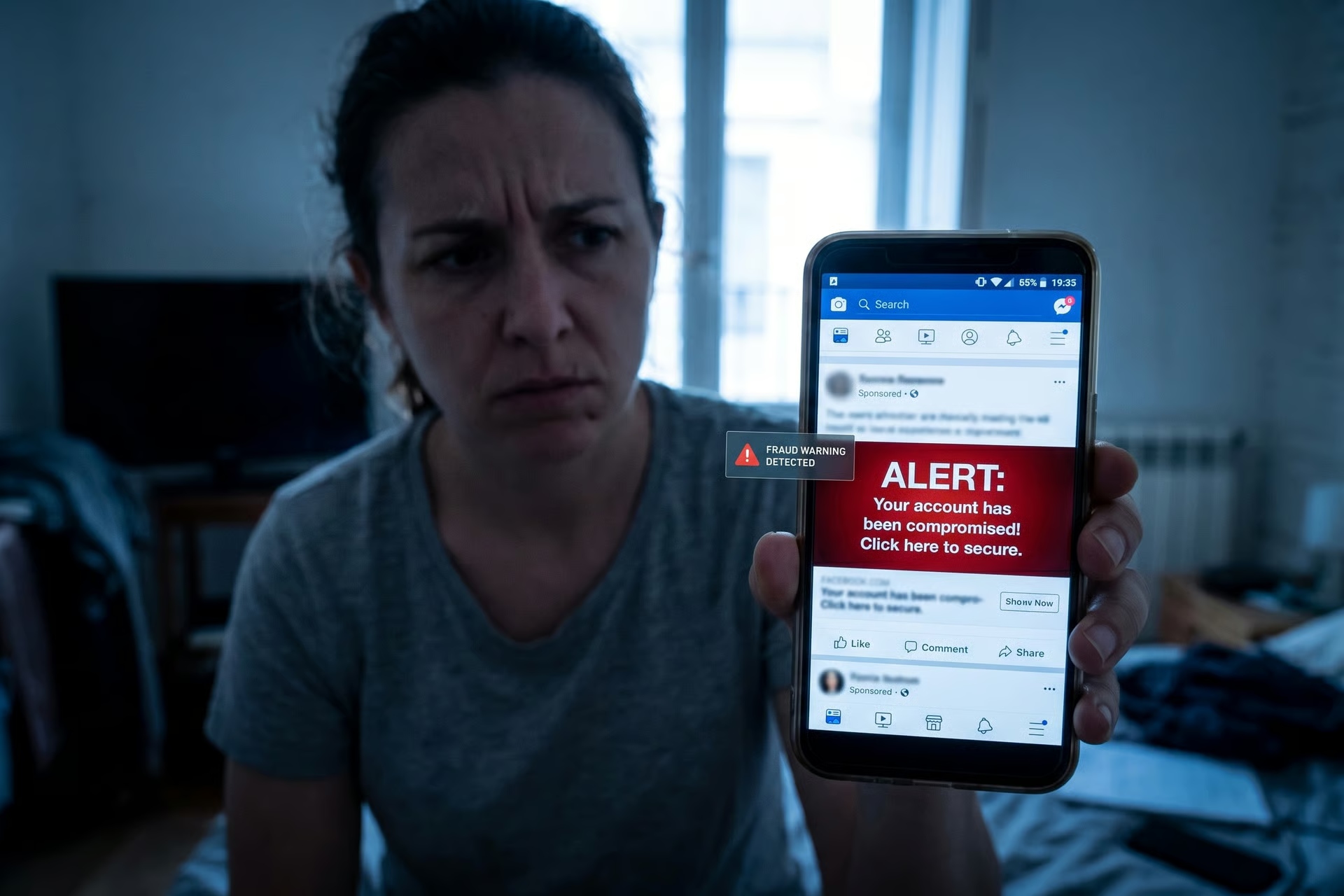
That great deal you just saw on social media? Well, proceed with caution before taking out that credit card. Attention-grabbing advertising may seem legitimate, but many too-good-to-be-true deals are nothing but scams.
According to new data, consumers have reported losing $794 million in 2025 due to scams that started on Facebook – which is more than the loss due to scams that started on any other social media platform last year.
According to Federal Trade Commission data, in 2025, people reported losing far more money to scams on Facebook alone than they lost to text or email scams.
WhatsApp came in second with a loss of $425 million, and scams that started on Instagram reported losses of $234 million, the FTC reported in a data spotlight. Meta Platform owns Facebook, WhatsApp and Instagram.
Scammers are thriving on social media
Overall, consumers reported $2.1 billion in losses due to scams, according to the FTC, where the initial point of contact was on all types of social media. Social media was the top contact medium in terms of reported damages.
Two billion dollars is a lot of money, no matter how you slice it. But it’s even more shocking when you consider that the deficit increased eightfold in 2020. In 2020, consumers who said they engaged with scammers on social media reported losing $261 million.
According to the latest data from the FTC, crooks and fraudsters stole a record $15.9 billion in various scams in 2025, up from $12.5 billion in 2024. The FTC noted that the reports were not collected during the 43-day federal government shutdown in the fall of 2025, meaning actual losses are likely much higher.
Social media is ideal for fraudsters because it is easy to pretend to be someone you are not. Some people hack your account to look like you and steal from your friends and family.
Some victims easily lose $2,000 to $3,000 a pop when sending a down payment for an item that doesn’t exist – like a truck sold by your friend’s sick uncle that doesn’t actually exist.
And then there are also the fake ads for pretty dresses, pretty gifts, and other things designed to steal cash and ID information.
Watchdog wants Meta to become a ‘safe space’
The Consumer Federation of America filed a class action complaint against Meta Platforms in the District of Columbia in late April, accusing Meta of failing to protect consumers from paid ads that turned out to be scams.
The goal is to enforce better practices from Meta, said Ben Winters, director of AI and privacy at the Consumer Federation of America.
Winters said the platform needs to create a “safe space” where consumers face fewer threats from scam ads. Meta also must be held accountable for illegal behavior that has not yet been corrected through legislation or promises, he said.
“We also hope to learn more about their practices and bring transparency to a remarkably non-transparent and unsympathetic company,” Winters said.
The consumer watchdog group alleged that Meta had promised users that it was meaningfully fighting scams and removing scam content from its platform, but instead it has adopted policies and practices that it knows allow scam ads to proliferate. The group alleges that Facebook profits from those ads at the expense of its users.
“Meta claims it is doing everything it can to crack down on scam ads on its platforms. But in reality, Meta has knowingly taken steps and adopted policies that hurt its bottom line at the expense of its users’ safety and well-being. In fact, instead of banning advertisers that the company itself has determined pose a greater risk to its users (as other tech companies like Google have done), Meta overcharges these advertisers,” according to the class action complaint.
Meta did not respond when asked about the lawsuit or damages.
How Meta is using AI to fight scams
In March, Meta issued a press release indicating that the tech giant was launching new tools on Facebook, Messenger, and WhatsApp to help protect against scams.
In 2025, Meta said it removed more than 159 million scam ads for violating its policies and removed 10.9 million accounts on Facebook and Instagram linked to criminal scam centers.
Among other steps, Meta said it will use advanced AI systems that can analyze multiple signals – such as text, images and surrounding context – to more quickly identify a wide range of sophisticated scam patterns.
Don’t Trust – Just Verify If It’s Real or Scam
Scammers use social media to gain your trust before stealing your money. It’s not uncommon for ads impersonating medical doctors and celebrities to run to sell potentially dangerous health products, according to a study by Reset Tech, an independent nonprofit that researches how digital media is used to intimidate consumers.
In other cases, scammers develop a profile of you based on what you post online. Are you single and looking for love? They will send a message from an attractive prospect who shares your interests. Later on, after gaining your trust, they will create a crisis where they need cash – or offer investment advice to lure you to a fake investment platform.
According to the FTC, shopping scams were the most reported type of social media scam in 2025. More than 40% of people who lost money to scams on social media said they ordered something they saw in an advertisement that either never arrived or proved to be of poor quality. Investment scams caused the largest losses, with consumers reporting losses of $1.1 billion – more than half the money lost in all social media-related scams.
you have to protect yourself
How do you avoid losing money to social media scams? The FTC and others recommend:
- Limit who can see your posts and contacts on social media. Visit your privacy settings to set some restrictions so scammers have less work to do.
- Never tell someone you’ve only met on social media to suggest a way to invest for your retirement. Instead, learn more about spotting investment scams.
- Before purchasing, search online for similar products or deals and use the words “scam” or “complaint.”
- If a friend appears to be selling watches or trucks out of the blue, contact him by phone or through a mutual friend before sending any money. Remember, scammers can change email addresses after taking over an account.
- Enable two-factor authentication on your social media accounts for an extra layer of security.
Contact personal finance columnist Susan Tompor at: (email protected). X Follow him on @tompor.