

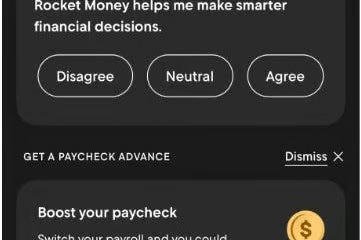
Personal finance apps have become increasingly popular, but navigating the growing number of options available can seem overwhelming. Since Mint’s closure, a wave of competitors has emerged, each offering a different approach to budgeting, saving, and managing money.
One app you may have seen advertised on TV or social media is Rocket Money. Part of the Rocket Company family that includes Rocket Mortgage, Rocket Money has carved a niche as the automated auditor of your financial life. Unlike traditional budgeting apps, which focus primarily on tracking spending, Rocket Money is designed to help users identify recurring expenses, negotiate bills, and find money-saving opportunities.
After testing Rocket Money for several months, we found that its subscription tracking and bill negotiation tools provided the most value, while its budgeting features were better suited for users wanting a high-level view of their finances rather than detailed budget management.
In this review, we’ll take a closer look at Rocket Money’s features, pricing, strengths, and shortcomings to help you decide whether its automated approach justifies the cost.
What is rocket money?
Rocket Money is a comprehensive personal finance app that aims to provide a 360-degree view of your financial health. Originally launched as Truebill, the app was rebranded after being acquired by Rocket Companies.
At its core, the app focuses on three pillars:
- Spend tracking: It aggregates your bank accounts and credit cards to show an integrated feed of transactions, so you can use it as a budgeting app.
- Managing Subscriptions: It scans your transaction history to identify recurring charges – including “vampire” subscriptions you forgot about.
- Identifying savings: This looks for opportunities to reduce your bills or automate your savings.
By connecting to your financial institutions using multi-factor login through secure services like plaid, it provides real-time tracking that theoretically removes manual labor from budgeting.
Key Features of Rocket Money
Subscription Tracking and Cancellation
The feature that Rocket Money promotes most in its TV and social media ads is the app’s ability to detect recurring charges. It lists every subscription it can identify, from Netflix to that obscure gym membership – even for free users.
In our testing, Rocket Money uncovered several forgotten subscriptions, one of which was still shipping products to an old apartment. Although the app can’t cancel every service on your behalf, simply identifying recurring charges that might otherwise go unnoticed can help users reduce unnecessary spending.
Premium users can access the Concierge service, where the Rocket Money team handles the cancellation process for you. This can be especially useful in combating “dark patterns,” which the Consumer Financial Protection Bureau (CFPB) warns can trick people into signing up for unwanted subscriptions without thinking.
bill negotiation
Another great thing is that Rocket Money can try to lower your monthly bill by negotiating with cell phone, internet and cable providers on your behalf. They do not charge any upfront fees for this service; Instead, they take a percentage of the annual savings secured for you.
The bill negotiation feature was one of the most valuable tools we tested. After submitting the internet bill for review, Rocket Money successfully negotiated a lower monthly rate, reducing the cost from $90 to $50 per month. While results will vary depending on your provider and location, this type of savings can easily offset the cost of a premium subscription.
Budget and Expense Tracking
Rocket Money’s detailed expense tracking allows you to set spending limits for specific categories and it can send alerts when you get close to those limits. With those capabilities, you can effectively use it as an automated budgeting app, even if the primary focus is finding areas you can cut back on.
In our testing, Expense Summary made it easy to identify patterns that weren’t obvious when reviewing bank statements alone. For example, the app highlighted how much was being spent at certain retailers each month and made it easy to compare spending habits over time. Instead of manually categorizing transactions, Rocket Money provides a high-level view that can help users identify areas where they may be overspending.
smart savings
Whether you’re planning a summer trip or trying to maximize your retirement savings, Rocket Money can help automate your savings strategy. When you set goals using the Financial Goals feature, Rocket Money’s Smart Savings Autopilot analyzes your checking account balance and spending to automatically transfer small amounts to a savings account when it determines you can afford it. It even knows to skip automatic deposits when your balance gets low.
You can turn this off or use the Custom Savings feature if you prefer to manage your savings goals more manually.
Alerts and financial insights
Rocket Money offers additional financial insights, such as credit score monitoring and net worth tracking, that can help you strengthen your financial health. The credit score and reports feature provides insight to help you improve your credit so you can qualify for better loans and credit card terms.
Net Worth Tracker combines assets and liabilities into one dashboard, making it easy to see how loan repayments, savings contributions and investment growth affect your finances. During our testing, this feature made progress on student loan repayment more tangible, showing how each payment affected overall net worth rather than simply reducing the account balance.
Rocket Money also sends alerts for upcoming bills, unusual transactions, and other account activity. In our experience, Bill Reminders provided additional visibility into recurring expenses and helped prevent missed payments and overdrafts by making it easier to predict upcoming charges.
rocket money pricing
Rocket Money’s pricing is unusual in that it uses a “pay what you think is fair” model for its premium tiers. The price levels are:
- Free: This includes basic account linking, expense tracking, and a list of subscriptions. However, you will have to cancel the subscriptions yourself.
- Premium: Costs between $7 and $14 per month, depending on “what you think is fair.” At this stage, Rocket Money will work on your behalf to cancel subscriptions and negotiate discounts from phone, internet and cable providers.
- Additional costs: If the app’s representatives successfully negotiate a lower bill for you, they charge 35% to 60% of the first year’s savings.
Advantages and disadvantages of rocket money
Pros
- Subscription Audit: This is probably the best app on the market for finding hidden recurring costs.
- Automated Insights: Net worth tracker and spending alerts provide a high-level view without manual data entry.
- Negotiating Bills: For those who hate talking to customer service, fighting with third parties for discounts is a huge advantage.
Shortcoming
- Budget depth: It lacks the every-dollar-in-a-job philosophy found in competing zero-based budgeting apps like YNAB.
- Additional Fees: If savings are significant, the reductions from bill negotiation may seem steep.
- Privacy Concerns: Like all aggregators, you are sharing important financial data with a third party.
Who is Rocket Money best for?
Rocket Money is a great fit for hands-off spenders who want more visibility into their finances without maintaining spreadsheets or manually tracking every dollar. If you frequently sign up for free trials and forget to cancel them, haven’t reviewed your monthly bills in years or just want a clearer picture of where your money is going, the app can quickly pay for itself.
We’ve found Rocket Money particularly useful for uncovering spending habits that might otherwise go unnoticed, identifying forgotten subscriptions, and providing an easy way to monitor net worth and upcoming bills. Users who struggle with overdrafts or surprise charges may also benefit from the app’s alerts and recurring bill reminders.
This app is best suited for those who want actionable insights and automation rather than a highly detailed budgeting system. If your goal is to spend less, eliminate unnecessary expenses, and stay on top of recurring bills with minimal effort, then Rocket Money is worth considering.
who should leave it
If you’re a dedicated budgeter who likes zero-based budgeting, detailed spending plans, or extensive customization, Rocket Money may seem too high-end. Apps like YNAB or Monarch Money offer more robust budgeting and planning tools for users who want more control over every aspect of their finances.
The bottom line: Is rocket money worth it?
Like any budgeting app, Rocket Money is worth what you get from it. That said, this particular app can determine its value better than others. If you use the premium version for a few months before you recognize and cancel the $50 worth of monthly subscription, it’s an excellent investment. It can also serve as a watchdog for your accounts against dark patterns and other manipulative subscription practices.
While it lacks the precision of more expensive money management software or the zero-based budgeting methodology of strict budgeting apps, Rocket Money can be a valuable resource for those looking to rein in their spending.
questions to ask
Is Rocket Money Free?
There is a free version, but the app’s defining features – concierge cancellation and real-time syncing – require a premium subscription.
How does Rocket Money make money?
Rocket Money makes money by paying membership fees, success fees from bill negotiations and recommending other financial products (such as credit cards or loans) within the app.
Can Rocket Money cancel membership for you?
Yes, Premium members can use the Concierge Service to handle the cancellation process for most major services.
Is Rocket Money safe?
Like other apps, Rocket Money uses bank-level security and 256-bit encryption. It uses plaid to connect to your accounts, which means it never stores your actual bank login credentials. That said, there’s always at least some risk when you share your data with third parties.
Is it hard to cancel Rocket Money?
No, Rocket Money allows users to cancel their premium subscription through the app or website. However, canceling your Rocket Money subscription does not automatically cancel any subscriptions identified by Rocket Money in your account. If you wish to stop paying for third-party services, you must cancel those subscriptions separately or use Rocket Money’s concierge cancellation service before your subscription is terminated.
Has Rocket Money faced any controversy?
Rocket Money has faced some criticism over its privacy practices and membership model. Consumer advocates have questioned whether some of the company’s marketing claims about data privacy align with disclosures in its privacy policy, while some users have complained about bill-negotiation fees and premium subscription fees. However, Rocket Money has not been the subject of any major security breaches or widely publicized fraud scandals, and it remains a popular personal finance app used by millions of consumers.
