

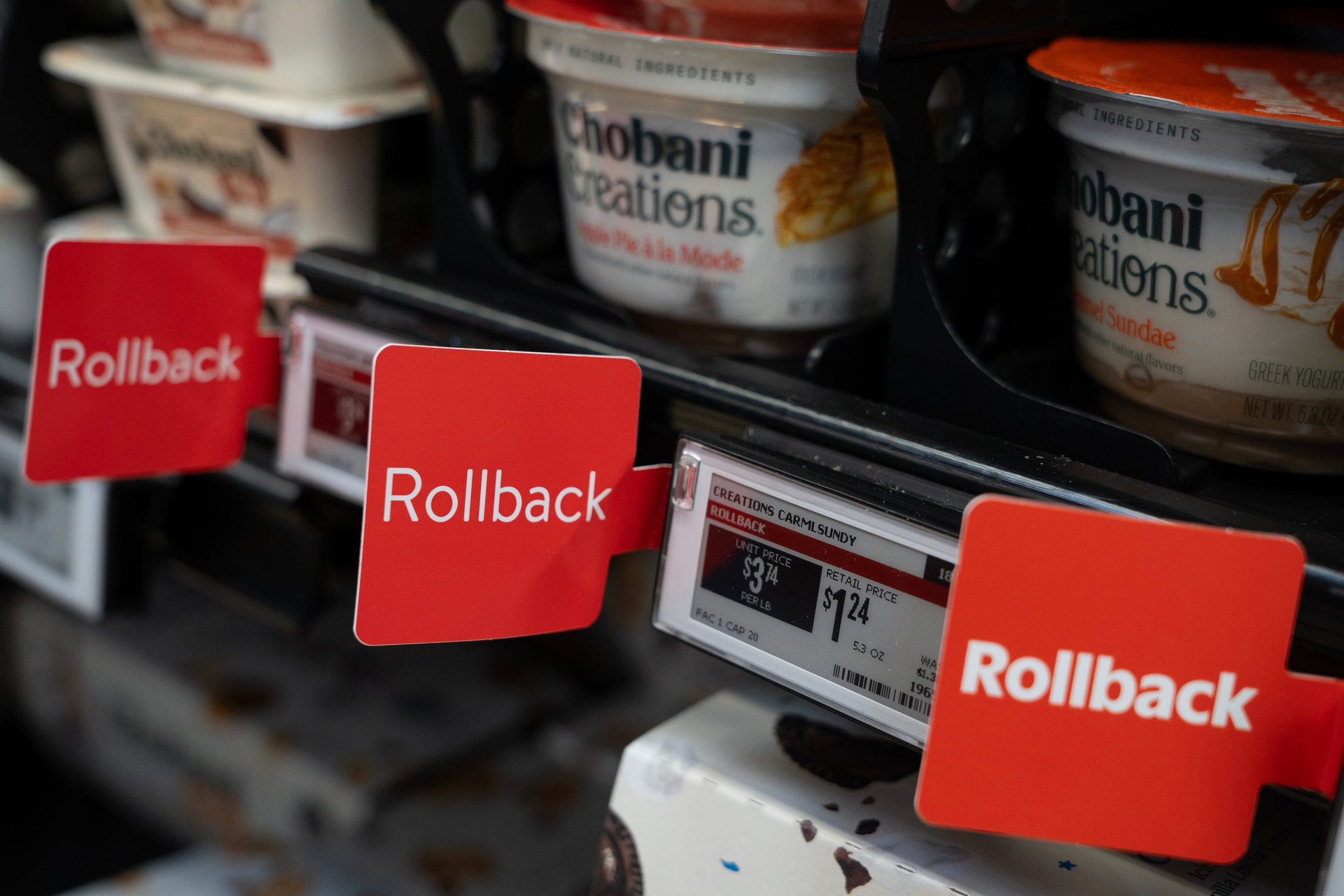
Walmart has lowered prices on thousands of other summertime favorites like beef and barbecue.
But was the rollback, which was first announced in a Truth Social post by President Donald Trump on July 6, made at the request of the president’s administration to commemorate the nation’s 250th anniversary? Were they part of an aggressive summer pricing campaign to remain competitive with other retailers?
Or has the impact of tariffs, which many retailers have cited as pressure to raise prices, begun to ease?
Walmart would not say anything, declining to comment to USA TODAY beyond a press release issued by the retailer on July 6.
What did Trump say about Walmart?
In his social media post, Trump said Walmart would “greatly reduce prices at the request of my administration to celebrate our great country’s 250th birthday.” He said Walmart “will be reducing the price of ground beef by approximately 15% in addition to several other products.”
Are Walmart prices going down?
Walmart confirmed the price cuts in a news release on its website. The retailer said Walmart and Sam’s Club “will help customers and members save more at thousands of lower prices through Walmart’s signature rollbacks and Sam’s Club offers at stores and clubs across the country.”
According to the press release, Walmart reduced the price of a pound of 73% ground beef rolls by 12%, from $6.74 to $5.94. At Sam’s Club, member Mark 88/12 ground beef fell 3% to $5.97 a pound from $6.17.
Other products that received price drops included ice cream, disposable paper plates and soft drinks. At Sam’s Club, the retailer said prices on 250 items dropped.
“This summer, we’re investing even more in price, with thousands of rollbacks for customers purchasing most products including beef, fresh produce and beverages, grills, pools, toys and summer fashion apparel,” said Julie Barber, executive vice president and chief merchandiser for Walmart US, in the press release. “We’re helping everyone save more for every occasion.”
Walmart declined to comment on the price cuts or Trump’s social media posts and directed the press release to USA TODAY.
Professor says price cuts are likely part of value addition
“Walmart’s price cuts look less like a turning point on food inflation and more like an aggressive summer promotion,” food economist and Michigan State University professor David Ortega told USA TODAY. “Large retailers focus on ‘backyard barbecue’ staples like meat, corn, soda, chips because they are highly visible and shape how shoppers feel about prices in general.”
Ortega explained, “But double-digit reductions on a handful of items don’t mean the cost of an entire grocery trip is back to where it was a few years ago.”
He said labor, transportation, energy, packaging and rent have increased over the past year and since the COVID-19 pandemic.
“Walmart may absorb some margin or use its scale to reduce costs on specific products, but that’s separate from a broad reset of price levels,” Ortega said. Shoppers may be paying less for burger fixings, Ortega said, “but their shopping carts are still shaped by the cumulative growth of the past few years.”
In particular, Ortega said, beef prices are at record highs and getting a lot of attention, but “this is fundamentally a story of supply tied to strong demand: U.S. cattle herds have fallen to their lowest levels in decades, as years of drought have driven up feed costs and forced farms to collapse, while consumer appetite for beef remains strong.”
Ortega said the tariffs have also put pressure on retailers’ margins through fees on imported lean beef and trimmings, which processors add to ground beef, driving up prices. But this is a secondary factor to herd dynamics, he said.
Weren’t retailers saying tariffs were the reason prices were rising?
The tariffs have been a cornerstone of Trump’s economic policy, and despite the loss in court, the administration remains committed to enforcing them.
When a tariff, which is a tax on imports, is imposed, companies have three options: absorb it into their margins, adjust their supply chains or pass it on to buyers through higher prices, Ortega said.
In February, the Supreme Court struck down the tariffs Trump imposed last year. Trump responded with a 10% increase in temporary tariffs, which took effect in February and expire after 150 days if Congress does not extend them — meaning some action needs to be taken by the end of July.
If the temporary tariffs are phased out, the Trump administration could use another part of the U.S. trade law called “Section 301,” which allows the government to investigate whether other countries are trading unfairly through subsidies, barriers to U.S. exports or labor abuses, and allows them to respond with measures like tariffs, Ortega explained.
“Consumers should care because those tariffs don’t disappear… they appear as higher costs for importers, which could mean higher retail prices, less choice or fewer discounts,” he said.
Drew DeLong, head of corporate statecraft at Kearney Foresight, an arm of global management consulting firm Kearney, said he expects “the tariffs are here to stay for quite a while.” He said clear details on where prices will be set for buyers will be available in late July or early August.
DeLong said he believed tariffs would play a role for “whoever walks into the Oval Office in January 2029” and that the president would need to “take inventory of the full economic toolkit and market conditions … In the absence of serious changes in conditions, the theme that economic security is national security will keep trade policy on the path it’s on,” he said.
In other words, tariff inflation is not suddenly going down, Ortega said.
Greg Portell, head partner of global markets at Kearney, agrees.
“It would be a mistake to characterize rising prices caused by tariffs as reversing,” Portell told USA TODAY.
The initial tariffs caught many retailers by surprise, Portell said, but they found ways to mitigate the cost increase. Some of those changes include making product packaging smaller and changing the product.
However, “For a company like Walmart that has built its brand on cost efficiency, lowering prices is an ongoing objective regardless of specific tariff policies. Consumers are now seeing the benefits of that commitment,” Portell said.
Additionally, many of the products for which Walmart has reduced prices benefit from domestic supply chains and are less directly impacted by the tariffs, he said.
Did Trump politicize Walmart price cuts?
Ortega said it was notable that the Walmart press release “did not give the administration credit. Meanwhile, the President is linking the private sector decision to his broader message on inflation. The promotions are real, but they do not indicate that the structural drivers of food prices are being permanently dialed back.”
Businesses must always be mindful of the political contexts in which they operate, Portell said.
Portell said that “it would be naive to ignore the relationship between consumer businesses and politicians.” But retailers also generally maintain a core commitment to their brands, and low prices are a core brand promise for Walmart, he said.
Portell said, “It is not unusual for them to highlight price cuts, regardless of who is in political office. On the contrary, politicians have learned again and again that the economy is the primary voter concern. In this sense, it is not unusual to see incumbents celebrating price cuts.”
Will other retailers lower their prices in response?
Whether they shop at Walmart or not, shoppers are likely to benefit from Walmart’s price cuts as Ortega said he expects some reaction from other retailers on “easy-to-compare items.”
He said, “If Walmart advertises cheap ground beef or soda, competitors may not want to emphasize those same products.” “But these moves are selective.”
Ultimately, however, shoppers feel inflation not just through sticker prices, but through how often and how deeply items go on sale, Ortega said.
“Highly publicized reductions on some core food items may improve sentiment, while less core categories such as spices, snacks and prepared foods continue to grow,” he said. “And the ongoing tug-of-war between courts and policymakers creates real uncertainty about future business costs, making companies less likely to cut prices aggressively today.”
Betty Lynn-Fisher is a consumer reporter for USA TODAY. Reach him at (email protected) or follow him on Bluesky on X, Facebook or Instagram at @blinfisher and @blinfisher.bsky.social. Sign up for our free The Daily Money newsletter, which analyzes complex consumer and financial news. Subscribe here.
Reporting by Betty Lynn-Fisher, USA TODAY/USA TODAY
USA TODAY Network via Reuters Connect