

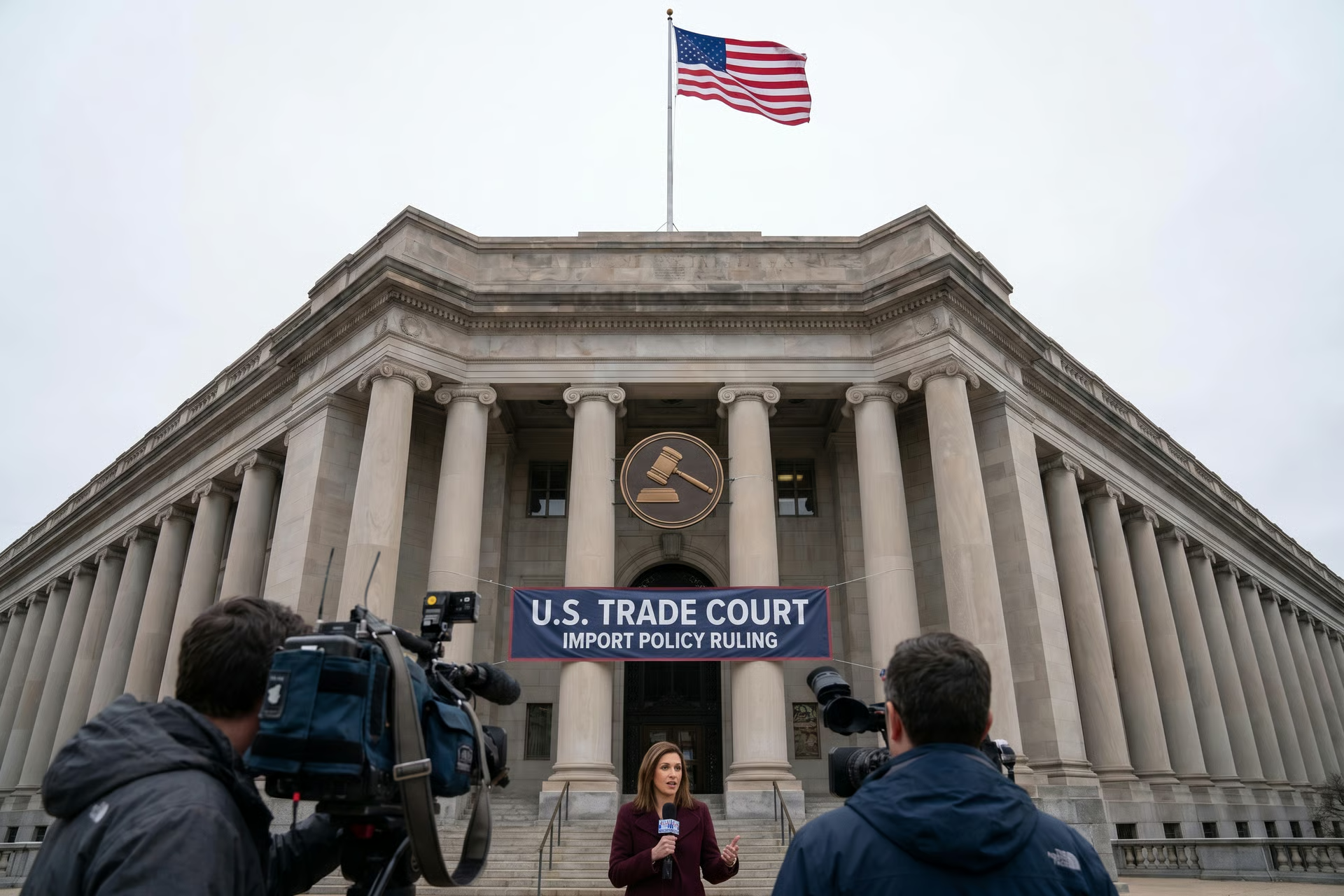
A federal court dealt another blow to President Donald Trump’s trade agenda, ruling against a 10% global tariff the president imposed this year to replace tariffs struck down by the Supreme Court.
A panel of International Trade Court judges ruled 2-1 that Trump could not use the 1974 Trade Act to impose the 10% levy. The court blocked the tariffs on only two businesses and Washington state, which led to the lawsuit, but the decision could lead to more legal challenges.
The Trade Act allows temporary tariffs for up to 150 days to address significant “balance of payments deficits”, but the court ruled that the law was not appropriate for the type of trade deficit cited in Trump’s February order.
supreme court background
The decision comes after the Supreme Court overturned a pillar of Trump’s second term agenda. It declared that the use of emergency powers to impose tariffs was unconstitutional. Trump had cited the International Emergency Economic Powers Act of 1977 to impose sweeping tariffs to reset trade relations with countries around the world.
Tariffs have been central to Trump’s economic policy, with the president using the levies as a weapon to pursue new trade deals. He criticized the Supreme Court after its February 20 ruling against his emergency tariffs, calling the decision “extremely disappointing.”
“I am ashamed — absolutely ashamed — of some members of the Court for not having the courage to do what is right for our country,” Trump said.
What’s included in the 10% tariff – and what’s not
The two small businesses that brought the latest challenge, a toy company and a spice importer, argued that the 10% global levy was an attempt to avoid the Supreme Court ruling. The White House did not immediately respond to a request for comment on the court’s decision.
Trump announced the 10% tariffs on the same day the Supreme Court ruled against his other tariff program. This applies to most imports, although Trump has exempted some products such as beef, tomatoes, oranges, pharmaceuticals, passenger vehicles and some critical minerals. Products governed by trade agreements with Canada and Mexico were also excluded.
The court rejected the request of the group of 24 states to stop the 10% tariff for all importers. The court ruled that most states except Washington were not importers who did or could pay the tariffs.
Contributing: Bart Johnson, Reuters