

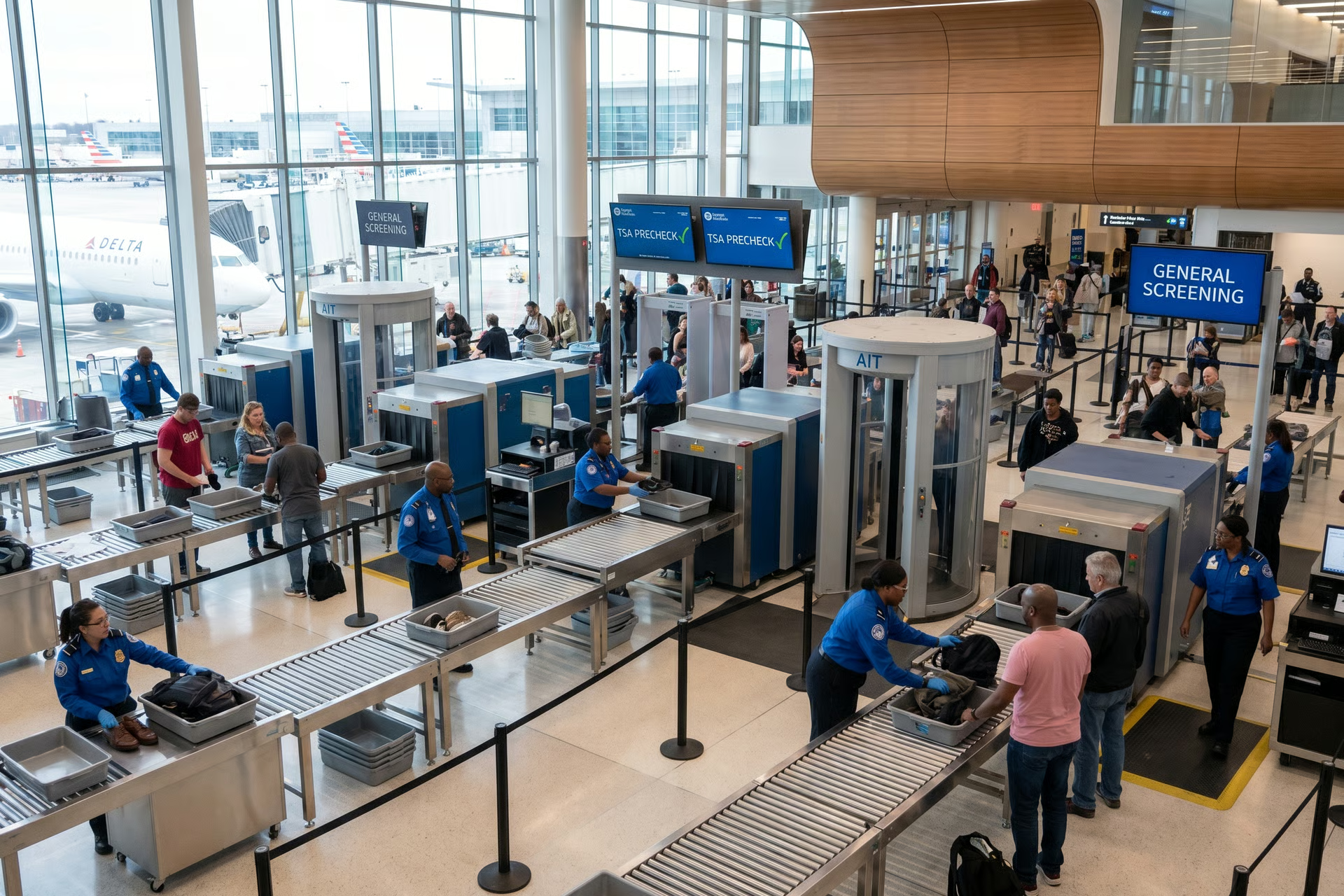
The partial government shutdown earlier this year threw Hartsfield-Jackson Atlanta International Airport into chaos.
Transportation Security Administration officials went without pay for several weeks, and soon many began calling in or simply did not show up for their shifts, a move largely supported by passengers.
However, the result was hours-long waits in security lines, missed flights, and ICE officers storming the airport to keep operations running.
Now, airports across the country are considering the possibility of transitioning their security forces from the government-funded (and politically dependent) TSA to privatized security services.
The city of Atlanta wants to see how it can make things work at the world’s busiest airport.
City Council approves feasibility study
The Atlanta City Council voted 11-1 to request a feasibility study of privatized security at Hartsfield-Jackson from the Aviation Department Commission.
The study is to be completed in 90 days, and will give the city an idea of how private security will actually work and what it might cost. The Department will evaluate the theoretical application of the existing public-private security partnership program, the Screening Partnership Programme.
Hartsfield-Jackson, while part of both Clayton and Fulton counties, is governed by the city. Officials estimate the annual cost of TSA screening operations to be between $140 million and $240 million.
If a private partnership could reduce these costs, while also providing greater stability in the current political climate, the city may choose to replace the airport.
What is the Screening Partnership Program?
There are at least 20 airports in the United States that already use private security, although they are primarily smaller and regional airports.
According to TSA, “The Screening Partnership Program contracts out security screening services at commercial airports to qualified private companies.” “These companies run screening operations under federal oversight and must follow all TSA security screening procedures.”
San Francisco International Airport and Kansas City International Airport are the largest airports using the program so far, but airports in the Northeast, West, and Southern states have not yet received large-scale changes.
If Atlanta chose to move to privatized security, it would be the largest and busiest to make the change, as well as a security hotspot due to the high number of international flights.
Hartsfield-Jackson will be tested
The feasibility study will conclude after Atlanta hosts eight matches for the FIFA 2026 World Cup, which will bring thousands of travelers to Hartsfield-Jackson.
The airport has been working for years to prepare for increased passenger traffic at both the domestic and international terminals, but employees are still recovering from weeks of uncertainty and stress from the partial shutdown.
The additional passenger traffic in June and July could help city officials decide what security procedures are right for the airport.
Irene Wright is an Atlanta Connect reporter on USA TODAY’s Deep South Connect team.