

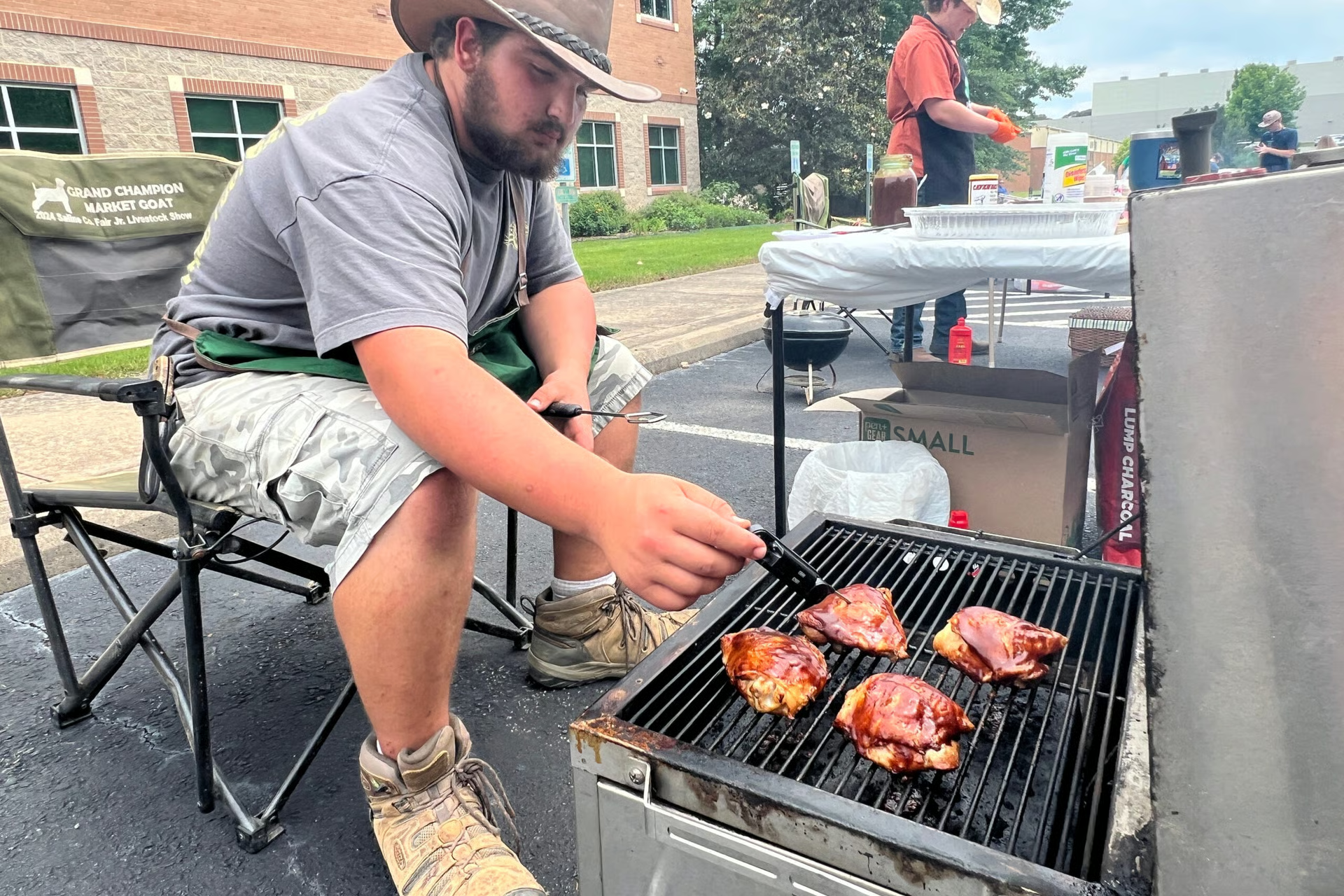
As you prepare for prime outdoor grilling season, make sure you’re not serving unsafe food over Memorial Day weekend.
Memorial Day, on Monday, May 25, honors American military personnel who died serving their country. This holiday also marks the unofficial start of outdoor grilling season, as families and friends gather over delicious grilled foods.
But backyard cooks want to avoid foodborne illnesses ruining the festivities. According to the Centers for Disease Control and Prevention, at least 48 million people fall ill from foodborne illness each year, of which 128,000 are hospitalized and 3,000 die.
Raw or undercooked meat and poultry, as well as unwashed fruits and vegetables, are among the factors that can carry germs that can cause food poisoning, the CDC said.
“When planning a cookout, think beyond the menu and create a food safety game plan,” said Quad Whitson, Extension culinary nutrition and food safety program associate at the University of Arkansas Division of Agriculture, in a food safety primer.
“A little preparation beforehand can prevent a lot of problems later,” Whitson said. Outdoor cookouts may require additional supplies, he said. For example, packing your food in a well-insulated cooler will help keep cold foods at or below 40 degrees Fahrenheit or hot foods at 140 degrees or above, he said.
before lighting the grill
Here are some food safety tips on preparation from the U.S. Department of Agriculture’s Food Safety Inspection Service and the Food and Drug Administration:
- Keep it cool: When shopping, choose your meat, poultry or fish last and keep raw meat separate from other items in your shopping cart. Put raw meat in the refrigerator as soon as you get home from the grocery store. Freeze poultry and ground meat within 2 days that will not be used; Freeze other meat within 4 to 5 days.
- melt: If possible, defrost any frozen meat and poultry in the refrigerator. But you can thaw sealed packages in cold water, the USDA’s Food Safety and Inspection Service said. If you defrost using the microwave, place the food on the grill immediately.
- Marinate: It doesn’t matter which marinade you use, marinate your food in the refrigerator (note: do not thaw or marinate meat, poultry or seafood on the counter). Ideally, dispose of your marinade after using it with raw meat. If you want to use some as a sauce for cooked food, set aside a portion before adding it to raw meat. If you want to brush it while grilling, boil it for a few minutes first to destroy any bacteria.
Proper cooking temperature for grilling meat
When cooking, you want the meat to reach a certain internal temperature to kill bacteria like E. coli, which has been linked to frequent recall of ground beef and leafy greens. The CDC said exposure to E. coli infection can lead to dehydration, bloody diarrhea and stomach cramps three to four days after exposure — and potentially kidney failure in children under 5, adults 65 and older, and people with weakened immune systems.
A food thermometer will help you ensure that food is cooked to at least the minimum internal temperature. Place the thermometer in the thickest part of the meat and read the temperature after 10 to 20 seconds.
- According to the USDA’s FSIS, poultry must be cooked to a minimum temperature of 165 degrees Fahrenheit.
- Hot dogs and burgers made from ground beef, pork, veal or lamb must be cooked to 160 degrees Fahrenheit. All pieces of pork should also reach 160 degrees Fahrenheit.
- Steaks, roasts, chops and other whole pieces of meat should be cooked to at least 145 degrees Fahrenheit and allowed to rest for three minutes after removing from the grill for medium-rare; Increase to 160°F for medium.
- For fish, cook to 145 degrees Fahrenheit or until the flesh is opaque and flakes easily with a fork, according to the CDC and USDA’s safe cooking temperature charts.
Preventing germs from taking over your cookout
The CDC suggests that to prevent bacteria in raw meat from contaminating other foods, use a cutting board or plate for raw meat, poultry, and seafood, and a separate plate for produce, bread, and other foods that will not be cooked.
Don’t use the same plate and utensils for taking raw meat to the grill and collecting cooked meat and poultry – wash them or use separate utensils. You don’t need to wash raw chicken or meat before cooking; According to FoodSafety.gov, run by the Department of Health and Human Services, washing can spread germs to your sink, counters and other food items.
If you take your food to a cookout, pack raw meat in sealed containers or bags, then place them in the bottom of the cooler so the juices don’t drip onto other foods.
Once the meat is on the grill, wash down your counters and take it to the kitchen to wash any plates and utensils used to place the meat on the grill with hot, soapy water.
Additionally, the CDC recommends washing your hands for at least 20 seconds after handling raw meat, poultry, seafood, flour, or eggs and before eating.
handling leftover food safely
As you prepare to serve food, keep cold food on ice before and during serving. Hot food must be kept at or above 140 degrees Fahrenheit, so you may need to keep it insulated until served.
Once the food is finished, remember the “two-hour rule,” said USDA food safety specialist Meredith Carruthers. Food that has been spoiled for so long “can be safely kept at room temperature or outdoor temperatures before bacteria reach dangerous or non-safe levels” that cannot be prevented by reheating.
And if it’s really hot, that window is cut in half. “When the temperature is above 90 degrees Fahrenheit, that time actually drops to just an hour,” Carruthers said.
Refrigerate leftovers immediately in small containers. Small portions of hot food can go directly into the refrigerator or back into the insulated cooler. Cut larger items such as whole roasts or hams into smaller portions before refrigerating; The legs and wings can be left whole.
“If food has been sitting out too long and you’re not sure whether it’s been cold enough, the best advice is ‘when in doubt, throw it out,'” Whitson said. “And when leftovers are later reheated, they should reach 165 degrees (Fahrenheit).”
Reporting by Mike Snyder, USA TODAY/USA TODAY Network via Reuters Connect