

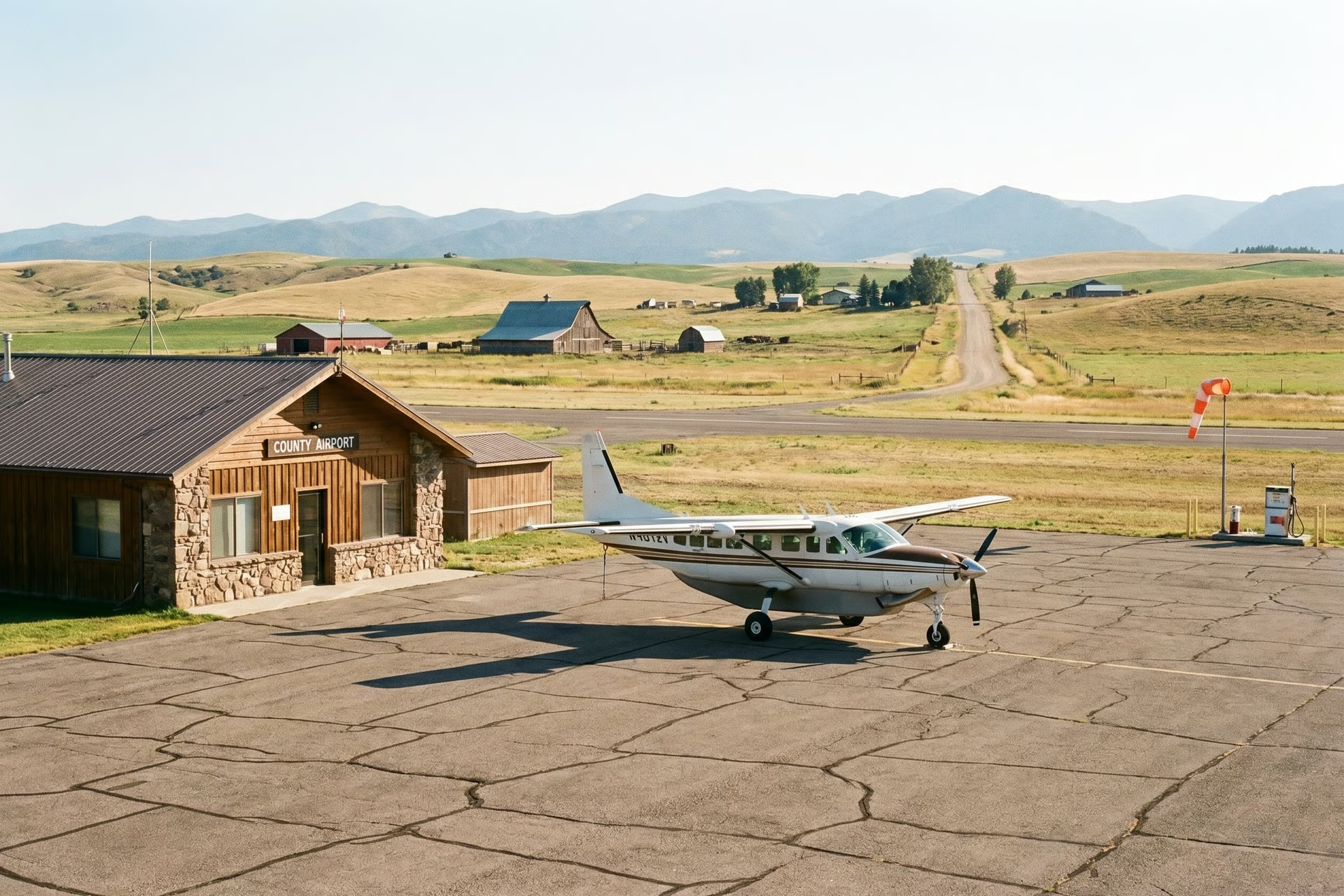
Have you ever wondered about Rhinelander, Wisconsin? Many other than its 8,000 residents and their families do not.
But if you want to fly to Rhinelander, you can, thanks largely to Essential Air Service (EAS).
EAS is a federal subsidy program that helps support airline service to small communities across the country, connecting them to larger hub airports and the broader global aviation network.
Rhinelander is one of 177 communities in the United States (65 of which are in Alaska) that are part of the program.
It is a relic of a time when the airline industry was heavily regulated by the federal government, and remains an economic lifeline for small communities.
What is essential air service?
The EAS program is a government grant that subsidizes airlines to fly to small communities.
Maxine Lubner, professor and chair of the management department at Vaughan College, told USA TODAY, “There was a discussion in the late ’70s that if we had more competition and these things were privatized, then in the free market there would be more airlines competing with each other and that would lead to lower prices for everyone and better service, etc.” “That’s what happened in the beginning, we had multiple airlines everywhere offering very low prices and services, but very quickly the airline industry consolidated.”
Lubner said that as the industry shrank, many airlines moved out of smaller, less profitable airports, leaving those communities disconnected.
“Congressmen realized that very small areas would be missed because everyone was going to where the markets are, so they worked on this essential air service program, making sure that people in remote areas would still have transportation service,” Lubner said.
The Department of Transportation provides subsidies to airlines on a “per-flight-completed basis”, and the funds can range from a few million to a few thousand dollars per route per year.
What are essential air service flights?
it varies. There are minimum requirements for aircraft size and frequencies, but operators have a lot of freedom when it comes to which aircraft they use and what type of service they provide onboard.
How can travelers book Essential Air Services flights?
This also depends on the operator, but most flights can be booked online like any other airline.
Some EAS flights are operated by regional subsidiaries of major airlines or by main carriers such as JetBlue, and those flights can be booked directly through the marketing airline’s websites.
“In today’s world, you can book on a website if you can, and obviously everyone uses the Internet or an app these days,” Daniel Friedenzon, professor of aeronautical sciences and associate dean of the College of Aviation at Embry-Riddle Aeronautical University, previously told USA TODAY. “For some people, it may be unique because people are not familiar with that particular airline.”
How do communities qualify?
EAS-qualifying communities in the continental United States must receive subsidies between September 30, 2010 and September 30, 2011.
To continue qualifying, EAS airports must maintain a minimum of 10 passengers per subsidized flight on average per day each year, unless the qualifying airport is more than 175 miles from the nearest large airport. Subsidies should average less than $650 per passenger. For communities 175 miles or more from the nearest airport, it should be less than $850 per passenger.
Communities in Hawaii and Alaska have different needs.
There are more technical details about the qualifications on the Department for Transport website.
What are the requirements for airlines to operate essential air service flights?
Airlines bidding for EAS contracts typically have to plan to operate at least two daily flights to the subsidized community on 30 or 50-seat aircraft. Operators may also use smaller aircraft, including those with nine seats or less, and operate flights at higher frequencies.
Embry-Riddle’s Friedenzon previously said the DOT sometimes relaxes these requirements on a case-by-case basis.
In 2025, DOT will spend approximately $690 million on EAS grants.
Zach Vischer is a travel reporter and writes the Cruising Altitude column for USA TODAY.