

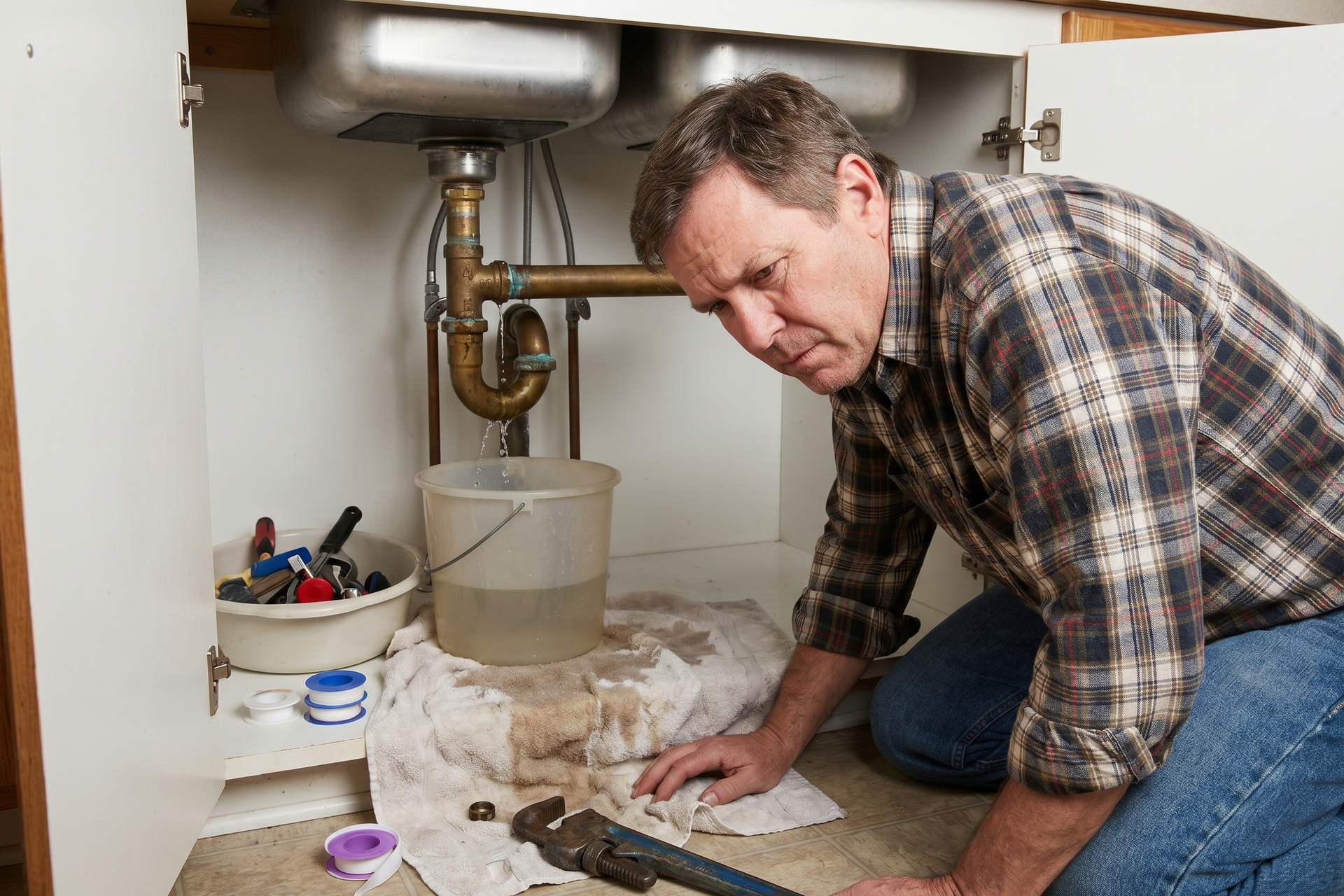
A clogged drain or a dripping faucet may not seem like a big deal, but if left unchecked, these small problems can turn into costly disasters.
SupplyHouse, a nationwide online supplier of plumbing, heating, cooling and electrical supplies, surveyed 1,001 U.S. homeowners to learn more about their plumbing and HVAC repair habits. What did they find? Homeowners are more likely to delay home repairs, especially when cost is a concern.
Still, waiting to make those repairs can cost more than double the cost of making the repairs in the first week.
Here’s why delaying home repairs, especially HVAC and plumbing, can cause even bigger headaches for the homeowner.
Why do homeowners wait to make home repairs?
According to a SupplyHouse study, homeowners wait an average of a month to get minor plumbing issues fixed.
If you’re among the third of Americans who picks up the phone as soon as a home system goes down, you’re smart. Most people choose to avoid or actively ignore the problem until it becomes a huge issue.
In fact, 40% of those waiting will only call for help if they see a problem worsening, and about 20% will only call for a repair if the system stops working altogether.
logic? It’s easy to put off a repair when it doesn’t seem that serious, especially when 71% of homeowners decide the DIY effort is worth it before calling a professional.
The “It’s not that serious” group was often wrong. While 64% of homeowners agreed that HVAC or plumbing problems were not a problem, more than half of those problems got significantly worse and required significant repairs. DIYers weren’t much successful, as half of those attempts were either useless or made the problem worse.
Effect of income and age
Unsurprisingly, annual household income and age also played a role.
DIY efforts were much more common among younger homeowners, with 76% of both the Millennial and Gen Z groups attempting DIY before anything else. Homeowners were more likely to fix the problem themselves if annual household income was between $75,000 and $99,999. When household income increased to $150,000 or more, nearly half of those homeowners immediately called for help.
What happens when home repairs are delayed?
When home repairs are delayed, the bill becomes huge. The longer you wait, the more expensive the problem will become.
SupplyHouse’s survey found that when homeowners took action within a week of noticing an HVAC or plumbing problem, their average repair cost was $380. But when they put off those repairs for six months or more, that bill more than doubled to an average of $868. This is approximately $500 more than what they would have paid had they fixed the problem immediately.
This cost does not account for any DIY efforts, increased water bills from leaky plumbing or other related costs. So, the money lost could be even more.
How do homeowners pay for repairs?
Not everyone has emergency funds available to pay for sudden home repairs, and 44% of all homeowners surveyed used credit cards, loans, payment plans, or borrowed from family or friends to pay for home repairs. When repairs were delayed by a month or more, this percentage dropped to half.
How a home warranty can help you save money on home repairs
Home renovations don’t have to be stressful, nor should they be something that’s put off due to cost concerns. “When HVAC or plumbing systems age and fail, which can result in rapidly increasing costs, a home warranty can help cover breakdowns caused by normal wear and tear over time,” says Santiago Vazquez, director of customer experience at Oncourse Home Solutions.
With a home warranty, you can have a technician come to your home for the cost of the service fee, and potentially not pay much out of pocket. “Instead of getting hit with big surprise repair bills, homeowners know they have coverage and a defined service fee if something goes wrong,” says Vazquez. Most home warranties cost $40 to $60 per month and cover the cost of repairing HVAC and plumbing systems when they break down due to normal wear and tear.
- Homeowners are covered for $2,000 to $3,000 per system, sometimes more (such as with American Home Shield).
- When a covered home system or appliance breaks, you contact your home warranty company and they send someone out for you.
- If the repair is covered, you’ll only have to pay the service call fee (average $75). This is a fee you’ll pay for any technician to come to your home, whether you have a home warranty or not.
“Home warranties can also help reduce stress in situations where one of the biggest hassles is finding a reliable contractor at a fair price,” says Vazquez. “With home warranties, there is already a system in place to connect homeowners with a licensed professional, which can make the repair process more manageable.”
HVAC Home Warranty Coverage
Home warranty covers all of your major HVAC systems, including:
- Ducted Central Electric Split and Package Units
- Geothermal units (depends on provider)
- evaporative cooler
- wall air conditioner
- Ductless Mini-Split
- Window air conditioner (depends on provider)
If you need a full replacement, a home warranty will often cover all or most of that cost. However, the unit will probably be identical to your current unit. The only upgrade you can expect is energy efficiency. You may want to get a new unit with a higher energy efficiency rating (SEER, EER or HSPF) to stay in line with regional standards (14 SEER for northern climates and 15 SEER for southern states).
Common exclusions include:
- Pre-existing issues (known or undocumented)
- poor maintenance or neglect
- cosmetic damage
- Improper installation or code violation
- Structural parts (like ducts in walls, but depends on provider)
- Requires upgrade to meet existing building codes (some providers offer this as an add-on)
- Freon/Refrigerant Limitations (some plans limit or exclude this)
Plumbing Home Warranty Coverage
Home warranties often cover leaks or breaks in water, gas, drain and waste lines. They may also cover valves and fixtures, but this varies by provider.
Many providers offer sump pumps, well pumps, and water softeners as add-ons.
Common exclusions include:
- Bathtubs, sinks, bidets, shower enclosures and base pans
- caulking/grouting
- septic tank
- Water Softener/Filtration/Purification System
- storage tanks
- sauna/steam room
- sprinkler system
- radon system
Keep in mind that if something is covered by home insurance, the home warranty will not cover it.
