

Here’s something most drivers don’t know: A speeding ticket isn’t actually a $150 fine.
according to experianA speeding ticket increases car insurance premiums by an average of $582 per year. Since a violation typically stays on your driving record for three to five years, that’s about $1,750 in insurance increases alone – before you even include the basic fine.
The fine itself is almost the cheap part.
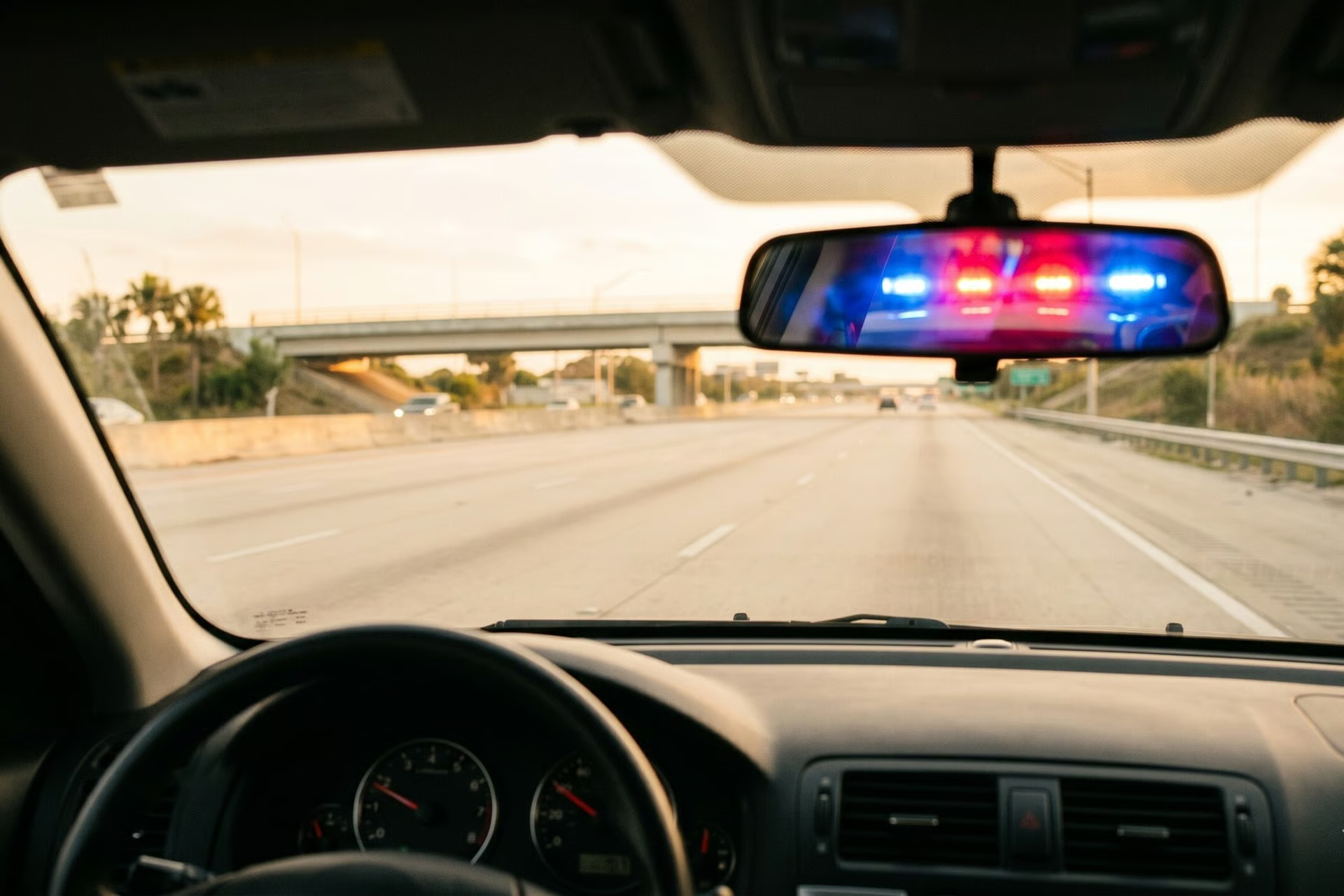
That’s why it’s worth knowing how to keep those flashing lights off your rearview mirror. Here are eight ways to do it.
1. Turn on speed limit alerts in your navigation app
Waze and Google Maps both display your current speed with the posted limit in real time. More importantly, you can enable audio alerts that will warn you as soon as you drift off.
Turn them on. It takes 30 seconds to set up, and means you don’t have to glance at your speedometer every few seconds to make sure it’s valid. The phone keeps track for you.
2. Use cruise control – especially on the highway
This is the most underutilized tool in your car to avoid tickets. Set it at or a hair below the speed limit, and you can’t physically crawl up to 80 mph while zoning out on a podcast.
Adaptive cruise control – now standard on many new vehicles – goes a step further, automatically adjusting to the flow of traffic around you. If your car has it, use it.
3. Get your speedometer checked
Your speedometer is not accurate. It may be a few miles per hour slower than your actual speed due to a tire change, aftermarket wheels, or just regular wear.
If you’ve switched to larger or smaller tires without recalibrating, you may be speeding and not really know it. An auto shop can verify accuracy in minutes, and many GPS-based apps will show your actual speed for free.
4. Stay away from the left lane
The far-left lane isn’t just where officers expect to find speeders – it’s also where you’re most exposed. Officers parked in the middle have a clear line of sight to every driver in the left lane. Everyone to your right covers you.
Beyond enforcement, many states have “retaining rights except passing” laws. It is both safe and smart to use the left lane only for passing.
5. Don’t magnetize the officer
Some cars invite scrutiny. Loud exhaust, aftermarket spoilers, dark window tint, neon undercarriage lighting – these can all indicate something worth stopping for.
Even paint color matters. A dented beige sedan doesn’t get another look like a cherry-red Mustang with racing stripes.
If you drive a specific object, you need to be more careful, not less.
Officers often decide whether they are issuing a ticket or a warning before they even get to your window. The look of your car is part of that calculation.
6. Know when and where enforcement is hardest
Enforcement is not random. In most states, double the fine is imposed in school zones and construction zones. A speeding ticket that costs $150 on the highway could cost $300 in the work zone.
The end of the month is also historically active – executives facing performance targets become more aggressive in the final week. Rush hour, weekend nights and holiday weekends are also peak patrol times.
This doesn’t mean that it’s okay to drive fast at other times, but it does mean being extra diligent when the odds are against you.
7. If you get teased, your behavior is everything
Your behavior in the time between when you see the police car lights and when the officer approaches your window can overturn that decision.
Pull up quickly and completely. engine off. Turn on your hazard lights. Keep your hands clear on the steering wheel. Don’t reach for anything unless asked.
Be polite. “Yes, officer” dismisses any excuse you may have. Don’t volunteer that you don’t know the limits, don’t apologize in a way that sounds like a confession, and don’t argue. If you think the ticket is wrong, that’s what court is for.
8. If you get a ticket, just don’t pay it
Paying the ticket immediately is an admission of guilt. Before you hand over that money, know your options.
Fight it in court. The officers do not always attend, and if they do not, your case is usually dismissed. Also check the ticket for errors in your name, date, location or your vehicle details. Any inaccuracy may be grounds for dismissal.
Many states also allow you to attend a state-approved defensive driving course to keep the ticket completely off your record. It costs a little money and a few hours, but it’s better than paying high insurance premiums for three years in a row.
If the stakes are high – say, you’re close to a license suspension – a traffic lawyer may be worth every penny. A $400 speeding fee for a minor equipment violation could save you an insurance surcharge altogether. For a closer look at your options, see “4 Ways to Fight a Traffic Ticket.”
bottom line
A speeding ticket is not a one-time hit. It’s a recurring bill that follows you for years. The penalty is only the advance payment – your insurer recovers the remaining amount.
Most of the above strategies do not cost anything. There are zero dollars and zero extra time required to turn on Waze Alert or move to the correct lane. Just need to pay attention to this.
And if you really want to know how many different violations can ruin your rates — or how to make sure your insurer isn’t already overcharging you — start with “The Worst Traffic Violations for Your Car Insurance in Every State” and “How to Get the Best Deal on Car Insurance.”
