

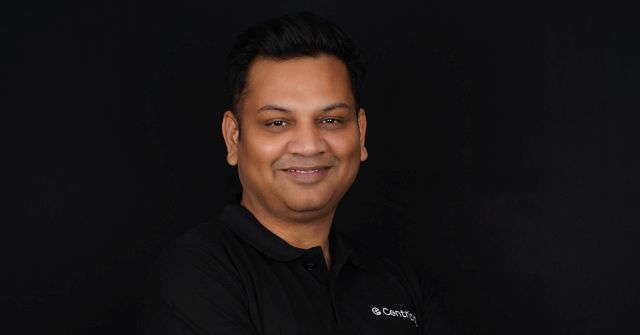
India’s wealth management platforms are undergoing a fundamental architectural shift, with artificial intelligence (AI) moving from a support layer to the core engine powering decision making, portfolio building and client engagement, according to Kamal Kishore, chief AI and technology officer at Centricity Wealthtech, a Gurugram-based technology-driven, SaaS-based wealth management platform.
This transformation is transforming the sector from transaction-based systems to “intelligence-first” platforms that operate in real-time, enabling continuous portfolio monitoring, dynamic rebalancing and hyper-personalized investor experiences. In an interview with TechCircle, Kishore said the industry is moving away from periodic, reactive models towards always-on systems that integrate advice, operations and customer journeys into a unified AI-powered stack.
Kishore describes this shift as “real-time portfolio intelligence,” or platforms that continuously incorporate live market data, investor behavior, and portfolio status to trigger proactive actions rather than retrospective reporting. These systems can simultaneously analyze investor objectives, risk appetite and market signals, allowing portfolios to be built and adjusted dynamically as conditions change, significantly reducing the lag between market movements and investor decisions.

However, Kishore believes that despite rapid progress, India’s wealthtech ecosystem still faces structural data challenges. Many platforms continue to rely on siled and batch-processed data systems, limiting their ability to deliver real-time insights and scalable AI-powered services. According to him, “The industry must shift to more advanced data architectures – such as data mesh frameworks, streaming pipelines and continuous machine learning operations (MLOPS) – to unlock the full potential of AI.”
“Without strong data standardization, governance and trust frameworks, AI in wealth management will remain powerful but not fully reliable or scalable,” he said, adding that the need for a single, unified source of truth across all platforms remains a key gap.
Within Centricity WealthTech, the focus over the next 12-18 months is on building an integrated, AI-first platform that integrates its core offerings while expanding into new areas such as non-resident Indian (NRI) services, broking and insurance. Kishor explained that the company is also investing in automating back-office operations using AI to improve efficiency and productivity on a large scale, while enhancing decision-making capabilities for advisors and investors.
As wealthtech companies grow larger, it is becoming increasingly important to balance growth with regulatory compliance and investor confidence. Kishore emphasized that governance, transparency and explainability should be directly embedded into the platform architecture rather than being treated as add-ons. He said AI-powered systems, when built on robust data pipelines and auditable frameworks, can enable both hyper-personalization and compliance in regulated environments.
Hyper-personalization itself is starting to move from concept to reality, though it has yet to be fully scaled into the ecosystem. Kishor said platforms are increasingly leveraging AI and advanced analytics to tailor portfolios and investment journeys to individual users, but widespread adoption will depend on improvements in data infrastructure and interoperability.
Currently, AI is providing the most immediate impact in operations and risk management, where it is being used to consolidate fragmented data, enhance research capabilities, and enable real-time portfolio rebalancing. While advisory functions are also being augmented by AI-powered insights, Kishor said human expertise remains central to client relationships and decision making.
Looking ahead, Kishore believes that the next wave of winners in India’s wealthtech sector will be those who embed AI deeply into their core architectures rather than treating them as a feature. Platforms that successfully combine AI-native infrastructure, integrated data layers and seamless user experience while integrating human decision-making will define the future of wealth management in the country.
“The real difference will come from connecting data, AI insights and human expertise into a single, cohesive decision-making engine,” he said.