

President Donald Trump threatened to destroy Iran’s power plants if the vital Strait of Hormuz is not opened, prompting Iran to respond with threats of retaliation if the energy crisis escalates into war.
The president took to social media to pressure the Middle Eastern country on the global shipping route, which Iran has effectively closed since the US-Israeli attacks on February 28. It is one of the world’s most important oil chokepoints and handles approximately 20% of the world’s oil products annually.
“If Iran does not completely open the Strait of Hormuz, without any threat, within 48 hours from this exact time, the United States will attack and destroy their various power plants, starting with the largest first!” Trump wrote on Truth Social shortly before 8 p.m. on Saturday, March 21.
In response, Speaker of Iran’s Parliament Mohammad Baqer Qalibaf said that if the United States attacks Iran’s power plants, Iran would destroy critical infrastructure and oil facilities in the region in an “irreversible manner.” In his March 22 post on X, Qalibaf also threatened that oil prices “will remain high for a long time.”
Iran threatens tit-for-tat attack amid energy crisis
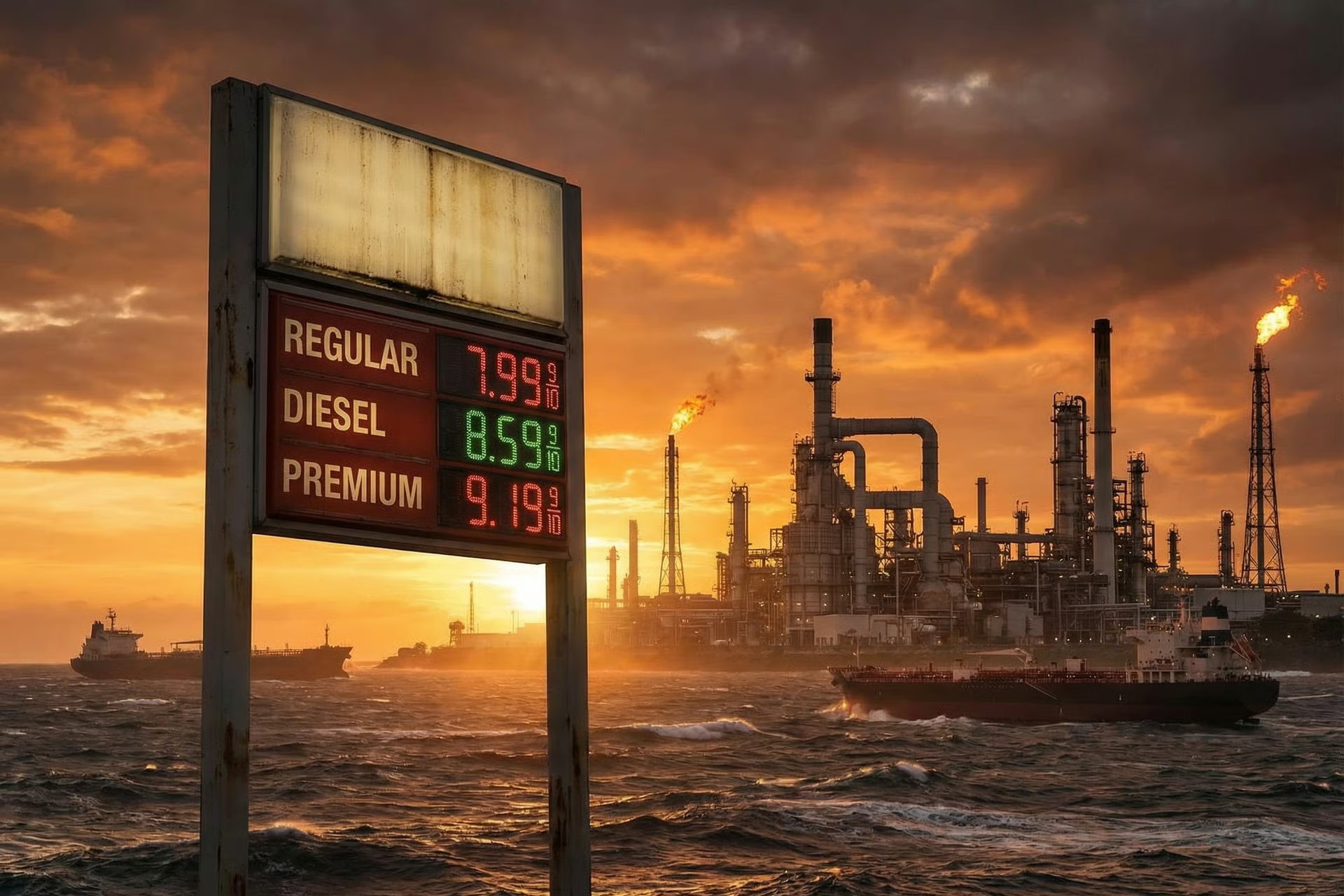
As the US-Israel war with Iran enters its fourth week, economic and oil-related impacts continue to weigh on global and domestic markets. The average US gas price reached $3.94 per gallon on Sunday, March 22, compared to $2.98 per gallon two days before the war began.
While consumers are struggling with the dollar’s surge to near-dollar highs over the past three weeks, the United States, Israel and Iran have entered a new phase in the ongoing war, with oil and gas becoming key targets for both sides.
Following Israel’s attack on Iran’s largest gas field, South Pars, on March 19, Iran retaliated against US-allied Gulf states. Hours after the South Pars attack, Iran attacked oil refineries in Kuwait and damaged Qatar’s giant liquefied natural gas production site, Ras Laffan.
More than 2,000 people have died in the ongoing war
While the warring nations trade threats over energy and oil targets, Lebanon is suffering the second-highest war death toll after Iran. Overall, more than 2,000 people have been killed in the conflict in several countries.
Thirteen US service members have been killed, and the Pentagon said last week that the number of US troops injured in the Iran war had reached 200.
According to the Lebanese Health Ministry, Israel’s attacks on Lebanon have killed more than 1,000 people, including about 120 children, 80 women and 40 medical personnel. The United Nations reported on March 21 that 2,584 people had been injured in Lebanon since March 2, when the Iran-linked militant group Hezbollah launched attacks on Israel in response to the assassination of Iran’s supreme leader Ayatollah Ali Khamenei.
The number of casualties in Iran varies.
US-based rights group HRANA said on 21 March that 3,230 people had been killed, including 1,406 civilians and at least 210 children.
Reuters reported that the latest figures from Iranian state media put the death toll at 1,270, while Iran’s ambassador to the United Nations said on 6 March that at least 1,332 people had been killed since the war began.
Elsewhere in the region, Reuters reported that officials confirmed that 60 people were killed in Iraq, 15 civilians and two soldiers were killed in Israel, 8 people were killed in the United Arab Emirates and 6 people were killed in Kuwait. Reuters reported that two people each were killed in Saudi Arabia, Oman and Bahrain, and four in Syria.
Democrats hammer administration over cost
Treasury Secretary Scott Besant said on NBC News’ “Meet the Press” on March 22 that the United States has “a lot of money to finance this war” as Congress prepared for an expected $200 billion request from the Pentagon.
Besant called this demand “supplementary” and refused to insist on any tax increase to finance the war. When Besant was asked if it was going to end soon, Besant responded by telling host Kristen Welker that “Sometimes you have to move on to do less.”
Senator Chris Murphy responded to Besant’s comments on the same program, suggesting that Democrats might attempt to use the Pentagon’s expected request for billions more in war funding to pressure the administration to end the conflict.
“We need to end this war,” Murphy said. “The only way to bring prices down in the United States, the only way to bring peace to this region is to end this war.”
The funding demand faces stiff opposition in Congress, with Democrats and some Republicans questioning its need after large defense appropriations last year. Many Democrats have also expressed strong opposition to the joint US-Israeli war since it began, putting further obstacles in the way of the Pentagon’s request.
Contribution: Reuters.
Katherine Palmer is a politics reporter for USA TODAY. You can contact her at (email protected) and X @KathrynPlmr. Sign up for his daily politics newsletter here.
This article originally appeared on USA TODAY: US, Iran threaten more energy attacks as gas prices rise. what to know
Reporting by Katherine Palmer, USA TODAY/USA TODAY
USA TODAY Network via Reuters Connect