

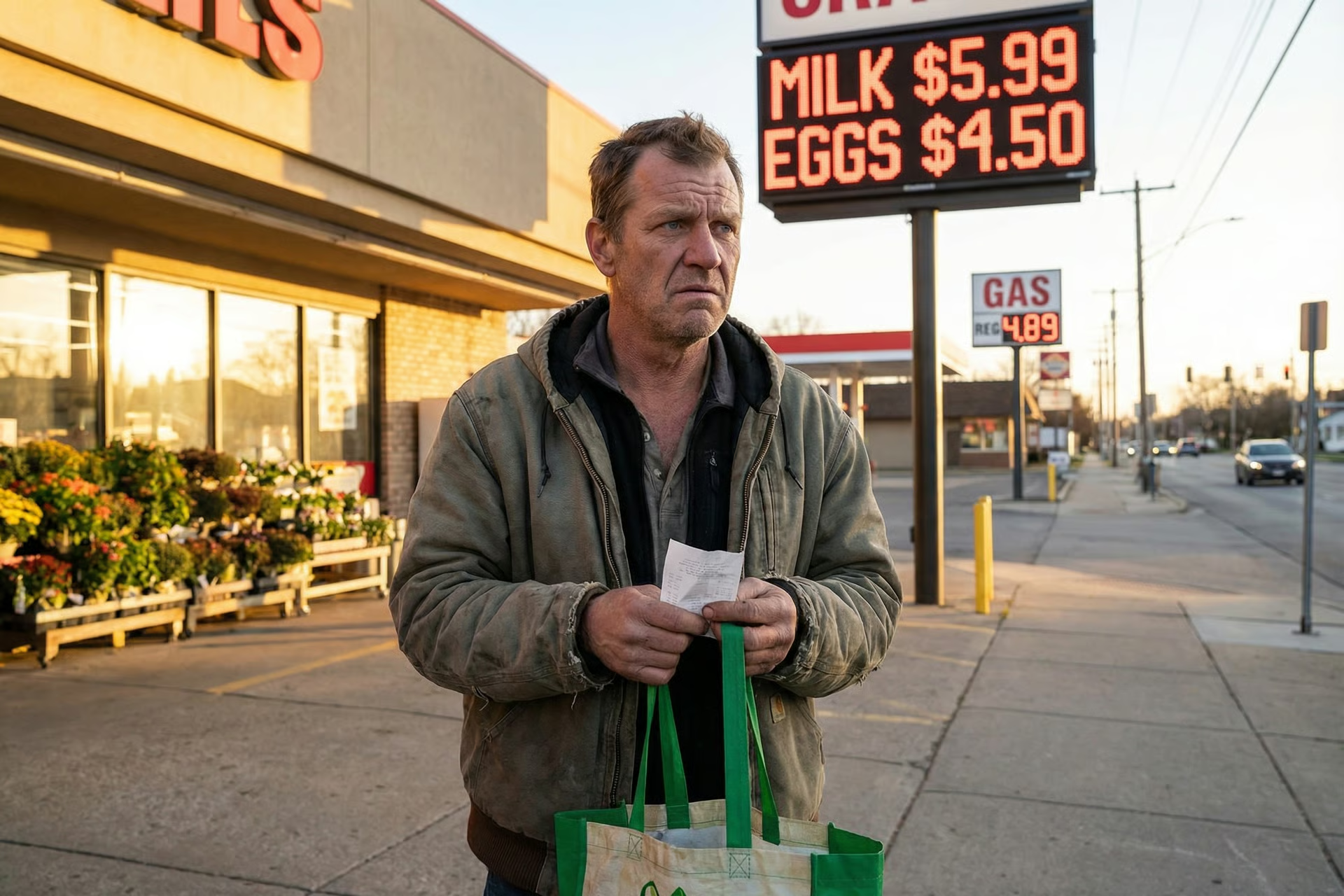
The United States is not in recession, but it may be in “recession.”
Despite ticking up over the past three months, the University of Michigan’s consumer sentiment index fell to 53.3 in March – down from an initial estimate of 55.5 two weeks earlier – and down from 56.6 in February and 57 this time last year. Among those surveyed, expectations for gas prices increased and inflation predictions increased after the start of the Iran war on February 28.
According to Joan Hsu, director of the Michigan survey, although sentiment declined across different age groups and political affiliations, “consumers with middle and upper incomes and stock holdings have demonstrated particularly large declines due to both rising gas prices and volatile financial markets in the wake of the Iran conflict.”
The university’s indices are based on a survey of American households and score results against a 1966 baseline of 100, meaning March’s reading is about 47 points below that historical benchmark. Consumer sentiment today is generally considered low by historical standards. It reached a record low of 50 in June 2022 and an all-time high of 112 in January 2000. The index has not exceeded 100 since February 2020, a month before the pandemic lockdown began.
How do Americans feel about the economy today?
The index of current economic conditions, which measures whether people feel better or worse financially than a year ago and whether now is a good or bad time to buy goods, fell to 55.8 in March. This is down from 56.6 in February and 63.8 a year ago.
Frank Sorrentino, founder and CEO of ConnectOne Bank, said low consumer sentiment could be a reflection of higher borrowing costs, delayed inflation in some categories or persistent economic uncertainty.
“At the same time, when we look at what’s actually happening on the ground, the underlying economy still appears relatively resilient,” Sorrentino told USA TODAY. “Businesses are afloat, people are working, and activity has not decreased in a meaningful way. So, what we’re seeing is a bit of a disconnect between what people are feeling and what they’re doing.”
Where do Americans predict the US economy is headed?
The index of consumer expectations, which reflects consumers’ outlook for their financial situation and the general economy in the near and long term, fell to 51.7 in March. This is down from 56.6 in February and 52.6 this time last year.
Year-ago inflation expectations rose to 3.8% in March from 3.4% in February, the biggest one-month rise since April 2025.
Even before the report was released, fears of a US recession had increased. Mark Zandi, chief economist at Moody’s Analytics, said in a note that “even before recent worrying events” in the Middle East, the company’s models had put the probability of a breakout in the next 12 months as high as “uncomfortably high” at 49%.
Reach Rachel Barber at (email protected) and follow her at x @rachelbarber_
This article originally appeared on USA TODAY: U.S. consumer sentiment fell in March as Iran war stoked recession fears
Reporting by Rachel Barber, USA TODAY/USA TODAY
USA TODAY Network via Reuters Connect