

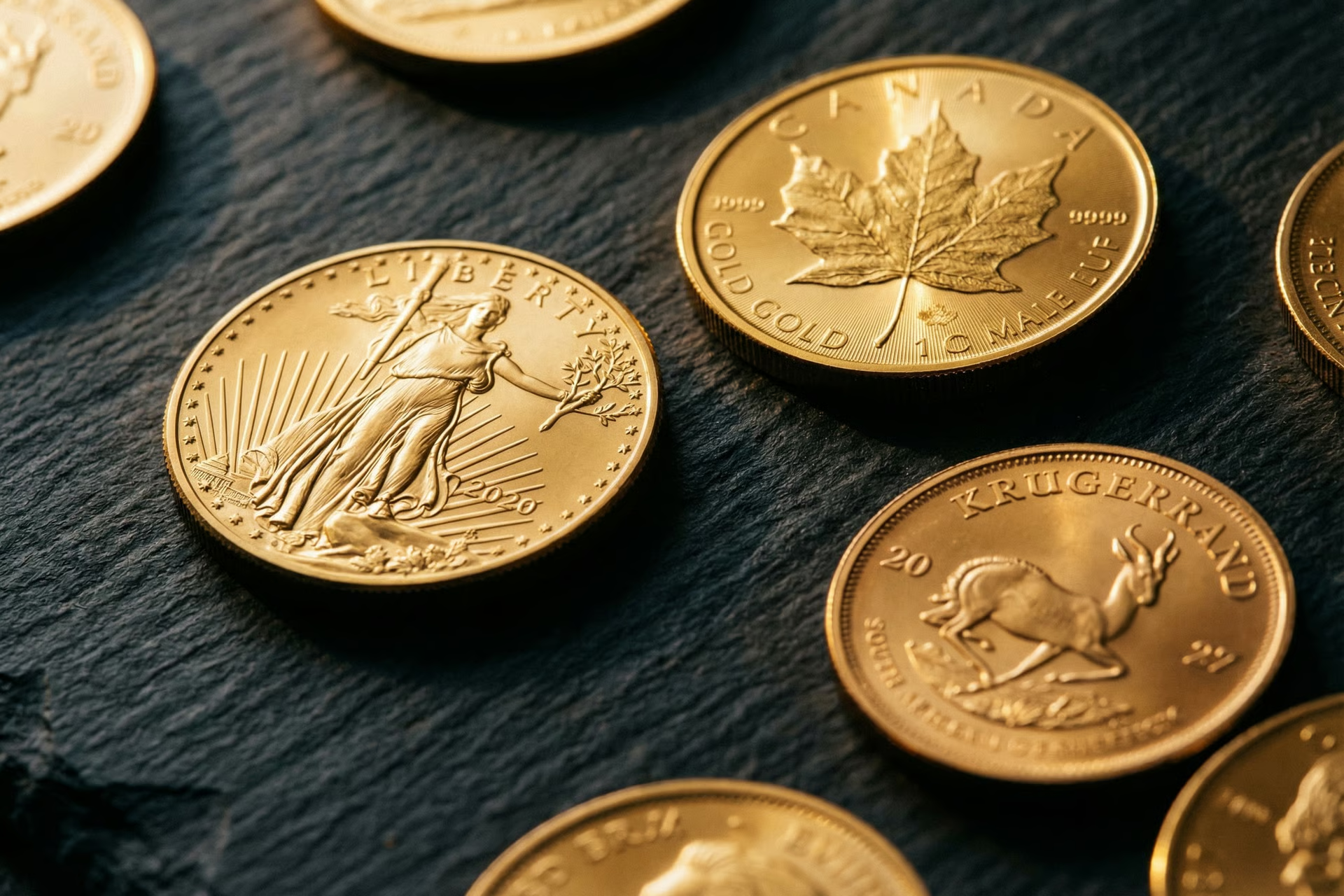
Verifying, pricing, and selling physical gold can be difficult – unless you know what to look for. That’s why many investors start with bullion coins. They are issued by the government, standardized in weight and purity and recognized by dealers around the world. Here’s what you need to know about the most common programs today.
What makes a gold coin an investment coin?
Not every gold coin qualifies as an investment coin, and it makes sense to know the differences before purchasing.
Government mints produce gold bullion coins in standardized weights (usually one troy ounce), with strict purity requirements and legal tender status in their country. Their value tracks the spot price of gold, which is the current market rate for the metal.
Numismatic, or collectible, coins work differently. “They offer a premium that has nothing to do with the pure metal content value of gold,” says Henry Yoshida, a certified financial planner and co-founder of Rocket Dollar, a fintech company in Austin, Texas. Rarity and historical importance increase their value.
Major Types of Gold Bullion Coins
Many government mints produce bullion coins for investors, and global recognition plays a direct role in how easily each sells. The best gold coins to buy include the American Gold Eagle, Canadian Gold Maple Leaf, South African Krugerrand, British Gold Britannia, and Australian Gold Kangaroo.
American Gold Eagle
The US Mint first issued the American Gold Eagle in 1986, making it the country’s official gold bullion coin. The mint mints it in 22-karat gold (.9167 fine), adding small amounts of silver and copper to each coin to improve durability.
It comes in four sizes:
- 1 ounce
- 1/2-ounce
- 1/4-ounce
- 1/10-ounce
Eagle is one of the few gold coins explicitly approved by the Internal Revenue Service (IRS) for use in self-directed retirement accounts.
canadian gold maple leaf
The Royal Canadian Mint introduced the Gold Maple Leaf in 1979. It is the first bullion coin to achieve .9999 purity and sets the standard for 24-karat gold coins worldwide. The Canadian government guarantees its weight and accuracy, and it serves as legal tender in Canada.
It comes in five sizes:
- 1 ounce
- 1/2-ounce
- 1/4-ounce
- 1/10-ounce
- 1/20-ounce
The face value of the 1-ounce coin is $50 CAD. Maple Leaf’s high purity and strong North American buyer pool makes it one of the easier coins to buy and sell globally.
South African Krugerrand
The Krugerrand pioneered modern gold bullion investment when South Africa introduced it in 1967, long before most other mints followed. The South African Mint and Rand Refinery produces it in 22-karat gold (.9167 fine), with copper added for durability and a distinctive red color.
Like the American Gold Eagle, it comes in four sizes:
- 1 ounce
- 1/2-ounce
- 1/4-ounce
- 1/10-ounce
Over 50 years of global trade has made it one of the most recognized bullion coins.
British Gold Britannia
The Royal Mint introduced the Gold Britannia in 1987. In 2013, the Mint upgraded it to .9999 fine gold, making it among the purest bullion coins in the world.
It comes in six sizes:
- 1 ounce
- 1/2-ounce
- 1/4-ounce
- 1/10-ounce
- 1/20-ounce
- 1/40-ounce
UK investors pay no capital gains tax on Britannia Coin profits and no value added tax (VAT) – the consumption tax on most goods and services in the UK.
australian gold kangaroo
The Perth Mint launched the Gold Nugget series in 1986, which was changed to the Kangaroo design in 1990 and officially rebranded as the Australian Gold Kangaroo in 2008. struck with .9999 fine gold, it is one of the purest bullion coins available.
It comes in eight sizes:
- 1 kg
- 10 ounces
- 2-ounce
- 1 ounce
- 1/2-ounce
- 1/4-ounce
- 1/10-ounce
- 1/20-ounce
Unlike most bullion coins, the Kangaroo introduces a new reverse design every year. This gives it mild collectible appeal without the heavy premium that limited-edition proof coins carry.
gold coins vs gold bars
Government mints produce gold coins according to standardized specifications, making them globally recognized and easier to sell. In contrast, most gold bars come from private refineries. They lack the same level of standardization, making them difficult to verify and sell.
Bars come with a lower markup on the spot price, making them more efficient per ounce. “But for retail investors, the ability to sell coins immediately often outweighs the high upfront cost,” says Yoshida.
Why do investors choose gold coins?
For most investors, coins offer some practical benefits:
- Global Recognition: Government minted coins are known and accepted by dealers around the world. That familiarity affects how quickly and easily you can sell.
- Liquidity (ease of converting into cash): Due to standardized weight and purity, dealers do not need to guess what they are buying. As a result transactions proceed faster.
- Government Mint Reliability: Government guarantee of weight and purity reduces the risk of purchasing misrepresented metal.
- Fractional sizes: Smaller denominations allow investors to buy or sell incrementally.
Yoshida emphasizes that the 1-ounce coin is the most universally traded unit of the gold market. For first-time buyers, that standardization takes the guesswork out of knowing what you have and what it’s worth. Since gold is traded by the ounce globally, 1-ounce coins also keep premium comparisons between programs clean and simple.
Where investors usually buy gold coins
Investors generally buy gold coins through three channels:
- Specialized precious metals dealers, including American Hartford Gold, Goldco, Priority Gold and Thor Metals, help investors obtain physical gold for direct purchase or IRA rollovers with guidance on storage and compliance.
- The online bullion retailer carries extensive inventory at competitive prices, with insured shipping and free delivery above minimum order requirements.
- Local coin shops offer investors the opportunity to examine coins before purchasing and walk away with gold in hand the same day, although their overhead often means higher prices.
Yoshida recommends asking each dealer three questions when you make a purchase:
- How long have you been in business?
- Are you an authorized distributor?
- What does your buyback process look like?
“A reputable dealer is equally transparent about how he buys back gold and how he sells it,” he says.
ground level
Gold bullion coins are one of the more simple ways to add physical gold to a portfolio, but the details matter. Accuracy, premiums and dealer reputation all affect your profits. If you’re new to investing in precious metals, reviewing how to buy gold safely and understanding common investment scams can help you avoid costly mistakes before they happen.
This article originally appeared on USA TODAY: Popular gold bullion coins for investing and what to know
Reporting by Sharon Wu, Special to USA TODAY/USA TODAY
USA TODAY Network via Reuters Connect