

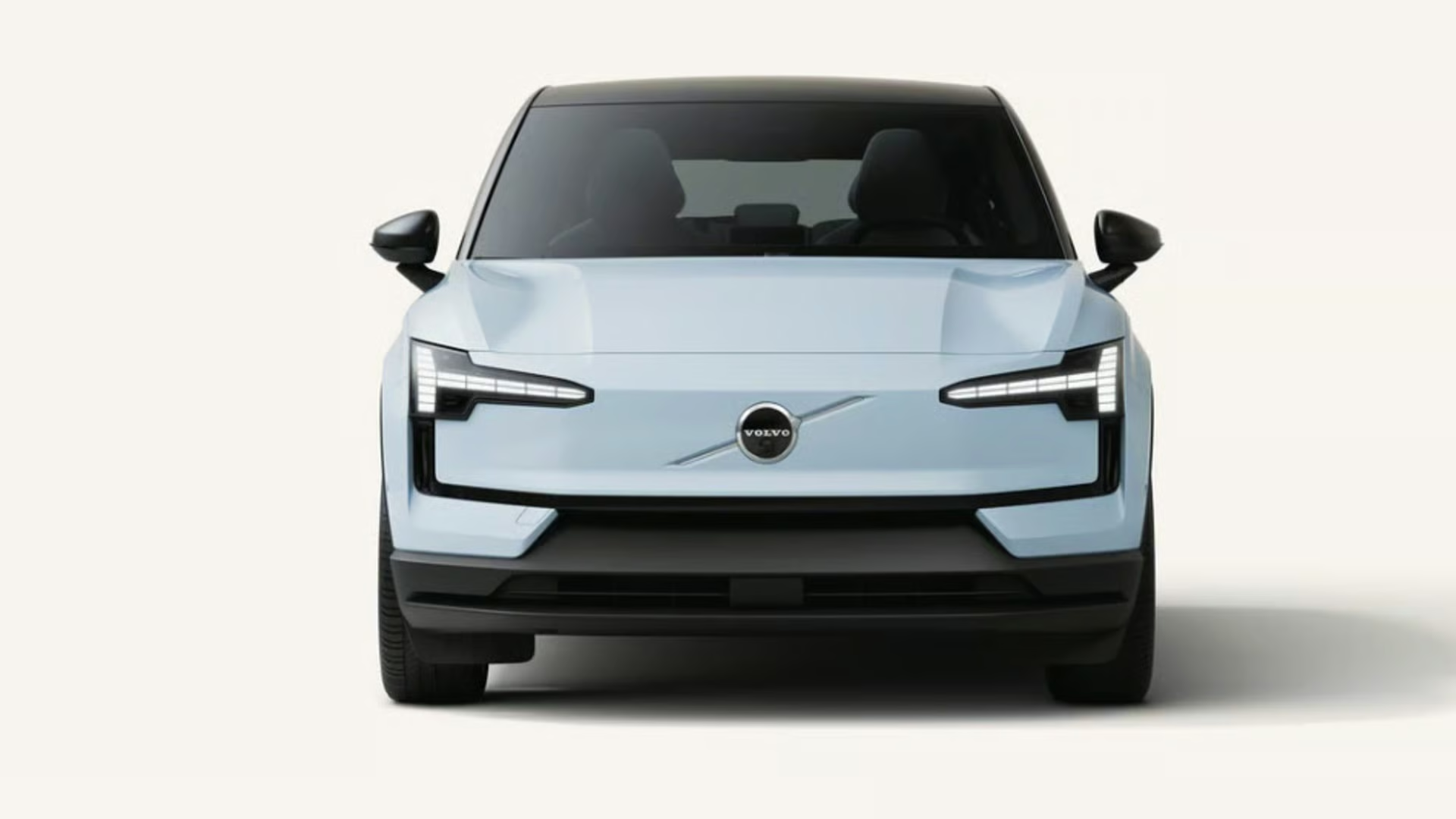
According to Reuters, Volvo is killing the EX30 subcompact electric SUV in the US after just two model years.
The Swedish automaker will continue to sell the EX30 globally, but the company has decided to discontinue the EV after the 2026 model year. The EX30 joins the ranks of electric vehicles that have been given a death sentence, as tariffs and production costs force automakers to adapt production strategies to the new automotive landscape.
Due to the current administration’s stance on electric vehicles, a lack of federal incentives, and tariffs that have devastated some of the world’s largest automakers, many EVs won’t be around until 2026. Here’s what you need to know about the death of the Volvo EX30 and many EV nameplates.
Volvo launches EX30 electric subcompact SUV in the US
Electric vehicles have impacted the overall US market in recent years, but not all EVs are the same. Some stalwarts like the Tesla Model Y and 3 have become household names and daily drivers for thousands of Americans. Other electric vehicle nameplates that have not seen the same level of success have become a burden for many automakers as they struggle to survive in a hyper-competitive market.
Reuters says Volvo will sell about 5,400 EX30 EVs in 2025. While sales numbers may be impressive for some electric vehicle nameplates, Hyundai is projected to sell more than 47,000 Ioniq 5 SUVs in 2025, according to sales data compiled by Cox Automotive. Tesla plans to sell more than 192,000 Model 3 electric sedan units in 2025, outselling competitors by thousands of units.
Is the Volvo EX30 a good electric SUV?
Pricing for the 2026 Volvo EX30 starts at $40,345. It produces 268 horsepower and 253 pound-feet of torque. Volvo’s electric SUV has a standard driving range of up to 261 miles.
The Swedish automaker also offers a Twin Motor Performance trim ($46,345) that produces 422 horsepower and 400 pound-feet of torque. Its driving range is 253 miles.
Volvo’s EX30 has solid features but it’s more expensive than some larger electric SUVs. Additionally, there are several more affordable models that offer better standard driving range.
The EX30 may attract a small segment of EV fans, but it doesn’t make enough of an impact for it to be worthwhile for the brand to continue producing it.
Why are many car brands abandoning electric vehicle production?
Volvo has followed many brands, including Ford, in discontinuing the electric vehicle nameplate, which had promise but ultimately found production unsustainable. Many car brands are abandoning electric vehicle production as President Donald Trump rolls back the Biden-era EV mandate.
Since brands don’t have to produce electric vehicles, they can turn their efforts to more profitable and sustainable gas and hybrid nameplates that may be more cost-effective to produce and more attractive to American buyers.
Toyota recently made two of its best-selling models, the Camry and RAV4, standard hybrid models. The Japanese automaker’s decision to completely eliminate the gas-only Camry midsize sedan and RAV4 small SUV reflects consumer purchasing trends.
American car buyers are purchasing economical fuel-efficient vehicles. Tesla’s sales numbers are an anomaly compared to EV sales from other brands. Volvo’s EX30 is unlikely to be the last casualty in a rapidly growing market.
Charles Singh is an Autos Connect reporter for The Tennessean, part of the USA TODAY Network. Contact him at (email protected)
This article originally appeared on USA TODAY: Another EV biting the dust. Volvo discontinues 2026 EX30 in US
Reporting by Charles Singh, USA TODAY/USA TODAY
USA TODAY Network via Reuters Connect