

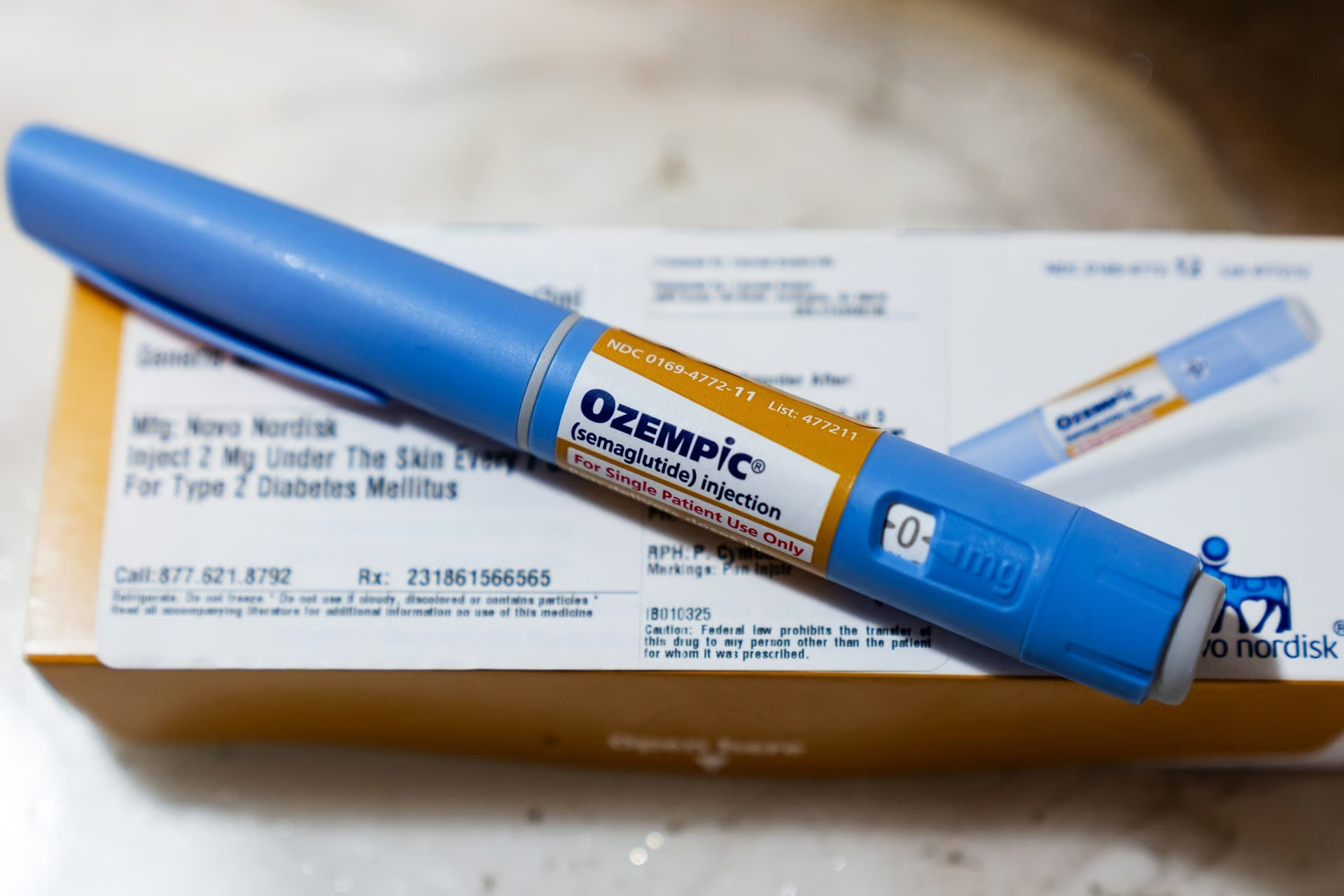
The Food and Drug Administration on April 30 proposed removing Novo Nordisk and Eli Lilly’s weight-loss drugs from the master compounding list, potentially limiting mass production by outsourcing facilities.
If finalized, the move could impact telehealth firms that rely on outsourcing facilities to produce these drugs in large quantities, while boosting Novo and Lilly’s efforts against unauthorized versions that are hurting sales of their blockbuster treatments.
The FDA said Thursday it found no clinical need for Bulk Drug Substances to source the compound semaglutide, the active ingredient in Novo’s Vegovy and Ozempic, and tirzepeptide, sold by Lilly as Zepbound and Monjaro. The proposal also includes Novo’s older drug liraglutide.
What drug manufacturers are saying
Lilly and Novo applaud the FDA’s confirmation that there is no clinical need to mix these drugs.
“This means the compounders have no basis to create a tirazeptide knockoff,” a Lilly spokesperson told Reuters.
“The agency’s notice today confirms that compounding is meant to be a rare and limited exception to the FDA’s gold-standard drug approval framework,” a Novo spokesperson said.
How Compounding Works – and Why It Matters
Compounding, in which pharmacies mix ingredients for specific medications or copy a drug but at different dosages, has flourished as Americans look for more affordable options. It is legal in some circumstances, such as during a medication shortage or when prescribed by a physician to address a patient’s side effects.
The FDA was reviewing nominations for the so-called 503B bulk list, which identifies drug ingredients that outsourcing facilities can use in compounding.
Section 503B of the Federal Food, Drug, and Cosmetic Act allows FDA-regulated outsourcing facilities to produce compounded drugs in bulk for healthcare providers, often without a patient-specific prescription. Section 503A allows state-licensed physicians and pharmacists to prescribe medications for individual patients under state supervision.
Many telehealth companies, including Hims & Hers, offer compounded medications tailored to individual patients through 503A pharmacies, while also relying on 503B outsourcing facilities to mass-produce them.
Most telehealth companies use 503A pharmacies to fill their personalized compounding doses, said Rosalie Hoyle, a research scientist at health consultancy Avalere, adding that the exclusion from the 503B list may not operationally impact the current compounding of GLP-1 drugs.
what happens next
The FDA has invited public comment on the proposal until June 29 before the agency issues its final decision.
