

I’ve been watching the travel industry for decades, and I can tell you that when governments make it harder to cross their borders, local economies bleed cash.
Right now, while many Americans are just trying to figure out how to get the best deals on travel, Washington is quietly building a financial fortress across the country. Two new hurdles are being erected for international tourists: tougher visa bonds and unprecedented social media background checks.
Its aim is to increase security and prevent overstaying of visas. But the economic shock is going to be brutal. If you own a restaurant, run a hotel, or work anywhere near the hospitality sector, you need to pay attention. We are considering a scenario where international visitors move their money to Europe or Canada.
This is why the tourism industry is ringing alarm bells.
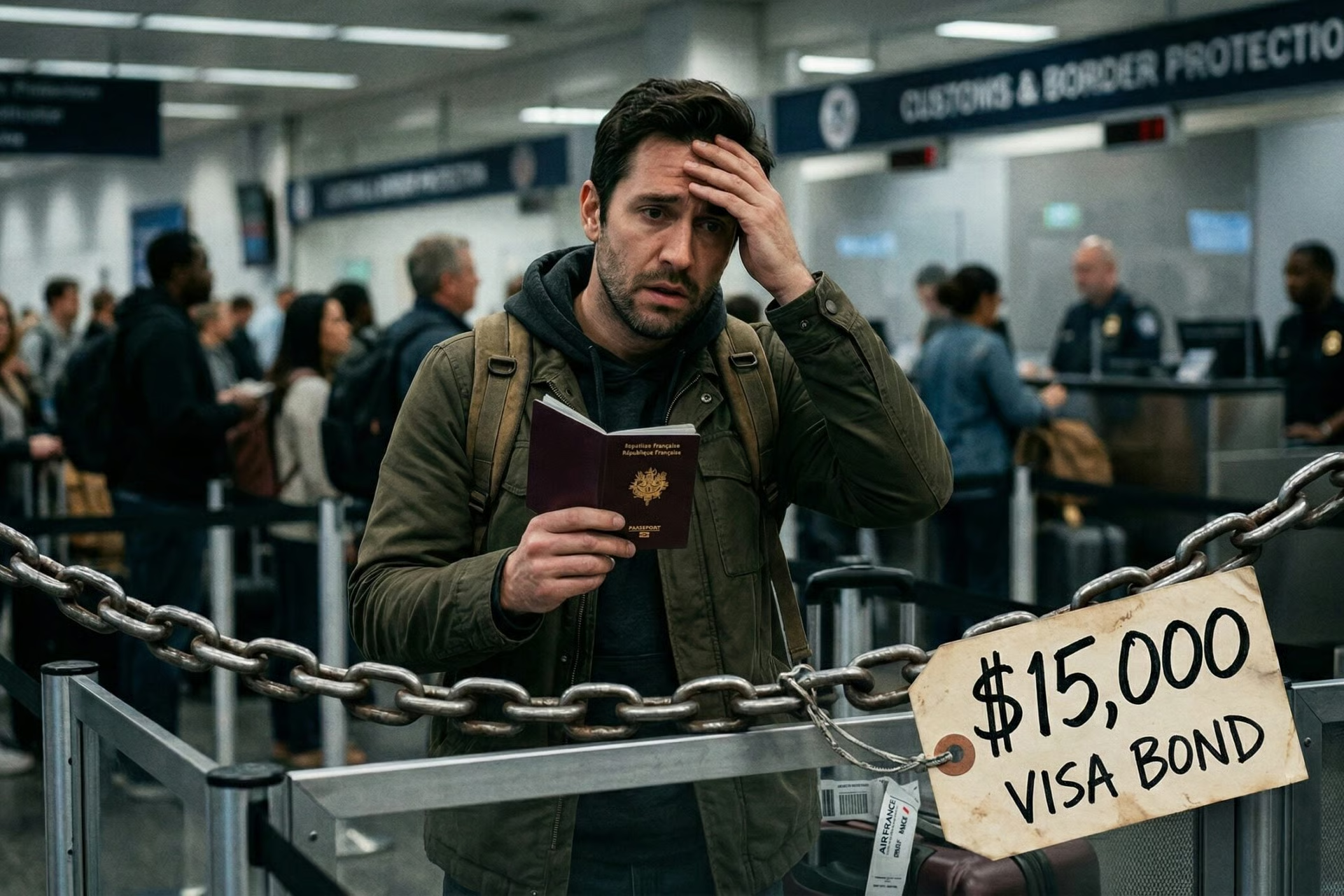
1. $15,000 Pay-to-Play Bond
Since April 2, travelers from 50 countries have faced a financial wall to travel to the United States. according to US State DepartmentConsular officers may require a refundable bond of up to $5,000, $10,000, or $15,000 before issuing a B-1 or B-2 visa.
This policy is designed to ensure that people do not overstay their welcome. If the visitor leaves the country on time, they get their money back.
But let’s be realistic. Most ordinary families can’t afford to deposit $15,000 into a government account just for the privilege of taking a vacation to Florida or California. This is a deterrent that will immediately kill demand from affected countries.
2. Intrusive Social Media Inquiries
Financial constraints are not the only problem. US Customs and Border Protection has proposed a sweeping new Policy Which forces tourists to hand over their social media history of the last five years. Is there anything you would endure to move to America?
The agency also wants phone numbers, email addresses and detailed biometric data used over the past decade. For a family that simply wants to visit Disney World or take a road trip to the Grand Canyon, this level of monitoring seems undesirable. Many people would prefer to spend their money elsewhere.
It is not just targeting high-risk countries. This requirement applies to the 42 countries whose citizens currently enjoy visa-free travel to the US. We’re talking about large, reliable sources of tourism revenue like Great Britain, France, Germany, Italy and Spain.
15.7 billion dollar hole in the economy
You don’t have to guess what happens when you treat tourists like suspects. The numbers speak for themselves.
World Travel and Tourism Council Ran the math on these proposed social media changes. It warned that making the US a less attractive destination could lead to a massive loss of $15.7 billion in visitor spending. That’s not just an abstract number. This translates to real pain for local businesses and the potential destruction of 157,000 American jobs.
Security matters, but we cannot ignore the economic reality. When you make travel too expensive and invasive, people stop coming. And when the tourists disappear, the American worker has to pay the bill.