

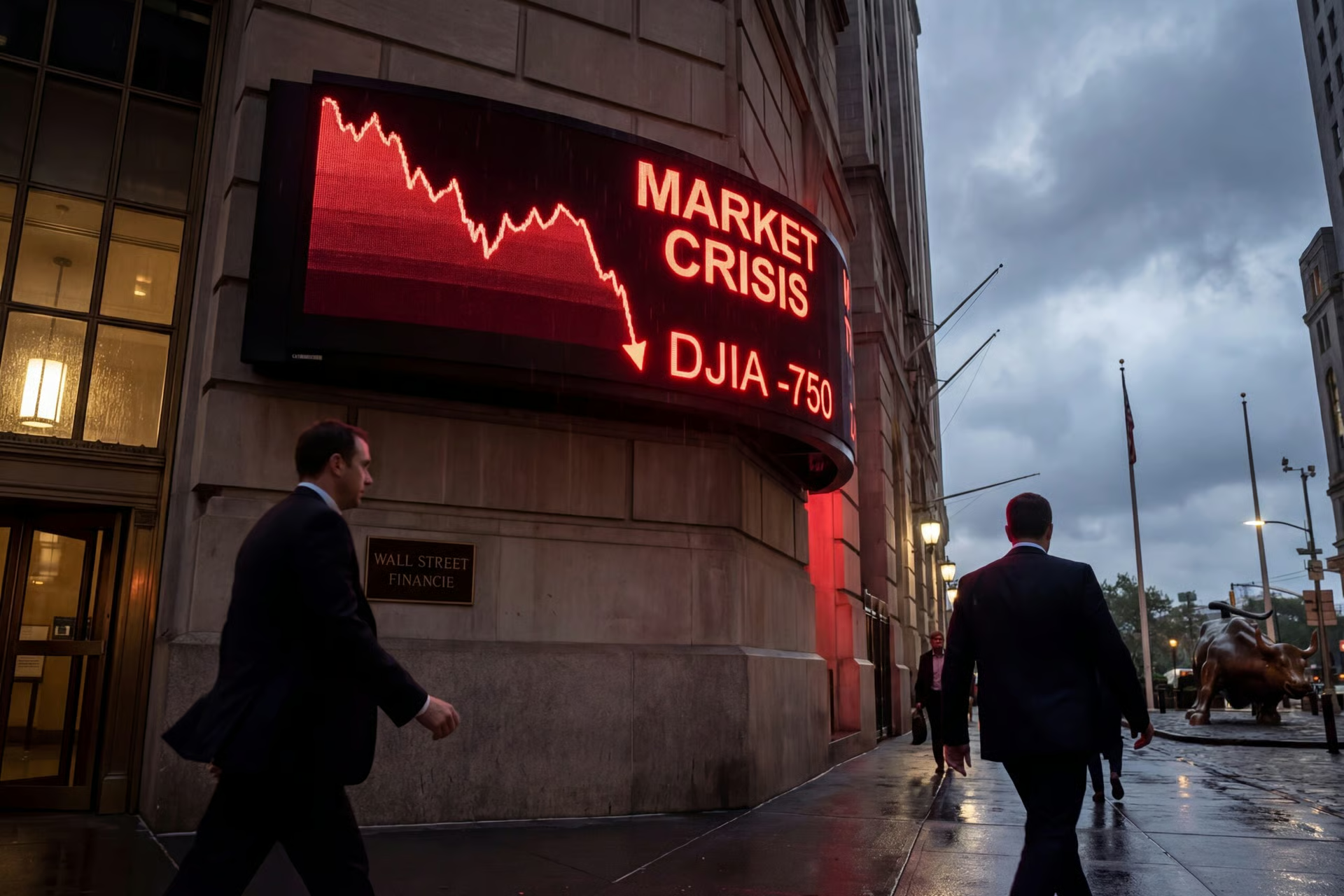
The oil surge led to a selloff on Wall Street and on March 27, the Iran war continued with no end in sight.
The two major US indexes are now in correction territory, defined as a decline of more than 10% from recent highs. The Dow Jones Industrial Average slipped nearly 800 points to close 1.7% lower for the day and 10% below recent peaks. The Nasdaq Composite Index closed down 2.15%, down more than 11% from last October’s high. The S&P 500 closed down 1.6%.
Meanwhile, the 10-year US Treasury note rose 2 basis points to about 4.44%. This was down from the earlier high of 4.48%, but still signals that the road ahead is tough for fixed income assets in a high inflation environment.
Investors are selling bonds, which provide fixed sources of income that become less valuable as prices for everything from energy to food rise due to the Iran war. Bond prices move in the opposite direction to yields. This was demonstrated on March 26, when the US government had to pay higher yields on seven-year notes to attract cautious buyers.
Higher bond yields ripple through all types of credit markets, making everything from mortgages to small business loans more expensive. Many analysts have compared the current period to the 1970s, given the high inflation affected by the oil shock as well as the possibility of a cooling of the economy.
Economists are getting ‘worried’
“There are ways to manage short-term disruptions to the economy (for example, drawing on consumer savings and inventories),” Don Rismiller, chief economist at Strategus, said in a March 27 note.
Now, Rissmiller said, the war has dragged on so long that he is “concerned.”
The Trump administration is known for what some analysts call a “TACO” approach to policy, short for “Trump Always Chickens Out”. The White House has several times proposed a policy, then reversed it when the market responded poorly: for example, last April, when it proposed sweeping new tariffs.
The market has not yet reached the ‘panic limit’
An analyst team believes that this time the craze has not been as strong. On March 27, Datatrack Research co-founder Nicholas Colas wrote that markets have not yet reached the threshold at which policymakers decide to intervene to support asset prices.
“In the US, oil prices and the CBOE Volatility Index (VIX) are time-proven triggers for policy changes,” Colas wrote. “US stocks remain under pressure as none are yet close to previous levels where the change occurred.”
In the past, he said, oil prices have doubled before a policy change and the VIX, also known as Wall Street’s “fear gauge,” has closed above 35 or 43.
On Friday, the price of a barrel of Brent was about 62% above its pre-war high. The VIX was slightly above 31, up more than 14% during the day.
This article originally appeared on USA TODAY: Stocks sink as Iran war continues, Wall Street’s ‘fear gauge’ rises
Reporting by Andrea Riquier, USA TODAY/USA TODAY
USA TODAY Network via Reuters Connect