

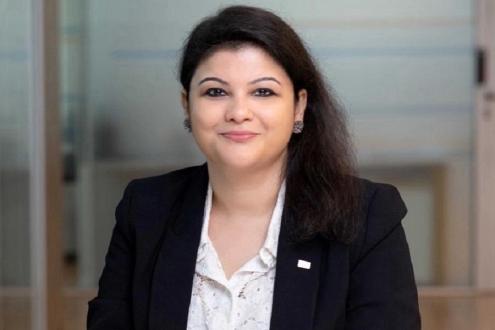
By Suranjana Borthakur, Head of Distribution and Strategic Alliances, Mirae Asset Investment Managers (India)
“There are no limits to what we can achieve as women.”
This sentiment seems especially relevant today as Indian women are entering a new phase of financial awareness and influence. India is witnessing a quiet but profound change in the dynamics of wealth ownership and financial decision making. Women, especially in HNI and UHNI families, are increasingly transforming from passive custodians of wealth to active architects of long-term financial strategies and family legacies.
This change is not accidental. This is being driven by rising financial literacy, rising professional and entrepreneurial success among women, and one of the most significant inter-generational wealth transfers India has seen in recent decades. As these forces converge, women’s role in wealth management is rapidly evolving, changing the way wealth is preserved, invested and passed on across generations.
The data clearly reflects this change. Today about 25% of individual investors in India are women, up from 22.5% in FY2013. (1) More importantly, they make up about one-third of individual investor assets under management. In simple terms, a relatively small portion of investors are managing a disproportionately large portion of the capital. It reflects discipline, patience and long-term conviction.
This trend becomes even more compelling with time. Over the last five years, women’s mutual fund wealth has grown by 147%, from ₹4.59 lakh crore in 2019 to ₹11.25 lakh crore in 2024. Their participation in the capital markets has increased rapidly, with demat accounts increasing from 67 lakh to about 2.8 crore within four years. Importantly, the share of investments held for more than five years has increased sharply, indicating a strong commitment to long-term wealth creation. (2)
For the wealth management industry, understanding this evolution is no longer an option, it is mandatory.
Past: wealth ownership without wealth participation
Historically, wealth structures in many Indian families have positioned women as beneficiaries, but not always as decision makers. While women often hold assets in their own names, particularly gold, property and inheritance, responsibility for managing the financial portfolio generally rests with male family members or external advisors.
Investment portfolios were generally conservative, with a strong preference for familiar and tangible assets such as real estate, fixed deposits, insurance products and gold. Participation in capital markets or investment in diverse financial instruments was relatively limited.
However, this mobility was less about capacity and more about access and tradition. Financial conversations were often not designed to include women. As a result, many remained on the periphery of investment decision making, despite being major stakeholders in family wealth.
Present: Women as active participants in wealth creation
Over the past decade, there has been a visible and meaningful change in how women engage in wealth management in India.
Today, an increasing number of women, especially in affluent families, are actively involved in financial discussions, portfolio decisions and long-term wealth planning. This growth is being fueled by higher financial literacy, greater workforce participation and better access to investment platforms and advisory ecosystems.
More women are creating wealth independently as entrepreneurs, professionals and business leaders. This is strengthening the sense of financial ownership and control.
Also, exposure to financial markets has increased significantly. Women investors are now participating more actively in mutual funds, systematic investment plans, portfolio management services, alternative investment funds and global investment opportunities.
Equally important is the nature of the conversations taking place among women investors. While returns remain important, the focus is broader. This includes financial security, goal planning, legacy planning, succession structures, and philanthropic impact.
In many ways, women are bringing a more holistic approach to money management. It integrates financial growth with long-term objectives and family continuity.
Money Management Best Practices for Women
As this segment continues to grow, some key principles are emerging as key enablers of effective wealth creation.
Financial awareness and ownership is the starting point. Women must have complete knowledge of the family balance sheet, including investments, liabilities and long-term financial structures. True financial empowerment starts with clarity.
Long-term investment discipline is another decisive strength. The data already shows a growing preference for holding investments for the long term, allowing women investors to benefit from compounding rather than reacting to short-term market movements.
Diversification beyond traditional assets is becoming increasingly important. While gold and real estate maintain cultural relevance, modern portfolios benefit from balanced exposure to equities, global markets and alternative assets.
For HNI and UHNI investors, structured wealth and succession planning becomes equally important. Trusts, governance frameworks and clearly defined inheritance structures help ensure smooth inter-generational wealth transfers, with women often playing a central role in maintaining family continuity.
Finally, wealth strategies are increasingly being linked to profit as well as purpose. Many women investors are leading the conversation about philanthropy, impact investing, and creating meaningful social outcomes alongside financial returns.
Aligning the portfolio with India’s growth story
The broad macroeconomic environment further strengthens the case for a structured and forward-looking investment approach.
India is entering a phase where infrastructure development and consumption growth are reinforcing each other. Investment in infrastructure is improving productivity, connectivity and efficiency, while rising consumption reflects rising incomes and demand. Together, these forces are creating a strong foundation for sustained economic growth.
For investors, this has a direct impact on portfolio construction. A balanced portfolio should take advantage of opportunities in both disciplines. Infrastructure and manufacturing-related businesses benefit from the long-term capital expenditure cycle and policy support, while consumption-driven sectors reflect the aspirations of a growing economy.
Pairing high-growth opportunities with stable, cash-generating businesses helps create portfolios that can participate in growth while maintaining flexibility during volatility.
A specific investment approach
There appears to be a significant difference in how female investors approach wealth creation.
There is more emphasis on patience, careful planning and measured results. Women investors tend to stay invested during market cycles, avoid excessive churn and adopt a balanced approach to risk. This often leads to more stable results over time.
This difference becomes more pronounced when compared to general investment behavior. Female investors are more likely to take a goals-based approach, aligning investments with defined outcomes such as education, retirement, or legacy building, rather than chasing short-term performance.
They want more clarity on asset allocation and risk before investing. This reduces the effect of overconfidence and excessive trading.
Another important difference is how women navigate market cycles. Female investors are more likely to continue systematic investing, and in many cases increase allocations during market corrections rather than exiting in response to volatility. This disciplined approach, combined with a strong focus on diversification and risk management, contributes to a more sustainable portfolio over time.
opportunity ahead
Despite this strong momentum, the opportunity remains largely underutilized.
Today, only about 1.38 crore women invest in mutual funds in India, which is about 25 to 26% of the total investor base. (3) As participation grows, it has the potential to deepen equity markets and strengthen the overall investment ecosystem.
The growth of women in India’s wealth ecosystem is more than a demographic trend. This is a structural change. As more women take ownership of financial decisions, the focus will shift from access to impact. From being passive holders of wealth, women are increasingly emerging as thoughtful, strategic managers of wealth. In doing so, they are not only reshaping the portfolio but also the broader direction of India’s financial future. Whether it’s through philanthropy, impact investing, or a more conscious allocation of capital, the idea is taking hold that wealth should reflect values, not just returns.
For the industry, this is a moment that demands recalibration. More than a new customer segment, it demands a rethinking of the way we think about money.
**