

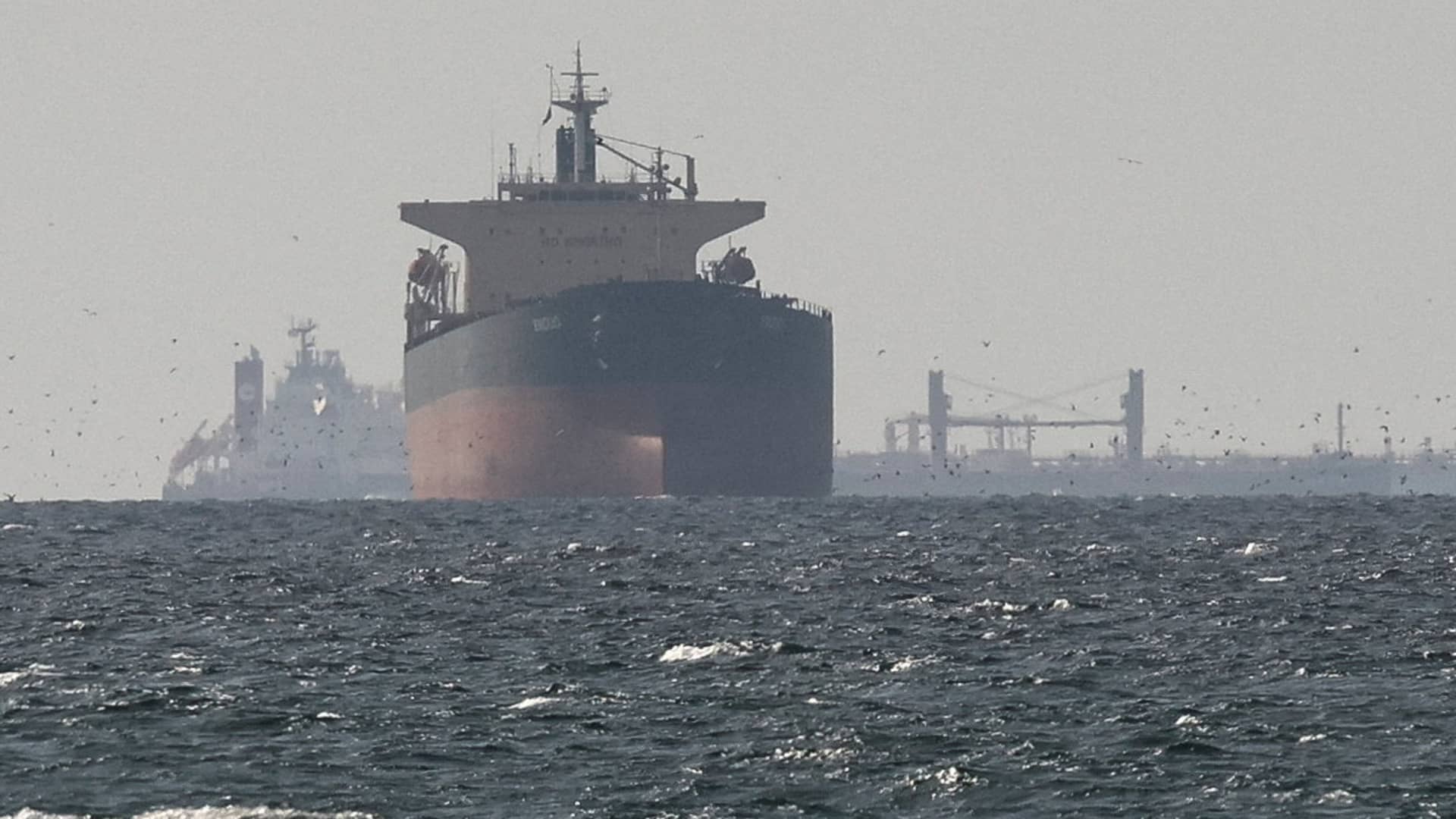
Tankers sail in the Gulf near the Strait of Hormuz, as seen from northern Ras al-Khaimah, near the border with Oman’s Musandam governorate, amid the US-Israeli conflict with Iran in the United Arab Emirates on March 11, 2026.
stringer | reuters
insurance giant Chubb Will be the lead underwriter for a US government-led program to provide insurance to ships making risky transits through the Strait of Hormuz.
Chubb will work with the U.S. International Development Finance Corporation, or DFC, as part of a $20 billion plan to help get oil tankers and other commercial traffic moving again amid the threats of an Iran war, the agency said.
Oil prices have increased Since the war began in late February. Brent crude was trading above $91 per barrel on Wednesday morning. Despite an announcement on Wednesday that the International Energy Agency would coordinate the release of 400 million barrels from its member countries’ strategic petroleum reserves, oil prices remain relatively high.
IEA chief Fatih Birol said in normal times the strait exports 15 million barrels of oil and 5 million other oil products a day. Despite efforts by companies and governments to ease the pressure, this flow has stagnated.
Ship crews are reluctant to use this route for fear that they may be attacked. Three ships off the coast of Iran were hit by shells on Wednesday, the UK Maritime Trade Operations Center said on Wednesday.
The strait connects the Persian Gulf to the Arabian Sea, making the narrow passage along Iran’s southern coast the only sea route out of the oil-rich region.
“Commerce passing through the Strait of Hormuz plays a critical role in the global economy and providing insurance protection to ships is essential to restarting trade flows,” Chubb President and CEO Evan Greenberg said in a statement.
The company “will be the focal point to provide all information about ships and cargo and work with us to facilitate this insurance,” a DFC official said, speaking on condition of anonymity because they were not authorized to discuss the topic publicly.
“After all, DFC itself does not have any actuaries. We do not have the staff to be the focal point of the market,” the official said.
The DFC program provides reinsurance – or secondary insurance for insurers – to cover approximately $20 billion of losses on a rolling basis. Chubb will provide final insurance to shippers. The agency said that DFC can work with other companies besides Chubb.
There has been some confusion about the extent of DFC coverage, which is intended to limit potential war-related costs for eligible ships. This will include the hull, machinery and cargo. Analysts have said ships will also need coverage for the environmental costs of cleaning up after oil spills.
The DFC coverage will cover environmental damage, the official said. “We’re providing baked-in coverage within that hull and machinery product.”
Ultimately what is stopping ships from moving is the very real danger of being near a war zone. Insurance may help at a high level, but ships will not proceed if crews fear for their lives.
President Donald Trump, who has said the Iran war would be brief, warned Tuesday that Iran would be hit “twenty times more” if it attempted to block shipments through the Strait of Hormuz. Earlier this week, speaking about the strait with CBS News, Trump said he was “thinking about occupying it.”
The best case for oil prices would be an end to the conflict, but failing that the US may be able to help by providing military escort to ships through the strait.
“The physical insurance that only the U.S. military can provide, and the financial risk that insurance can provide, need to go hand in hand,” said Rachel Ziemba, a senior advisor at political risk advisory firm Horizon Engage.
Clarification: This story has been updated to clarify that Chubb will work with the U.S. International Development Finance Corp. to provide insurance to ships passing through the Strait of Hormuz amid Iran war risks. In the previous version, the US agency’s full name was not given, but its abbreviated name.