

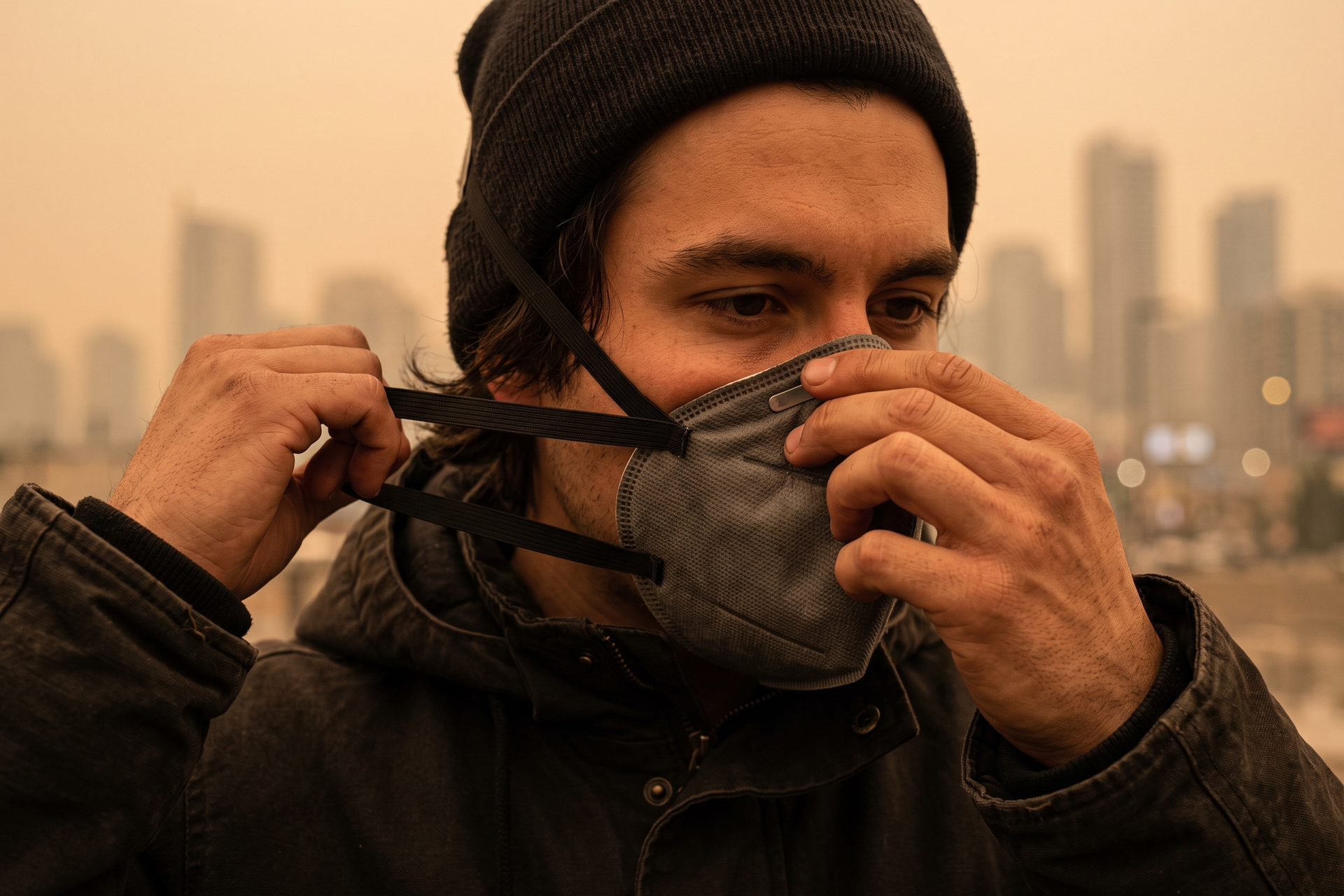
As smoke from hundreds of Canadian wildfires continues to worsen air quality in the Midwest, Great Lakes and parts of the Northeast, many Americans may be reaching for disposable or cloth face masks left over from the COVID-19 pandemic.
However, health experts say not every mask provides meaningful protection from wildfire smoke.
More than 830 wildfires are burning across Canada, more than 100 of which are considered out of control. Smoke from fires burning in Ontario and other areas has spread across the United States, prompting air quality alerts for millions of people and blanketing skies from Chicago and Detroit to Cleveland, New York City and Boston. Although conditions are expected to gradually improve in some areas by the weekend, officials have warned that smoky air may persist as long as the fires continue to burn.
The tiny particles in wildfire smoke are small enough to penetrate deep into the lungs, which means what type of mask you wear and how well it fits can make a significant difference.
Which masks work best against wildfire smoke?
According to guidance from air quality technology company IQAir and the U.S. Environmental Protection Agency, the best protection comes from tightly fitted respirators with N95, KN95 or FFP2 ratings.
These masks are designed to filter out at least 95% of airborne particles as small as 0.3 microns when fitted properly. This includes microscopic particles called PM2.5, the primary pollutant found in wildfire smoke that can penetrate deep into the respiratory system.
Experts say a strong seal around the nose and chin is just as important as the filter. Air leaking around the edges of the mask reduces its effectiveness as unfiltered air can get in through the gaps.
The EPA also recommends choosing a mask with two straps that go around the head rather than ear loops, as they are designed to create a stronger seal over the face.
Why are clothes and surgical masks not enough?
According to IQAir, basic cloth face coverings, scarves and many disposable surgical masks are not designed to filter out the small particles found in wildfire smoke.
While those masks can help reduce the spread of large respiratory droplets during diseases like COVID-19, they typically do not form a tight seal around the face and allow smoke particles to leak out the sides.
The best way to protect yourself
The EPA says wearing a respirator should not be the first line of defense against wildfire smoke.
Instead, the agency recommends staying indoors, limiting outdoor activities, reducing physical exertion and using HEPA air cleaners when smoke levels rise. People who spend a lot of time outdoors in smoky conditions may benefit from wearing a properly fitted N95 or P100 respirator.
Respirators can make breathing more difficult, especially for people with heart or lung conditions. The EPA recommends anyone with those conditions talk to a doctor before using it. Anyone who feels dizzy or has trouble breathing while wearing a respirator should move to clean air and remove the mask.
The agency also notes that respirators are not sized for children and generally cannot provide the tight seal needed to reduce smoke exposure.
Why is wildfire smoke a health concern?
Wildfire smoke contains fine particles that can irritate the eyes, nose, throat, and lungs, causing coughing, wheezing, and trouble breathing. Long-term exposure has also been linked to inflammation, cardiovascular problems and worsening symptoms in people with asthma or other respiratory conditions.
People considered most vulnerable include older adults, young children, pregnant people, and people with heart or lung disease.
As wildfire smoke blazes across Canada is expected to continue to impact parts of the United States, health officials say choosing the right mask is more important than just covering the face if necessary.