

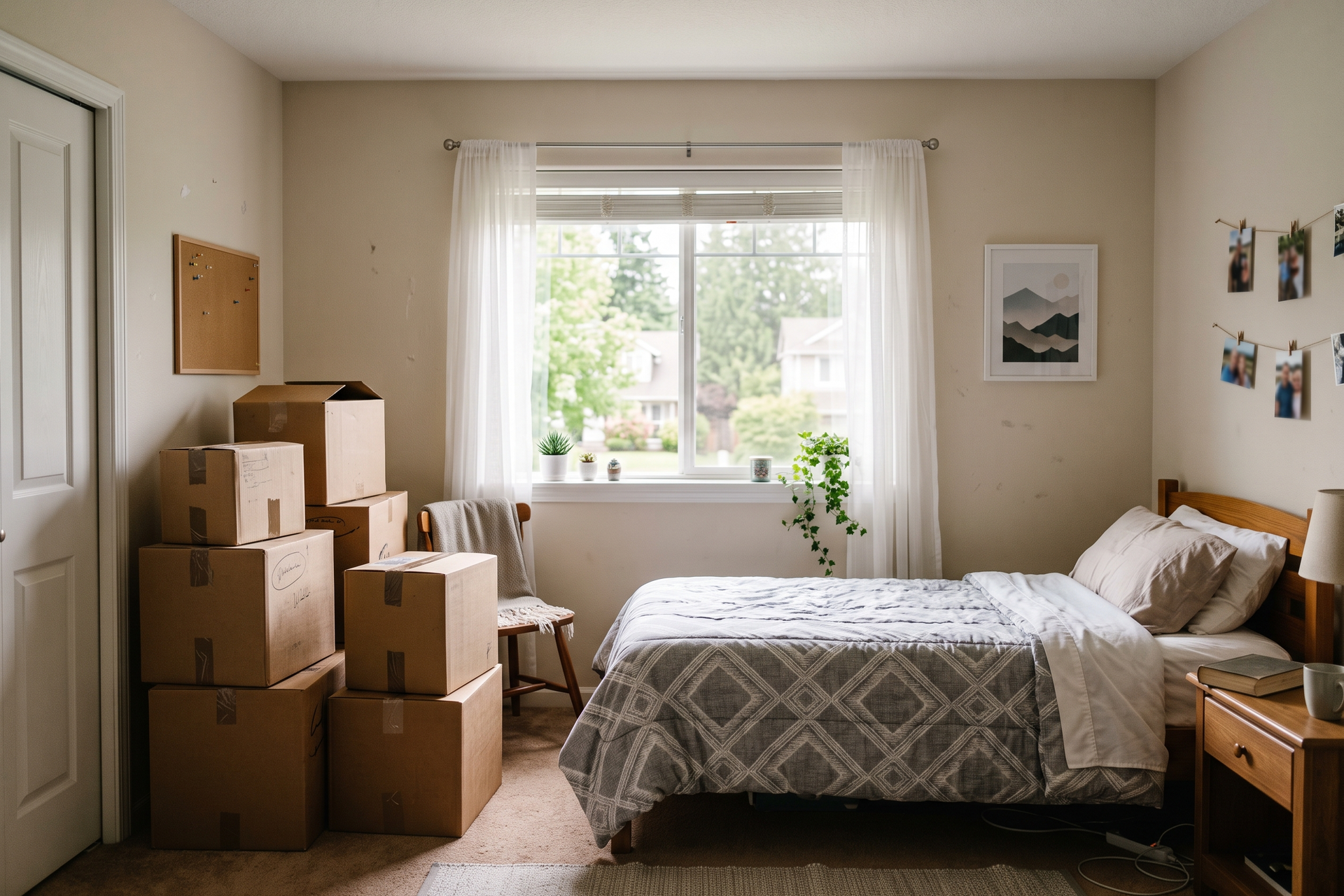
Census data shows that a record number of adults under 35 are choosing to live with their parents rather than consider the increasingly tricky math of living alone.
More than 25 million adults under the age of 35 lived with their parents in 2025, according to a June report from Realtor.com drawn from census data. That’s the highest number on record, including the peak of the COVID-19 pandemic, which sent millions of young Americans back into the parental nest.
“That means one in three 18 to 34-year-olds is back home, living with their parents,” said Hannah Jones, senior economist at Realtor.com.
The share of young adults living with parents was well below 30% in the early years of the new millennium. It rose during the Great Recession, rose again during the COVID-19 pandemic and has declined in the years since.
Why are young adults returning to their parents’ home?
Demographic experts say that in the pandemic years, adults under 35 moved into their parents’ homes to get out of quarantine and avoid big city crowds. Now, young adults are mostly returning to the parents’ home – or staying there – because of the cost.
According to Realtor.com, the average home price is $430,000. This is 34% higher than house prices in 2019. The average rent is $1,673, an increase of 18%.
“Gen Z and Millennials, by and large, want to buy a home. They want to be out on their own, but they feel like that’s not possible,” Jones said.
The notion of living in one’s childhood home into one’s adult years carries a permanent stigma, indicating failure at launch. Many Americans think this trend could also be bad for society.
Young adults face a challenging job market. But most adults under 35 who live with parents do not live there due to lack of jobs. According to Realtor.com, 7 out of 10 adults aged 25-34 who live with parents are employed.
“It seems like this is a housing issue, not an employment issue,” Jones said.
Mortgage payments and rent are both increasing
Mortgage payments have increased over the past few years, increasing the entry threshold for first-time homebuyers.
From 2020 to 2024, after adjusting for inflation, the typical mortgage payment will rise from $1,408 to $2,207, according to Bankrate. This increase reflects both rising home prices and higher interest rates. Housing payments had been relatively stable for several years before that surge.
For young adults, living in the parents’ home is “a way to cut costs, save more money” and work toward the ultimate goal of purchasing a home “if they were living on their own and saving for housing, they would be younger than they could afford.” Jones said.
Prohibitive housing costs aren’t just trapping young adults in parents’ homes. Researchers say that broadly speaking, the rising costs of mortgages and rents have hindered Gen Zers and young millennials from forming independent homes.
According to the Urban Institute, from 2005 to 2024, the share of adults ages 25 to 34 who lived independently, rented or owned a home with a spouse declined from 74% to 62%.
Meanwhile, the share of adults aged 25-34 living with their parents is projected to increase from 12% in 2005 to 20% in 2024.
“They just love living in mom and dad’s basement,” said Jun Zhu, clinical associate professor of finance at Indiana University and nonresident fellow at the Urban Institute.
These trends are shrinking the market for first-time home buyers.
According to the National Association of Realtors, first-time buyers will account for only 21% of all homebuyers in 2025, a record low. The typical age of a first-time buyer reached 40, an all-time high.
Married couples are more likely to own a home
If you want to save money to buy your first home, it helps to have a second income in your home. But Americans are marrying late. From 2008 to 2024, the share of adults aged 30 to 34 who were never married increased from 32% to 47%.
“You need about two household incomes to buy a home,” said Christa Westrick-Payne, assistant director of the National Center for Family and Marriage Research at Bowling Green State University in Ohio.
“And if you’re not living with anyone, you’re losing 40 to 60% of household income,” she said.
Researchers see a strong connection between young adults postponing marriage and staying in their parents’ homes. Married couples are more likely to own or rent a home than their unmarried peers.
Westrick-Payne said men typically marry about two years later than women. This may explain why men in their early 30s are almost twice as likely to live with their parents as women in the same age group, with the ratio being 16% to 9%.
“The ancestral home is where you park yourself until you get a better job, or until you get an apartment, or until you find a partner, or until you find a roommate,” Westrick-Payne said.
An overlooked factor in young-adult living arrangements, Westrick-Payne said, is the caregiving role of aging parents.
The oldest baby boomers are turning 80. Most boomers own homes – often very large homes. As they age, they may need help with tasks of everyday living. Their children can provide assistance.
“I think in some cases, and more than we may realize, the parent is dependent on the child,” Westrick-Payne said. “And I don’t really hear that in conversations.”