

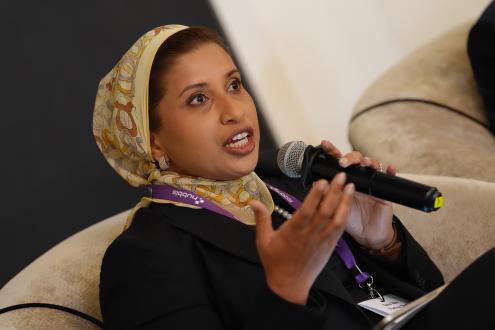
In Malaysia’s wealth structuring landscape, the difference between having a structure in place and having a structure that actually works is greater than many families realize. Trusts, foundations and holding companies are readily available, but without real governance, clear purposes and mechanisms that track how families relate to each other, these arrangements risk becoming hollow tools that fail precisely when they are needed most. At the recent Malaysia Wealth Management Forum 2026 organized by Hubbis in Kuala Lumpur, a panel chaired by Ruben van Dijk, Director of Melbourne Capital Group, examined how wealth structures should evolve for Malaysian households meeting increasingly complex cross-border, inter-generational and regulatory demands. Dato Nor Fazlina binti Mohd Ghaus, Chief Executive Officer of Maybank Trustees, brought a businessman’s directness to the discussion, challenging the industry’s tendency to treat structures as solutions in themselves and arguing forcefully that governance, substance and family alignment determine whether a structure delivers on its promise.
key takeaways
- Structures only add value when they solve real problemsAnd the key challenges for Malaysian high net worth families remain continuity, governance, business succession and liquidity.
- Muslim and non-Muslim families require different approachesAnd advisors should understand the interrelationship between Islamic inheritance law and the tools available for lifetime planning, rather than defaulting to any one product.
- The HIBAH myth must be addressedAs families and some segments of the market incorrectly believe that a single tool solves all succession challenges, especially for business owners.
- Governance is the intangible thing that makes structures workWhich includes not only documents, but also the mechanisms through which families regulate emotions, resolve disputes, and manage decision making between generations.
- Every structure must have an evacuation planBecause families evolve and the ability for members to opt out of the system without destroying the entire structure is essential for long-term sustainability.
Solving real problems, not selling products
When Van Dijk asked the panel whether structures such as trusts, foundations and holding companies actually add value to Malaysian families, Dato’ Nor Fazlina spoke clearly. “Structures add value when they solve real problems,” he said, identifying key challenges such as continuity, governance, business succession and liquidity.
She was equally clear about where the industry falls behind. He argued that the Malaysian market tends to consider certain products as universal solutions. “We all like structures, and people think when you have structure, you’re good enough,” he said. “But how do you make the structure come alive?”
His sharpest criticism was reserved for the marketing that has developed around HIBAH, the Islamic gifting tool that has become a prominent feature of succession planning conversations in Malaysia. Dato’ Nor Fazlina said social media and industry messaging have created a perception that implementing HIBAH largely solves a family’s succession challenges. He said, “A question that bothers me is: Who wants to do hibah? And people make the assumption that when you do hibah, the problem is solved.” “Yes, it’s a solution. But is it the right solution specifically for business owners?”
For families whose wealth is concentrated in operating businesses, HIBAH alone does not address management succession, governance continuity, or coordination of multiple stakeholders across generations. “Already Islamic inheritance law is so complex that one needs to understand what works today during your lifetime and what works after your lifetime,” he said.
Governance beyond the document
Dato’ Nor Fazlina repeatedly returned to the theme that governance is the substance that sits behind every structure, and documents alone are inadequate.
“Aside from firm, corporate solutions, whether a trust, a PTC, a family holding company or a foundation, at the end of the day, what is the substance? What is the intangible?” he asked. “The abstraction is really about how families relate to each other.”
He explains what this means in practice. In the context of a trust, governance extends to how the guardianship committee or advisory board operates. These bodies must go beyond simply approving or rejecting decisions. Different topics may require different quorums and different mechanisms. The governance framework should be broad enough to accommodate actual family decision making rather than relying on a set of uniformly applied rules.
The same principle applies to all structures. Dato’ Nor Fazlina stressed that administrators, shareholders, trustees, wealth planners and investment advisors must work together as a team. “It’s not in isolation,” she said.
exit planning mandatory
One of Dato’ Nor Fazlina’s most practical contributions was his insistence that every structure should include an evacuation plan. Families are not stable. Brothers and sisters move out. Cousins differ in their ambitions. Business interests that once coalesce may pull in different directions over time. Without clear mechanisms for members to opt out of a system, the structure itself can become a trap.
“What if a family wants to opt out of, for example, a sibling, or a cousin who no longer sees eye to eye?” he asked. “That exit plan and that mechanism needs to be there so the family knows there is something they can look forward to.”
This observation speaks to the broader reality in Malaysian succession planning. The structures are generally designed with an optimistic view of family harmony. The harder but more valuable task is to anticipate disagreement and build mechanisms to manage it without destroying the entire structure.
Case of Labuan Foundation and local structures
When the panel turned to the question of when families should transition from operating businesses to more institutional wealth structures, Dato’ Nor Fazlina acknowledged the sensitivity of the conversation. He said, “Nobody wants to talk about death. It’s not sexy, and it’s not like investing. When you do structures you can’t see results immediately.”
He cited control as a constant hurdle. Business owners are reluctant to transfer assets to structures where they perceive a loss of oversight. He reported that a client had set up a foundation but left it empty because they were not yet willing to give up control over the underlying assets.
His recommended solution for Malaysian business owners is the Labuan Foundation, which he argues provides the flexibility and control that founders require to maintain the arrangement within the regulatory framework in line with Malaysian compliance requirements. “The reason why I am emphasizing on the Labuan Foundation is just because the assets are in Malaysia. There are regulatory compliances that we need to follow,” she said. This structure allows families to maintain oversight throughout their lifetime, while also establishing a framework that can facilitate intergenerational transfers when the time comes.
However, Dato’ Nor Fazlina was clear that the structure is only as good as the intention behind it. “If you have the structure, but you don’t want to transfer, it defeats the whole purpose,” she said. The decision to continue a business across generations or to sell it is binary, and either path requires timely action.
A Malaysian structure for Malaysian families
In his concluding remarks, Dato’ Nor Fazlina strengthened the case for household structure. While acknowledging the availability of offshore solutions, he urged Malaysian households to ensure they have a local structure as a foundation. “If you’re in Malaysia, that’s your home base, consider why you should have a Malaysian structure,” he said.
The logic is practical. Local structures align with domestic regulatory and governance requirements and avoid the complexities that can arise when families inadvertently change their tax residence status by relying solely on offshore arrangements.
For Dato’ Nor Fazlina, the message was the same: the tools exist and the regulatory environment is becoming increasingly favourable. What remains in short supply is the willingness to move beyond product selection to the difficult work of aligning governance, family dynamics and long-term purpose. He argued that this is what advisors should focus on if Malaysian families are to preserve wealth in physical form and not just in name.