

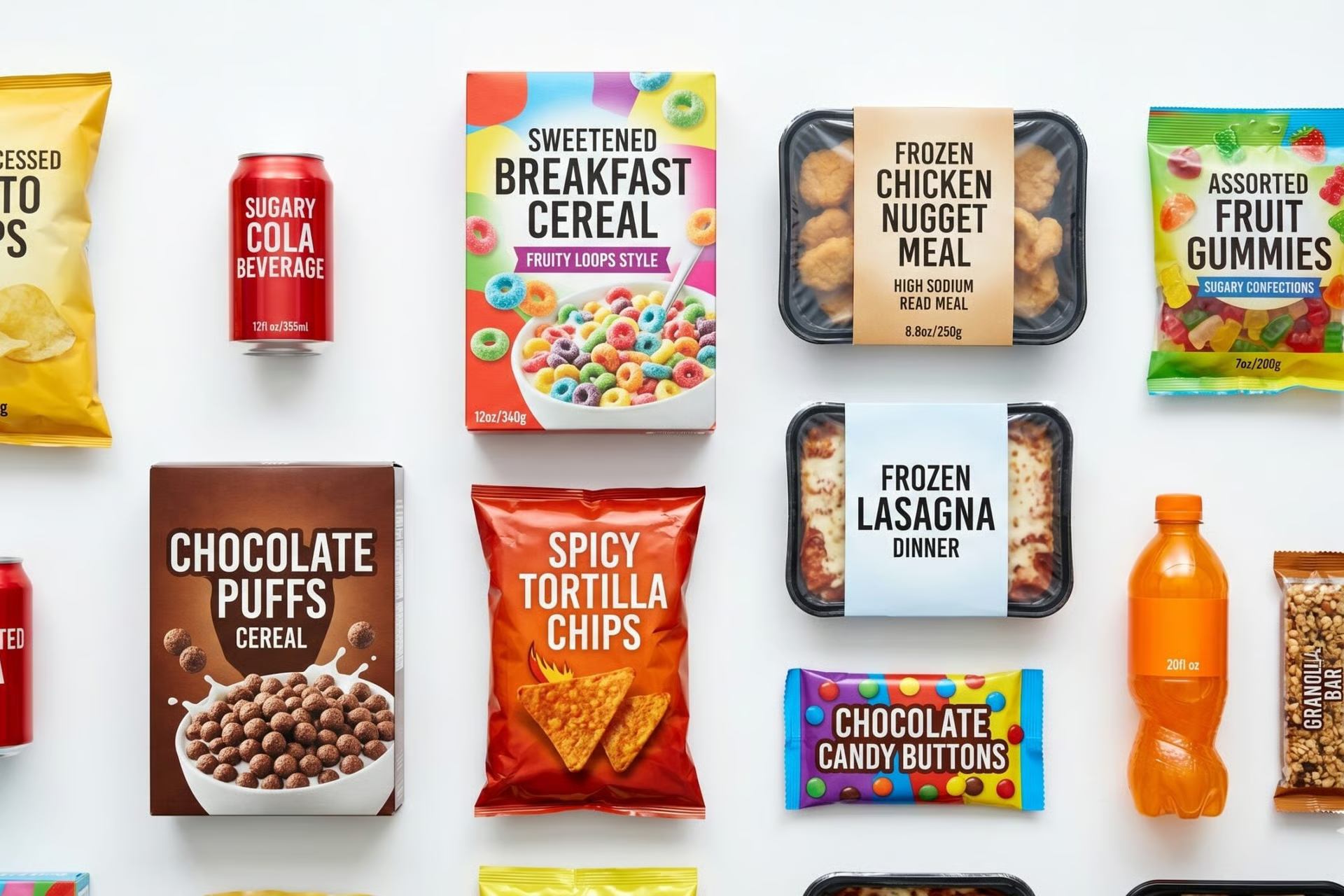
If you eat a lot of processed food, a recent study should have you worried.
Researchers at Harvard’s TH Chan School of Public Health recently published findings that American adults who eat the most ultraprocessed foods The risk of developing dementia in later life was 58% higher.
They had a 46% higher risk of cognitive impairment compared to people who ate less.
The study was published in June in the American Journal of Public Health along with more than a dozen others, painting an ugly picture of what the modern American diet is doing to our brains, hearts and wallets.
Here’s what you need to know.
1. The numbers are new, and scary
The Harvard team tracked older US adults and compared those who ate the most ultraprocessed-foods with those who ate the least. The high-consumption group had a 58% higher risk of dementia, and their risk of cognitive impairment was 46% higher.
Senior author Cindy Leung at Harvard points out the flip side: People who ate more minimally processed foods, such as whole grains, fruits and vegetables, had a lower risk of both cognitive impairment and dementia.
In other words, real food protects your brain. Engineered food hits it with a hammer.
This is not the first time researchers have shed light on this. A 2024 study also linked a 10% increase in ultraprocessed food intake to a 16% higher risk of cognitive impairment and stroke. The new numbers are even bigger.
2. We are eating these things in huge quantities
according to U.S. Centers for Disease Control and Prevention53% of American adults get the majority of their daily calories from ultraprocessed foods. This number increases to 62% for children aged 1 to 18 years.
And approximately 70% of the foods on the shelves of American grocery stores are highly processed. So trying to avoid them isn’t just a problem of willpower – it’s a logistics problem.
3. Ultraprocessed means more than chips and soda
The obvious ingredients in the category include: soda, packaged cookies, frozen pizza, hot dogs, sugary cereals, energy drinks.
But it also includes food that pretends to be healthy – flavored yogurt, plant-based meat alternatives, protein bars, store-bought bread, flavored nuts, and many “natural” sauces and dressings.
If the ingredient list reads like a chemistry homework assignment – emulsifiers, hydrogenated fats, protein isolates, modified starches, artificial flavors – it’s almost certainly ultraprocessed.
4. Researchers believe it’s no accident
A second study published the same day, co-authored by University of Michigan psychologist Ashley Gearhart, argues that food companies create products with the exact combination of sugar, fat and additives to create something close to a chemical addiction.
Gearhart’s prior research found that more than 12% of older Americans, and 21% of women ages 50 to 64, are now clinically addicted to ultraprocessed food. Globally, 12% of children meet the same threshold.
This doesn’t seem to be a problem of willpower. It seems that such a product is designed to dominate willpower.
Quit immediately – Most internet financial advice comes from people who weren’t alive during the last recession. I’ve been writing about money for over 35 years. Do you want concrete advice? Sign up for the free Money Talks newsletter. It takes 10 seconds. No sparkles. no spam.
5. Americans of every political class are fed up
one more survey A report published the same day in the American Journal of Public Health found that 77% of Americans – Republicans, Democrats and Independents – want mandatory warning labels on ultraprocessed food packages.
Up to 70% of people want companies to be banned from advertising these products on children’s TV. And 87% want government safety testing for lab-made chemicals that end up in our food.
This is not a Republican issue or a Democrat issue. It’s like “Have you read the back of a cereal box lately?” Issue.
6. Don’t hold your breath for Washington
The food industry spends a lot of money protecting the status quo. Between 1999 and 2020, ultraprocessed food companies spent roughly $1.15 billion on federal lobbying – More than the spending of the gambling, tobacco or alcohol industries.
The Make America Healthy Again Commission promised decisive action on ultraprocessed food by August 2025. The final report, released in September 2025, mostly promised that the government would continue working on the definition of the category. That is not action. That is a stall.
7. This solution is cheaper than you think
Here’s the part no one in Washington wants to talk about: Eating less ultraprocessed food saves you money. A lot of money.
Whole oats are cheaper than name-brand sugary cereals. Dried beans are cheaper than canned chili. Roast chicken with rice and frozen vegetables is cheaper than a frozen entrée. Tap water is cheaper than soda. Apples and carrots are cheaper than chips.
The food industry has spent decades convincing us that convenience is worth the markup. New research shows it’s not for our brains and certainly not for our budgets.
If you want a starting point, our collection of foods that may help fight dementia is a good place to start.
bottom line
I’m not telling you to throw out everything in your pantry. But evidence is accumulating rapidly and it is no longer easy to dismiss it. A 58% increase in dementia risk is not a number you can ignore.
If you have been ignoring this thing, today is a good day to stop it. Read labels. Cook a little more. Save some money. And give your brain a fighting chance in the back half of your life.