

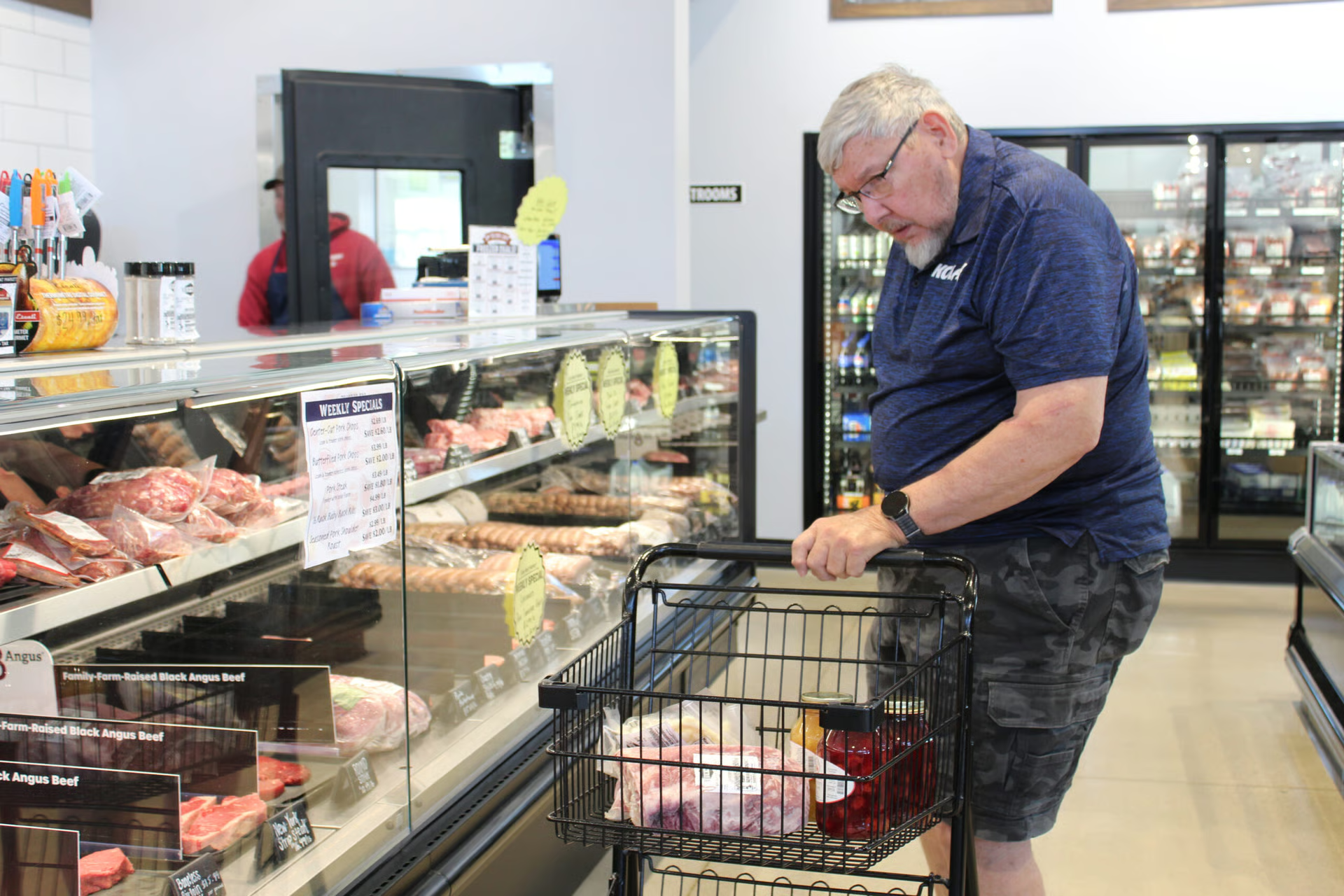
With beef prices reaching record highs, many consumers across the country, struggling with sticker shock, are wondering out loud why ribeye steaks cost nearly $22 a pound. Economists say the reason behind this has persisted for years, driven primarily by drought-induced herd losses and strong demand – not just general inflation.
The average retail price of beef hit a record $9.64 per pound in April, up nearly 13% from last year, according to USDA Economic Research Service data. While inflation has played a role, agricultural economists Brenda Boetel and Jeffrey Swenson say beef prices today are being driven primarily by a historic shortage of cattle to meet steady consumer demand.
“The most significant factor is the shrinking U.S. cattle herd,” said Boetel, professor of agricultural economics at the University of Wisconsin – River Falls. “As of Jan. 1, the national herd stood at about 86.2 million — the smallest since 1951 and about 9% below its peak in 2019. Fewer cattle means less beef, and while demand remains stagnant, supply remains tight, sending prices up.”
Drought casts a long shadow over the beef industry
The roots of today’s tight supply go back years. Boetel says prolonged drought in major cattle-producing states has forced cattlemen to sell animals earlier than planned, including breeding cows needed to rebuild herds. When pastures dry up and hay becomes scarce or expensive, producers often have no choice but to reduce numbers – a process known as herd liquidation.
“That liquidation has a long-term impact on the beef supply,” Boetel said. Unlike crops that can be grown again each season, cattle production follows a biological timeline. Even when prices encourage expansion, it takes years to rebuild the herd.
“If a producer has a heifer today, it could take two to three years for that calf to be in the beef supply,” Boetel said. “There’s no way to fix this kind of shortcoming quickly.”
Why hasn’t the demand for beef decreased?
Despite high prices, Americans have not shied away from beef. Svensson points to strong retail sales and changing food trends as key factors in keeping demand high.
“There is an increasing focus on protein in the diet,” said Swenson, a meat and livestock specialist for the Wisconsin Department of Trade and Consumer Protection. “People are paying the same attention to protein intake as they did to counting calories.”
Swenson says beef farmers are doing an excellent job of improving the quality and flavor of beef while focusing on protein.
“Part of this is through genetics, but the cattle are also spending more days on pasture, leading to a higher degree of marbling,” Swenson said. “People are demanding beef as quality and consistency have improved. This keeps demand strong even at higher prices.”
Will the price of ground beef become out of reach?
Ironically, high-quality beef has created challenges for one of the most affordable parts of meat. As more cattle grade choice and prime, less lean trim is available – an essential ingredient for making processed products such as ground beef and snack sticks.
“Heavy cattle hauls help offset the short supply somewhat, but so far this year beef production is down about 7% from last year, while cattle slaughter is down about 9%,” Swenson said.
The lack of lean trim has pushed ground beef prices higher, even as cost-conscious shoppers have turned to ground beef as an ever-lower-priced alternative. To fill that gap, Swenson says beef imports – especially from countries like Brazil, Australia and Canada – have increased. Nevertheless, imported beef still accounts for a minority of consumption and is not enough to fully offset the domestic shortfall.
Import helps – but doesn’t solve the problem
US imports of cattle from Mexico, primarily feeder cattle destined for pasture, are heavily disrupted.
“Historically, Mexico supplies more than 1.8 million head of cattle to the U.S. annually,” Boetel said. “With domestic calf supplies already tight due to herd depletion, disruptions to Mexican feeder cattle imports have further reduced feedlot inventories and reduced beef production. This is resulting in upward pressure on wholesale and retail beef prices.”
Imported beef from countries such as Brazil, Australia, Canada, New Zealand and Mexico accounts for about 20% of US consumption, which has increased from 10% to 15% in recent years. It is mostly used in hamburger production. Still, Americans are expected to have about a pound less available per capita this year than last year, Boetel said.
“Imports help supplement supply, but they are not large enough to completely offset the shortfall,” Boetel said.
What’s next for beef prices?
The future of beef prices will be influenced by supply and demand. Swenson says simply put, either demand will decrease or the supply of cattle will increase.
“In the short term, demand for beef generally remains high through and through June, with some cuts like ribeye and other steaks tapering off around the Fourth of July, when grillers turn their attention to burgers, brats and hot dogs,” he said. “Although this may lead to a decline in overall beef prices, ground beef prices are expected to rise in July and August. Long-term demand may be affected by higher prices as customers look to pork or poultry in place of beef. We have not seen that happen yet.”
In the long term, the outlook depends on whether supply can increase – and this remains uncertain.
“Past conditions in many parts of the country have been impacted by persistent drought and forage is in short supply. Although many farmers and ranchers would like to increase their grazing numbers, conditions are not as favorable as they would like,” Swenson said.
High land, labor and interest costs are also discouraging expansion, as well as the age of the owners.
“Many manufacturers are reaching retirement age, while younger generations are often reluctant to enter the business due to high startup costs and financial risk,” says Boetel. “Urban development has also reduced grazing land in some areas, limiting opportunities for herd growth.”
Ultimately, high beef prices reflect a historic shortage that cannot be resolved quickly. Many analysts now believe it could take several years for the cattle cycle to completely turn around.
“Until we see meaningful herd expansion, beef prices are likely to remain high,” Boetel said. “This is a supply problem that has been years in the making – and will take many years to fix.”
Swenson says many predict it will be 2030 before the pendulum swings in the other direction.
“If that’s true, beef prices could remain high for the next four years, but again, it will depend on Americans’ appetite for beef,” Swenson says.
This article was originally published on the Wisconsin State Farmer. Reporting by Colleen Kottke, USA TODAY Network/Wisconsin State Farmers. USA TODAY Network via Reuters Connect.