

They say, “Crime doesn’t pay.”
Are “they” sure about it?
I’ve been writing about your money for over 35 years, and part of my writing is looking at our federal government. I’ve seen a lot of waste, a lot of stupid ideas, and a lot of pet projects funded with your paycheck.
But I’ve never seen anything like it.
On May 18, the Trump administration set aside $1.776 billion in taxpayer money to compensate Americans who the president says were unfairly targeted by federal prosecutors. Acting Attorney General Todd Blanch told the Senate this “Anybody can apply in this country.”
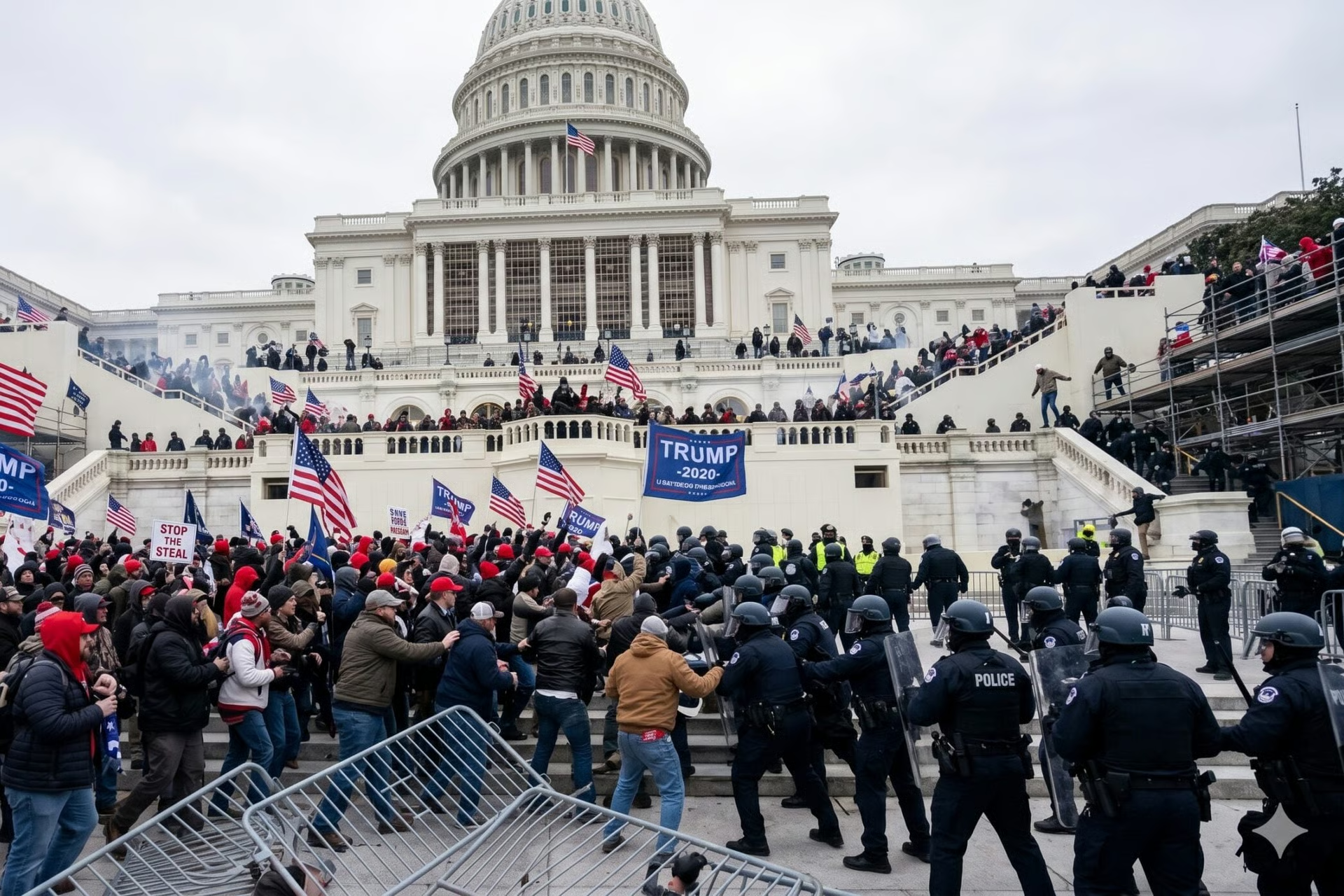
This includes those who attacked the US Capitol on January 6, 2021 – including those guilty of destroying our property and attacking the police officers we pay to protect it.
And it is now one of the five money streams flowing to the January 6 rioters. Let me walk you through them.
(Quick caveat: A portion of every paycheck you earn helps finance the thing you’re about to read about. If you want a comprehensive look at how Washington spends your money, we’ve covered some of the biggest taxpayer headaches.)
1. $1.776 billion ‘anti-weapons fund’
The Justice Department announced the funds on May 18 as part of a $10 billion settlement of a lawsuit against the Internal Revenue Service over the leaking of President Donald Trump’s tax returns.
The Treasury has 60 days to move the money into the pot. A five-person commission appointed by the acting Attorney General will decide who gets paid and how much, and the President can remove any of those members at will. This fund runs till December 2028.
That amount – $1.776 billion – is a deliberate nod to the year of American independence, 1776. this year is also Capitol rioters were called as their rally that day, and is used in the title of the Proud Boys’ planning document, “1776 Returns”.
I find it a little ironic that all of this is coming out right before the holidays when we honor our service members who gave their lives to protect our country.
Under pressure from senators on Tuesday, Blanche refused to pay the convicted rioters of January 6. Vice President J.D. Vance supported him: “I’m not going to commit to giving money to anyone or giving money to anyone.”
So how much can a rioter really pull off?
Jake Lang – pardoned by Trump after being charged with eight counts of assaulting officers – told npr Misdemeanor defendants “should likely receive several hundred thousand dollars”, while felony cases “may have the possibility of more than a million dollars.”
Former Proud Boys leader Enrique Tarrio, who on January 6 received the longest sentence (22 years before pardon), is already preparing his application. Jenny Cudd, a Texas florist who pleaded guilty to a misdemeanor, told CBS News that “all the J6ers will apply.”
Are you starting to feel a little cheated yet? Catch. it gets worse.
2. Babbitt family’s $4.975 million wrongful-death settlement
In May 2025, the Trump administration agreed to pay approximately $5 million to settle a wrongful-death lawsuit brought by the family of rioter Ashli Babbitt. Shot and killed by Capitol Police officer When he tried to climb through a broken window outside the House Chamber.
The original lawsuit, filed by the conservative legal group Judicial Watch, had sought $30 million.
The shooting officer, Lt. Michael Byrd, was cleared of any criminal wrongdoing in the DOJ’s own investigation in 2021.
But four years later – under a new administration – the DOJ decided to write a $5 million check anyway. About a third of it went to Babbitt’s lawyers.
Then-Capitol Police Chief Tom Manger called the settlement “extremely disappointing” and warned that it would send “a chilling message to law enforcement across the country.” His statement was largely ignored.
So we have established that the family of the man who illegally entered the Capitol and was tragically killed will receive a $5 million check. The officer who legally stopped him received a chilling message.
Quick gut-check – If your money advice is coming from random online influencers, you’re playing a dangerous game. I’ve been a CPA since 1980 and have been writing about money since before the Internet existed. Sign up for the free Money Talks newsletter and get time-tested expert advice.
3. Compensation Refund – Paying rioters back for the damage they caused
On January 6, most of the convicted defendants were ordered to pay restitution to help repair the approximately $3 million in damage caused to the U.S. Capitol. Misdemeanors typically have to pay $500. Felons paid about $2,000.
Total recovery was made from the rioters approximately $437,000 – A small fraction of the actual damage they cause.
That money is now flowing in the other direction.
In April 2025, the DOJ took the stance that pardoned defendants whose convictions were vacated on appeal are entitled to a refund.
That August, a federal judge approved the first: $2,270 for Yvonne St. CyrAn Idaho woman was sentenced to 30 months in prison on two felony counts of civil disorder. The same judge told him at sentencing that he had “little or no respect” for the law.
U.S. District Judge John Bates, appointed by George W. Bush, was not enthusiastic about the refund. “Sometimes a judge is called upon to do what the law requires,” he wrote, “even if it may seem contrary to justice or one’s initial instincts. This is one such occasion.”
By December, Chief Justice James Boasberg had reversed his own earlier ruling and ordered full refunds for two more defendants. At least eight January 6 rioters are now in court demanding similar refunds.
4. Civil-Suit Pipeline – More Big Checks Coming
The Babbitt Agreement was not an external affair. This was an early gun.
The DOJ also reached a $1.1 million settlement with anti-abortion activist Mark Hawk, who was acquitted of assault charges. And it paid $1.25 million to Trump’s former national security adviser Michael Flynn, who pleaded guilty to a felony count of lying to the FBI before being pardoned in 2020.
NBC News reported that until the anti-weapons funding was announced, the DOJ was actively defending civil lawsuits related to January 6. It is unclear whether they will still do so.
If the answer is no, expect a flood of cases and taxpayer-funded settlements.
According to The Washington Post, hundreds of additional claims have already been filed, alleging that the DOJ, FBI and other law enforcement agencies caused property damage and personal injuries to the defendants on January 6.
5. Forgive yourself
Without it none of the above happens.
On January 20, 2025 – his first day of return to office – President Trump pardoned or commuted the sentences of more than 1,500 people charged in connection with the Capitol attack.
This includes people convicted of attacking police, members of the Proud Boys and Oath Keepers, and people serving decades in prison.
It’s hard to sum up the financial value in a dollar figure. But consider what a pardon erases: jail time and lost wages, probation costs, court fines, and a felony record that follows you on every job application for the rest of your life.
For defendants facing lengthy sentences on January 6, the pardon alone could be worth millions in present value terms.
And clemency opened the door for everything else on this list. A conviction is not a legal basis for denying a restitution refund. No convictions mean rioters can credibly claim they were targeted by an “armed” government.
Without forgiveness, none of this exists.
What can you do about it
I’m a consumer journalist, not a politician. The political debate isn’t going to be settled by me – and it’s not going to be settled by this article either.
My job is just to tell you what’s happening with your money.
The $1.776 billion anti-arms fund alone works out to about $5 per American – every man, woman and child. Add in the Babbitt settlement, restitution refunds and the coming wave of civil lawsuits, and the bill is only going to grow.
Senators Ron Wyden and Jeff Merkley have introduced legislation to ban taxpayer money from compensating the January 6 rioters. And on May 21, two Capitol Police officers filed a federal lawsuit to block the funds entirely.
Whether either effort succeeds is anyone’s guess.
But if you want to speak with your member of Congress, the Capitol switchboard number is (202) 224-3121. Tell them what you think about tax dollars going to people who assault police officers. You can also find your senators and representatives and send them a note here democracy.io.
In decades of writing about money, I’ve certainly learned one thing. If you don’t pay attention to where your money is going, you are giving up your right to complain.
make a difference. Use your voice. So share this article.