

Close Menu
Smart Wealth Habits
    What's Hot

    100 years of love and money

    May 25, 2026

    ChatGPT Ideas to Earn Passive Income

    May 25, 2026

    ‘Mister. Buffett, ‘How Do I Make $30 Billion?’: Warren Buffett Reveals 3 Simple Investing Rules He Follows

    May 25, 2026
    Facebook X (Twitter) Instagram
    Monday, May 25
    Smart Wealth Habits
    Facebook X (Twitter) Instagram
    • Home
    • Blogs
    • Personal Finance
    • Wealth Building
    • Digital Products
    • Small Business Finance
    Smart Wealth Habits
    Home » PPF Account 2026: Interest rates, key changes, tax benefits, investment tips explained
    Wealth Building

    PPF Account 2026: Interest rates, key changes, tax benefits, investment tips explained

    Smart WealthhabitsBy Smart WealthhabitsMay 21, 2026No Comments3 Mins Read
    Facebook Twitter LinkedIn Telegram Pinterest Tumblr Reddit WhatsApp Email
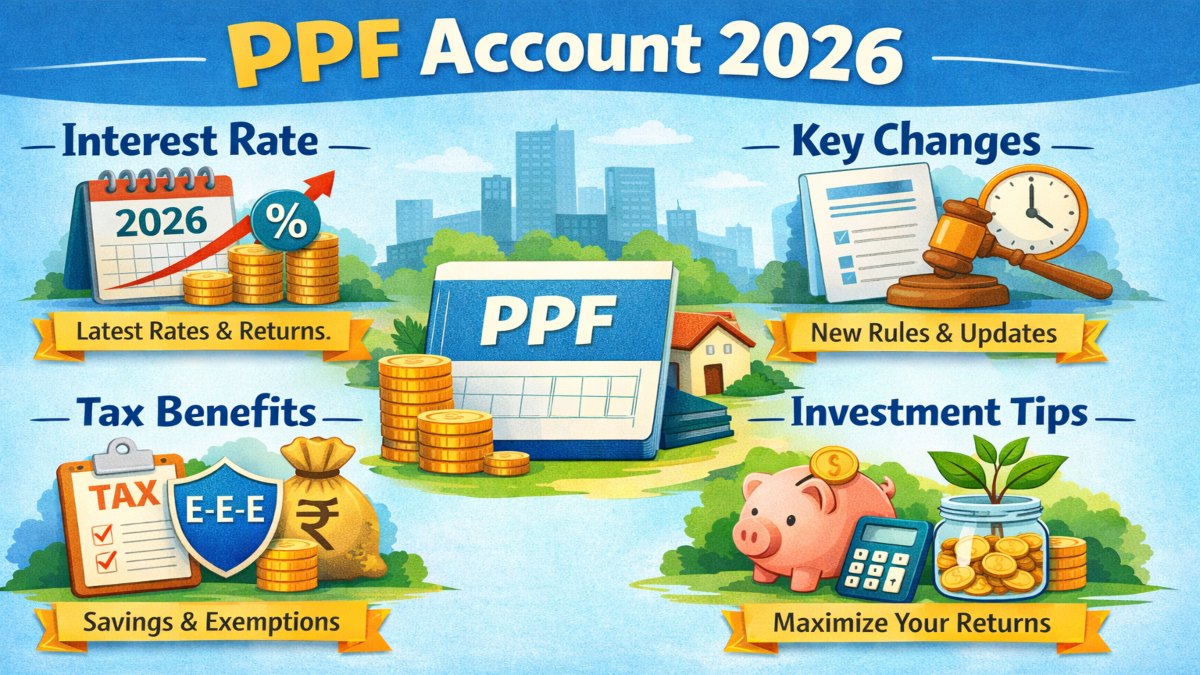
    PPF Account 2026: Interest rates, key changes, tax benefits, investment tips explained
    Share
    Facebook Twitter LinkedIn Pinterest Email

    Class

    Published: Wednesday, May 20, 2026, 12:37 (IST)

    Public Provident Fund (PPF) has long been considered one of the most reliable investment options for individuals seeking safety, tax efficiency and long-term financial security. With interest rates remaining unchanged for FY 2026-27, this government-backed savings scheme remains a preferred option for retirement planning and wealth creation in India.

    If you’re planning for retirement or looking to build a long-term savings fund, here’s everything you need to know about the Public Provident Fund (PPF).

    What is PPF account?

    Public Provident Fund (PPF) is a long-term savings scheme launched by the Government of India. It offers a fixed, government-announced interest rate, a lock-in period of 15 years and attractive tax benefits under the exempted-exempt (EEE) category.

    This means that:

    • Contributions made to the account are eligible for tax deduction,
    •The interest earned is tax-free, and
    •Maturity amount is also tax free.

    Current PPF Interest Rates in India for 2026

    The Government of India has retained the PPF interest rate at 7.1% per annum for 2026. The interest is compounded annually, ensuring stable and predictable returns for investors. Since the rate is backed by the government and reviewed quarterly, investors can benefit from low risk and relatively stable returns without worrying about market volatility. This stability makes PPF an attractive option for both existing and new account holders.

    Major PPF rule changes announced in 2026

    Higher annual investment limit

    The maximum annual deposit limit for PPF has been increased from Rs. 1.5 lakh to Rs. 2 lakh. This allows investors to contribute more towards building a larger long-term savings corpus.

    Fast access to partial withdrawals

    Earlier, partial withdrawal from the PPF account was allowed only after completion of five years. Under the latest update, investors can now make partial withdrawals after four years, offering better liquidity while supporting long-term savings goals.

    No change in interest rate

    The PPF interest rate remains constant at 7.1% per annum with compounding annually.

    Tax Benefits of Public Provident Fund

    Apart from being a low-risk investment option that supports retirement planning, PPF also offers significant tax benefits.

    1. Deduction on contributions under Section 80C – Contributions made to the PPF account are eligible for tax deduction under Section 80C of the Income Tax Act. Under the old tax regime, investors could claim a deduction of up to Rs. 1.5 lakh annually. However, deduction on PPF contributions is not available under the new tax regime.

    2. Tax-free interest income – Interest earned on PPF investments remains tax-free for contributions up to Rs. 5 lakh per year. Additionally, interest earned on deposits made before April 1, 2021, will remain completely exempt from tax.

    How to maximize PPF returns?

    To get maximum returns from PPF account, investors should plan their deposits strategically. For example, lump sum investors should ideally deposit funds before April 5 of the financial year to earn maximum annual interest. Meanwhile, monthly contributors should ensure that deposits are made before the 5th of every month, as deposits made after this date do not earn interest for that month. Most importantly, consistent and timely contributions can significantly improve long-term returns through the power of compounding.

    Share this article

    Story first published: Wednesday, May 20, 2026, 12:37 (IST)

    Other articles published on May 20, 2026

    account Benefits Explained interest investment key PPF rates tax tips
    Share. Facebook Twitter Pinterest LinkedIn Tumblr Telegram Email
    Previous ArticleDoes waiting until age 70 to claim Social Security help middle-class couples? Here’s what an expert told the 62-year-old
    Next Article This is the salary you need to live comfortably in America’s 15 largest metropolises
    Smart Wealthhabits
    • Website

    Smart Wealthhabits shares practical insights on personal finance, wealth building, and small business strategies to help readers make smarter financial decisions and achieve long-term financial success.

    Related Posts

    ChatGPT Ideas to Earn Passive Income

    May 25, 2026

    ‘Mister. Buffett, ‘How Do I Make $30 Billion?’: Warren Buffett Reveals 3 Simple Investing Rules He Follows

    May 25, 2026

    Daughter says she refused to give her parents access to her bank account after she turned 18, now they say she’s “behaving secretively”

    May 25, 2026
    Add A Comment
    Leave A Reply Cancel Reply

    Top Posts

    Mortgage Rates Today, Thursday, March 12: Slightly Higher

    March 13, 2026

    7 Smart AI Money Making Ideas to Try Today in 2026

    March 13, 2026

    Y Combinator-backed Random Labs launches Slate V1, claiming to be the first ‘swarm-native’ coding agent

    March 13, 2026

    3 real examples of how to handle overseas rental properties

    March 13, 2026

    How to Become a Substitute Teacher – and How Much You Can Earn

    March 13, 2026

    Subscribe to Updates

    Stay updated with the latest insights on finance, investing, and business growth.

    About us

    Welcome to Smart Wealth Habits, your trusted guide to mastering personal finance, building wealth, and growing your small business.

    Our mission is simple: to empower individuals and entrepreneurs with the knowledge and tools needed to make smart financial decisions, increase income, and achieve long-term financial freedom.

    Facebook X (Twitter) Instagram Pinterest YouTube
    Top Insights

    Mortgage Rates Today, Thursday, March 12: Slightly Higher

    March 13, 2026

    7 Smart AI Money Making Ideas to Try Today in 2026

    March 13, 2026

    Y Combinator-backed Random Labs launches Slate V1, claiming to be the first ‘swarm-native’ coding agent

    March 13, 2026
    Get Informed

    Subscribe to Updates

    Stay updated with the latest insights on finance, investing, and business growth.

    © 2026 smartwealthhabits.com.
    • About Us
    • Contact us
    • Disclaimer
    • Privacy Policy
    • Terms and Conditions

    Type above and press Enter to search. Press Esc to cancel.