

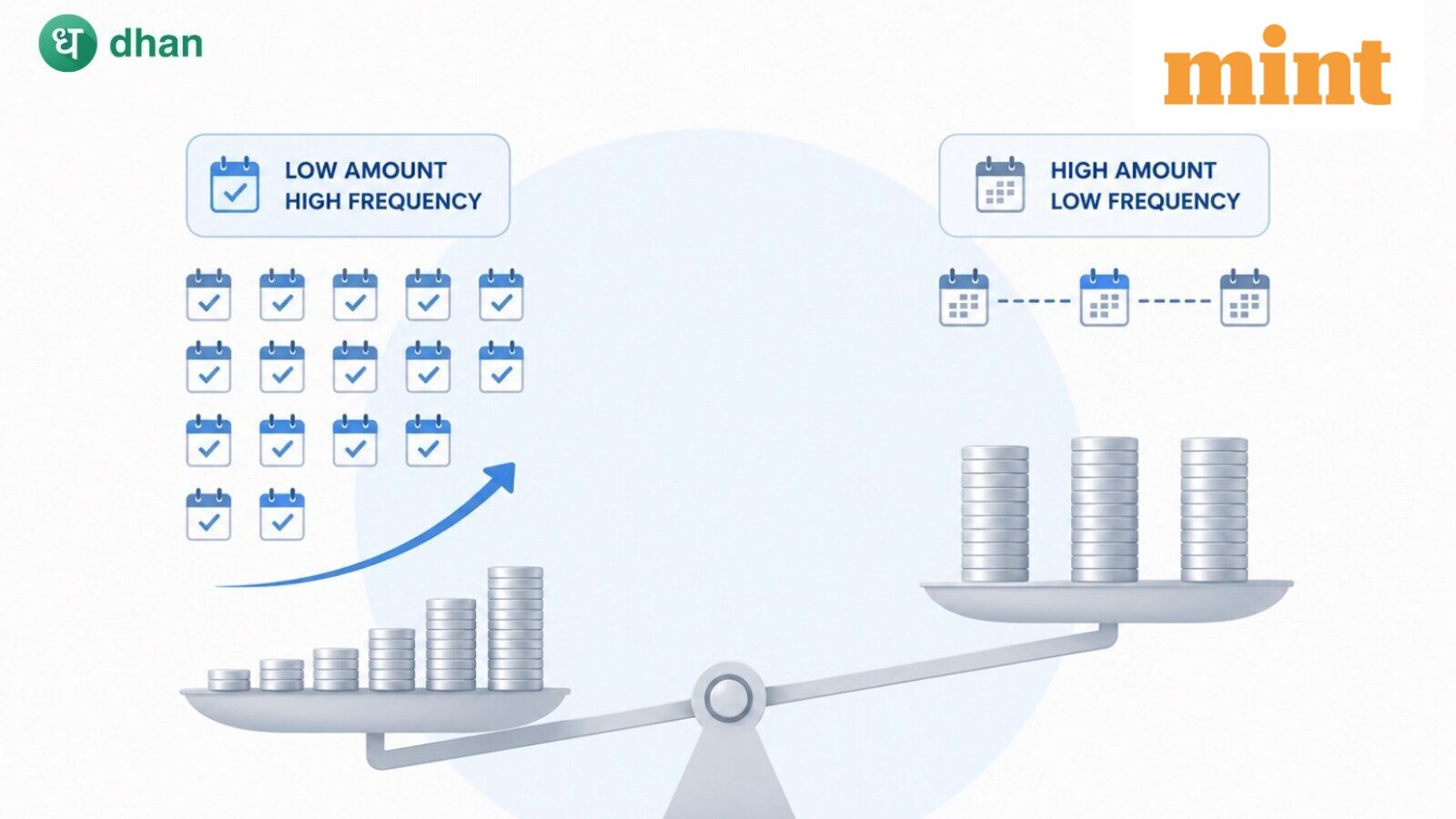
Traditionally, Systematic Investment Plan (SIP) investing has been a way for Indian households to start their investment journey and build wealth. The idea was to ‘set-and-forget’, which meant investing a fixed amount every month in a chosen investment scheme. But, as our lives and banking apps become faster, this ‘one size fits all’ approach may not be the best fit for every lifestyle.
Today, the modern investor is looking for more control and precision. Whether you want to invest every day, every week or once a month, customizing your SIP means making the market work for your specific cash flow. This guide explains how to move beyond the traditional monthly cycle to create an investing strategy that is as unique as your financial goals.
SIP Calculator: Your Financial Time Machine
Before you choose a date or frequency, you need to see if it will meet your ultimate financial goals. think of one sip calculator As a financial time machine. By typing in a small amount of money you can spend today, the calculator shows you exactly how much it could grow to over the next decade or two.
As investors, many of us might want to wait to collect a lump sum or set aside a large sum every month before signing up for an investment. The feeling behind this is that small quantities do not matter. SIP calculator proves the opposite with the power of compounding.
The calculator also helps highlight the cost of delay. This shows you how starting six months early is often more valuable than trying to find a perfect amount to start at a later date. By visualizing the future, the calculator helps turn a desire for the future into a concrete habit.
Weekly SIP: The power of micro habits
Have you ever noticed how spending ₹Rs 500 for a weekend coffee outing. seems easier than paying ₹2,000 utility bills? This is the psychology behind the shift towards weekly SIPs. For many salaried professionals, a large monthly deduction can feel like a significant outlay that restricts their lifestyle. In contrast, a weekly SIP feels like a subtle habit.
By aligning your investments with your weekly budget, the process seems less burdensome and putting the money aside feels easier. Apart from psychological benefits, it also provides the advantage of rupee cost averaging. Recent months of geopolitical instability have shown that the stock market can show volatility within a month.
If the market falls in the second week but recovers by the fourth week, a monthly investor whose SIP is scheduled for the 25th may miss the lower price point. However, a weekly investor automatically buys into those mid-month dips, ensuring a better average cost over time. use the Weekly SIP Calculator To see how much you need to save each week to meet your goals.
Daily SIP: Controlling the market noise
Daily SIPs are for investors who find daily market headlines stressful. By investing a small amount each trading day, you can effectively balance out the daily noise of the market because you are effectively buying at every single price point. A daily sip calculator You may find it helpful to determine an ideal amount for each day.
This investment strategy is especially effective for freelancers, consultants or small business owners who have money coming in daily or at irregular intervals. Instead of letting the surplus cash lie idle in a savings account till the end of the month, a daily SIP puts it to work immediately. In the long run, this high-frequency investing can lead to a very disciplined average purchase price.
Choosing the right rhythm for your financial goals
There is no ideal frequency for SIP. It depends on your finances and investment goals. Many investors start ambitious plans only to have them put on hold during a cash crunch at the end of the month. You should make sure that you choose a frequency that is sustainable for you. Taking a close look at your bank statement can help you with this decision.
- Monthly: Ideal if you have set monthly obligations and prefer a ‘set and forget’ approach that matches your pay cycle.
- Weekly: Best for those who want to build a micro habit and want more protection against mid-month market fluctuations.
- Daily: Perfect for those with volatile income streams or those who want to completely ignore market fluctuations by averaging every day.
Step-by-Step Checklist to Get Started
If you are currently on a monthly plan and want to prepare your strategy, follow these simple steps to see if there is a need to change the frequency of SIPs:
- Analyze your cash flow: Determine when your account has the most liquidity. Is it right after your pay check, or do you have a little surplus every week?
- Use SIP Calculator: Set a target corpus and work backwards to figure out the total amount you need to invest each month.
- divide and conquer: If your goal is ₹10,000 per month, consider dividing it into weekly installments ₹2,500.
- Automate: Make sure your bank’s auto-debit is set to your chosen frequency to remove the need for manual intervention.
- Review, not react: Check your progress every six months, but don’t let daily market news alter your long-term plan.
In conclusion, whether you choose daily, weekly or monthly intervals, the key to success is consistency. Use the tools available to map out your journey, choose a rhythm that matches your life, and let the twin engines of timing and composition do the heavy work.
Note to readers: This article has been produced by HT Brand Studio on behalf of the brand and has no journalistic/editorial involvement from Mint.