

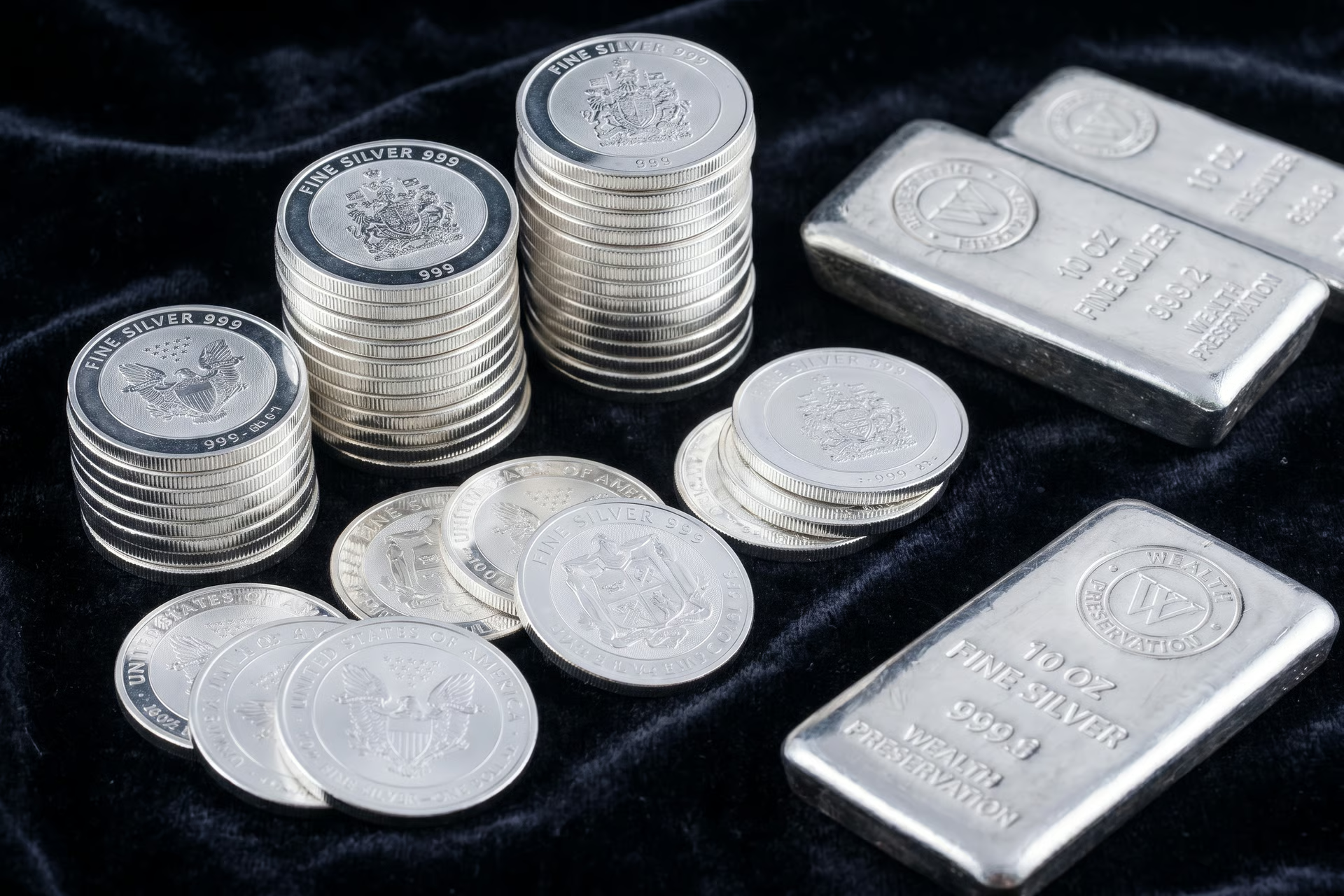
Investors buy silver for a variety of reasons. Some people want protection when the market falls. Others worry that inflation will drain their savings. But recent price headlines won’t tell you whether the precious metal belongs in your portfolio or not.
So, should you invest in silver? Understanding what changes the price of silver and how it compares to other investments can help you make this decision.
Is it worth investing in silver?
Whether silver is worth investing in depends on your goals, risk tolerance and time horizon.
If you want to add diversification to your portfolio or invest in precious metals, but don’t have the funds to purchase a full ounce of gold, purchasing silver may be beneficial. This is a low-cost entry for this type of investment. Silver can also act as an inflation hedge, and store value during inflation.
However, silver prices fluctuate much more than gold prices, so the short-term risk is greater. If you invest in physical silver, it is also hard to sell it if you need to cash it out quickly.
So is silver worth investing in? It can be, but silver investments should complement your portfolio, not take over it.
How is silver used as an investment?
Silver functions as an investment in different ways, depending on what you are trying to achieve.
“Holding physical silver (for example, coins and bars) is a way to preserve long-term value,” says Brandon Aversano, CEO of The Alloy Market, a precious metals buyer in Newtown, Pennsylvania.
In that case, you decide where to put it and have direct access, although that also means handling the security yourself.
Some investors prefer to own paper silver through exchange-traded funds (ETFs). Silver ETFs give you price exposure without the hassle of storage or insurance.
Brett Elliott, director of marketing for precious metals dealer American Precious Metals Exchange (APMEX), says popular ETFs are easier to trade and generally cost less to buy and sell. This works well for investors with short time horizons.
However, the role of silver extends far beyond investments. Manufacturers use the metal in electronics, medical equipment and solar panels. Industrial demand affects supply and pricing differently than pure monetary metals like gold. When both investors and producers compete for the same limited supply, prices begin to climb.
What causes the price of silver to move?
Silver prices react to multiple forces that often overlap:
- Supply and Mining Production: Prices rise when mines cannot produce enough silver to meet demand. Buyers compete for limited supply, driving up costs.
- Industrial Consumption: “The increased use of silver in industrial contexts directly impacts consumption,” explains Aversano. The more manufacturers require, the less profits investors will get.
- Economic Uncertainty and Investor Sentiment: Silver becomes popular when inflation rises or the economy looks shaky. Investors consider it a safe place to park money during uncertain times, making demand high.
- Interest Rates: When rates rise, yield-yielding investments become more attractive, which puts downward pressure on silver prices. Low rates have the opposite effect.
Potential benefits of investing in silver
Silver offers potential benefits for investors, although there are no guarantees:
- Low Entry Cost: “Silver may be less expensive than gold,” says Aversano. This makes it easier for new investors to get started with precious metals.
- Portfolio Diversification: Steve Azori, a Chartered Financial Advisor (CHFC) and owner of Azori Financial in Troy, Michigan, notes that silver is “a real asset independent of politics and government policies.” This can help spread risk across different asset types.
- Tangible Asset Appeal: Because physical silver exists outside of the financial system, it attracts investors who want direct control over their holdings.
- Possible rescue features: “Silver can serve as a partial hedge against inflation and currency fluctuations, although it is not used as a hedging vehicle like gold,” explains Aversano.
Risks and Drawbacks of Investing in Silver
While silver has its benefits, it also comes with risks:
- Price Volatility: “If demand for silver decreases, it could cause the price to drop precipitously,” Azori warns. Investors entering the market now should be prepared for volatility, as current conditions have increased the risk of sharp price fluctuations.
- Storage and Insurance Costs: Physical silver requires secure storage. You also need to take into account the cost of the safe or secure, as well as insurance to protect against theft or loss. These ongoing expenses can impact returns over time.
- Liquidity and Transaction Costs: Selling physical silver is not as easy as selling stocks. According to APMEX’s Elliott, strained supply chains have widened spreads for investors. This means you can pay more when buying and get less than the spot price when selling.
- tax treatment: The IRS considers physical silver collectible, meaning gains are subject to higher tax rates than stocks or bonds held in taxable accounts. Your after-tax returns are impacted, especially if you sell within a few years.
Silver vs Gold as an Investment
“A simple way to look at silver is that it’s a more volatile version of gold with an industrial demand component,” Elliott explains. When gold prices rise, silver usually rises, but by a larger percentage. This creates both greater risk and the potential for greater profit.
Apart from performance, both metals differ in accessibility. Gold tends to rise significantly per ounce, making it out of reach for some investors. “Gold is rare, but silver has more industrial uses,” Azouari says. In a portfolio, gold generally acts as an anchor while silver plays a complementary role that can boost returns during rallies.
How Silver Compares to Stocks, Bonds, and Cash
Stocks and bonds generate income that can help balance inflation, but they have contractual risks. “Bonds are loans that can default on, and companies can fail and bring down their stocks,” Elliott explains.
Silver doesn’t have those weaknesses – it’s a physical asset that doesn’t depend on someone else’s promises. But, unlike stocks or bonds, silver does not generate income, so returns depend entirely on price appreciation.
Cash has its own tradeoffs. It provides immediate access but its value reduces over time due to inflation. Silver retains its spendthrift better, although it requires more effort to convert it back into cash when needed.
How to Decide If Silver Fits Your Investment Strategy
First, ask yourself: “How long can I invest, and how much volatility can I handle?” Silver performs better as a multi-year holding. Elliott says the average annual return has historically been around 8%. If you need your money back quickly or you can’t afford to lose any of it, silver probably isn’t the right choice.
If silver is a good fit for your situation, the next question is how much to allocate. Most financial advisors suggest keeping silver in your portfolio at 5% to 10%. Azouari says if you’re looking for protection against inflation, silver may be a good fit for you, as long as it’s your primary investment.
how to buy silver
There are several ways to add silver to your investment portfolio:
- Physical Silver: Silver coins and bullion provide direct ownership. You can buy from a dealer, online or in a pawn shop – but you will need to arrange safe storage and it may be difficult to liquidate quickly.
- Silver ETF: These funds track the price of silver and trade on stock exchanges like regular shares, offering easy exposure without the worry of storage.
- Silver Mining Stocks: By investing in companies that mine silver, you indirectly impact the price of silver.
- Futures and Derivatives: These contracts allow experienced investors to speculate on price movements (or hedge risk), often using leverage. Although this may increase profits, it also significantly increases the risk of loss.
- Silver IRA: A silver IRA lets you hold physical silver inside a self-directed individual retirement account. These accounts must follow IRS rules regarding approved products and storage – you cannot keep the metal at home. They may attract long-term investors but often come with high fees, including setup, storage and custody costs.
How much silver should you have?
Silver should be viewed as a complementary investment, not your primary strategy. According to research from Oxford Economics, investors could benefit from a 4% to 6% silver allocation. The Silver Institute’s findings put the average closer to 4.4% for low-risk investors. Other experts recommend 5% to 10% of your portfolio total for silver and precious metals.
The Bottom Line: Is Silver a Good Investment?
Silver is not a get rich quick game or a replacement for core holdings. It works best as a modest position for long-term investors seeking exposure beyond traditional assets. Before investing, understand how it fits your goals, timeline, and risk tolerance. If you’re unsure where to start, a financial advisor can help determine if precious metals are appropriate for your situation and the right amount for your portfolio.
Frequently Asked Questions
Can you lose money investing in silver?
Yes. Like any other investment, the value of silver can also decline. Prices vary depending on manufacturing requirements, the global economy and investor sentiment. Short-term holders face greater risk because they have less time to deal with falling prices.
How much silver should you have in your portfolio?
Financial advisors generally suggest allocating 5% to 10% of your portfolio to silver, although this varies according to risk tolerance. More conservative investors can stick to 2% to 5%, while aggressive investors can go above that.
What is the best way to invest in silver?
It depends on your preferences. Physical coins and bars give you direct ownership, while ETFs provide exposure without the worry of storage. Mining stocks can deliver high returns but come with company-specific risks.
What will be the price of silver in 10 years?
Some forecasts predict silver could reach $100 or more per ounce within the next decade, with more aggressive projections pointing to $200 per ounce by 2030. However, price forecasts for commodities are inherently uncertain.
Can silver reach $100 an ounce?
In recent days, silver has crossed 100 dollars. The current price is around $80 an ounce, so while $100 remains within the historical range, commodity prices could move in either direction.
(This article was updated to add new information.)