

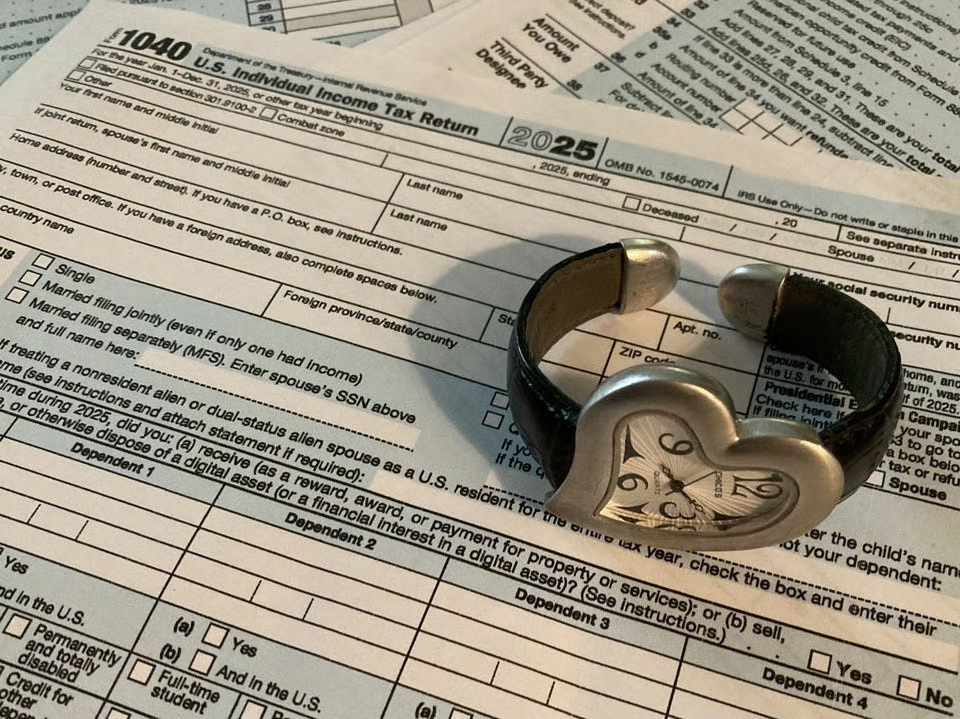
The IRS isn’t advertising that millions of taxpayers could potentially be owed a significant refund from the COVID-19 era, but tax advisors are explaining how to claim it.
A court decision last November in Kwong v. United States suggests that some penalties and interest assessed during the nearly 3.5-year COVID-19 federal disaster period may be unfair, meaning taxpayers may be entitled to a refund or waiver of those amounts.
The reason the IRS has remained silent about this is likely because it disagrees with the decision, and the independent National Taxpayer Advocate (NTA) within the IRS said in a blog post that it expects the Justice Department to appeal the decision. So, a refund is not a sure shot – but there is no time to wait as the deadline to claim it is July 10.
“Even if the IRS disagrees with the Kwong decision, I believe it has an obligation to inform taxpayers of their rights, so if the final resolution of this issue supports their right to a refund or waiver of interest and penalties, taxpayers do not miss the claims deadline,” the NTA said in a blog post.
Experts said if the decision is upheld, taxpayers will have until July 10 to submit claims for refund or exemption. As per the law, taxpayers have only three years from the time of filing the return or two years from the time of paying the tax, whichever is later, to file for a possible refund or reduction of penalty or interest. Since the court’s decision suggested the tax deadline be extended to July 10, 2023, three years from that date would be July 10, 2026 — the last day to preserve your claim, tax lawyers said.
“Millions of taxpayers may be eligible, but if people don’t file a claim before July 10, 2026, they lose the possibility of a refund or exemption,” said John Wasser, a partner at Fox Rothschild who focuses on tax issues.
Who is eligible for a possible refund or deduction?
Any taxpayer, including individuals, small businesses, large corporations, estates and trusts, can be eligible, NTA said.
“The issue reaches taxpayers with obligations relating to income, employment, property, gift and excise,” NTA said. “It may also affect taxpayers who have filed international information returns late, which could result in significant penalties even if no tax is due.”
How do you know if you qualify?
Use IRS tax transcripts to check if you owe any, experts said.
The IRS tax account transcript shows each year’s tax information, including filing status, taxable income, and adjustments made after the original return is processed. They also show the payments, penalties and interest along with their payment or assessment dates.
If the IRS charged you any interest or penalties between January 20, 2020 and July 11, 2023, you may want to explore a refund claim.
Tax account transcripts are available online, by registering to use a personal online account, for viewing, printing or downloading – or by mail. Americans can order one by mail on the IRS website or by calling the Automated Phone Transcript Service at 800-908-9946. It should arrive in five to 10 calendar days.
How do you file a claim?
A tax professional can file a claim on the taxpayer’s behalf, Wasser said, or the taxpayer can file a claim using IRS Form 843 (Claim for Refund and Request for Exemption) using information from the tax transcript.
The attorneys said a taxpayer must specify on the form that it is a protected claim based on Section 7508A(d) and the Kwong v. United States decision regarding the COVID-19 disaster period.
“You’re basically telling the IRS, ‘Here’s the refund claim, put it on hold for now,'” until the case is finally decided, Wasser said. If, after all litigation is completed and the IRS must issue a refund, you will have reserved the right to file your claim.
The NTA said taxpayers do not need to file a separate form for each tax year, but they need to identify the specific tax year or years involved.
Medora Lee is the money, markets and personal finance reporter at USA TODAY. You can reach him at (email protected) and subscribe to his free Daily Money newsletter for personal finance tips and business news every Monday through Friday.