

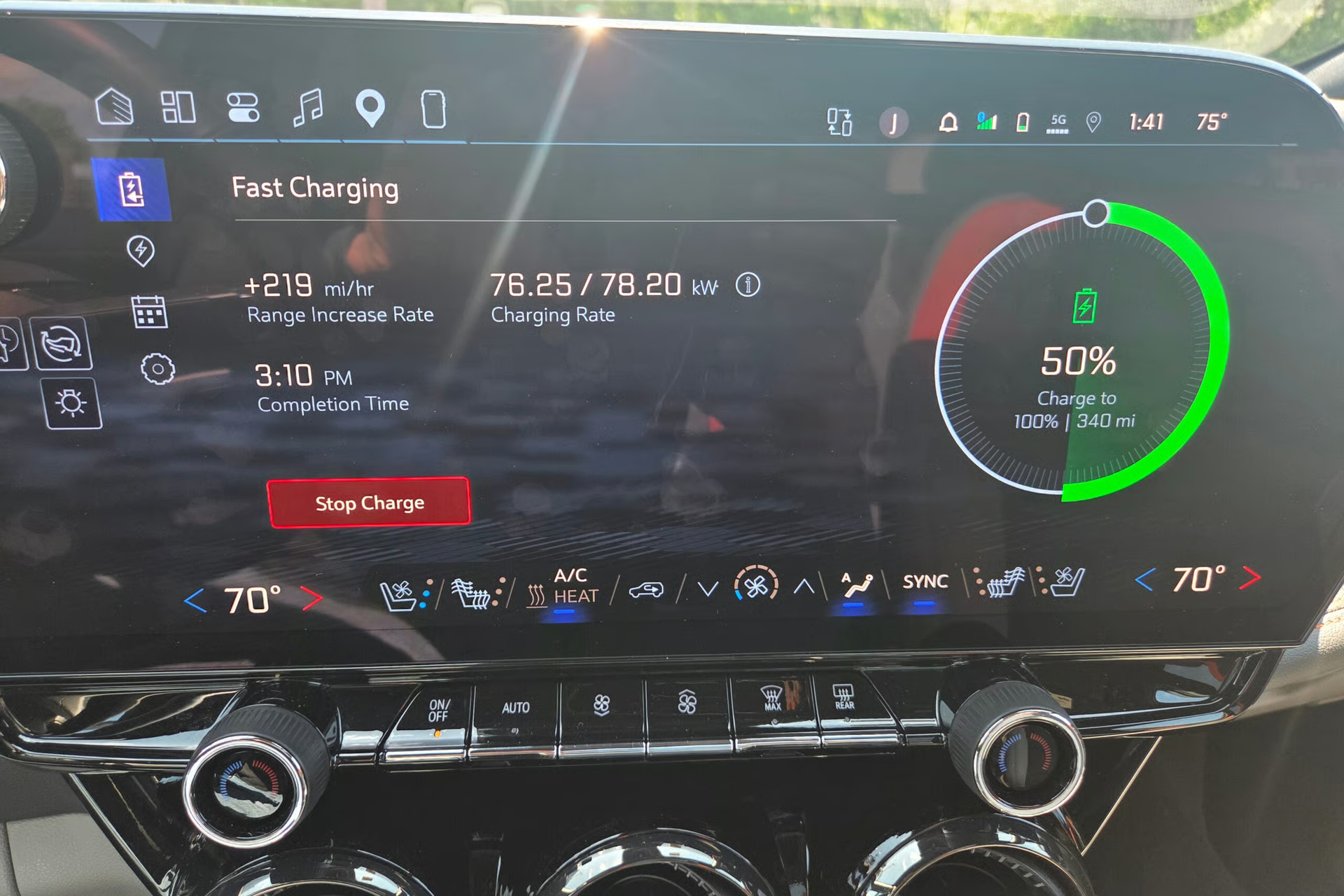
Increasingly hot weather in parts of the United States could have an immediate impact on electric-vehicle drivers.
Warmer temperatures speed up the chemical process that electric vehicle batteries use to store energy, which is why as much of the country recovers from the harsh winter, EV owners are preparing for summer with better battery performance and shorter charging times.
A 2024 study from Consumer Reports found that EV batteries performed 25% better in range when driven at 70 mph in temperatures 20 degrees warmer. The group tested four models made by different manufacturers in hot, mild and cold temperatures and found that they achieved an average range of about 243 miles on a mild day with a temperature of about 65 degrees, while they achieved an average of about 182 miles on a battery charge under the same driving conditions on a cold day with a temperature of 16 degrees.
On hot summer days, battery performance was even better, averaging about 265 miles on a battery charge.
Cold weather impacting performance isn’t just an electric vehicle problem, however. According to the U.S. Department of Energy, a conventional gasoline car’s gas mileage is about 15% higher at 77 degrees compared to 20 degrees.
According to Experian, less than 2% of the approximately 300 million vehicles in the United States are electric, so the problem is not affecting a large number of people. Additionally, the state with the highest sales is still California, where warm weather is common. But that is changing. According to the Cox Automotive report, US electric vehicle purchases will account for 7.8% of all new car sales in 2025.
Most cars or trucks perform better when it’s hot than cold, but electric cars may get the biggest boost. here’s why:
Why do EV batteries charge faster and last longer in hot weather?
It is well documented that cold batteries do not perform as well. The ideal operating temperature for an EV battery is approximately between 68 and 86 degrees, depending on the model.
Batteries use electrochemical processes to increase the speed of charging as the temperature increases. To charge a car, the battery must first be heated, which requires time and energy. Because of this, the colder it gets, the longer it takes for the battery to charge.
The battery is charged when lithium ions stored in the cathode are transferred back to the anode. In warmer charging conditions, ions flow more efficiently through the anode and the battery capacity increases.
How to maximize performance from an EV in spring and summer
1. Charge your battery when it’s hot. Most EVs today automatically preheat their batteries when they sense they are headed to a charger. This allows them to charge quickly and efficiently when plugged in. If you charge at home, consider plugging in immediately when the vehicle is warm.
2. If you can, park indoors – even in spring and summer. This keeps your battery warmer, so it doesn’t have to use as much energy to warm it up later. Car covers can also help.
3. Turn off your air conditioner while charging and use it sparingly while driving. Using your A/C while your EV is charging is generally considered safe, but it can slow down the overall charging time of your battery.
Plus, according to data from the website Recurrent, the effect of running the air conditioning in your EV during the summer is negligible unless the outside temperature exceeds 80 degrees Fahrenheit. But once it got hotter than that, they found the following effects:
- Range loss at 80 degrees was about 2.8% in many models
- Range loss at 90 degrees was about 5%
- Range loss at 100° was based on extremely limited data, but may have been 31%
4. Make sure your tire pressure is correct. Tires with low tread pressure result in increased rolling resistance in any weather, which means it takes more energy to move your vehicle. The problem is likely to be more serious in cold weather, but you should still keep an eye on your tire pressure in the spring and summer.
5. Drive with eco-mode on. Most EVs offer this, which requires the least amount of energy while sacrificing some performance.
6. Don’t let your battery go below 20%. Your battery will need electricity to get warm enough to charge, which happens more quickly in the spring and summer than in the winter. But if it gets too low, you won’t be able to charge even when plugged in.
Stephen Beard contributed to this report.