

Editor’s note: This story was originally published here Live and invest abroad.
A few years ago, I had a conversation with a fellow real estate investor about his rental properties.
He had purchased several apartments in three locations and was happy with all of them. They were returning good yields, and despite currency fluctuations in two markets that were not denominated in US dollars, values were held in US dollar terms.
The three markets are St. Petersburg, Russia; Santa Marta, Colombia; And Panama CityPanama.
Some time ago, I went to my colleague and got the latest information. All three markets are still at good rents. However, due to the pandemic and war in Ukraine, there has been some change in the way they operate their portfolios.
A changing market in Colombia
During the pandemic, properties Colombia Their properties were attracting local tourism rather than international tourism, so their rents are still good.
Wealthy Colombians who vacation on the beach in Santa Marta usually have second homes there, so they are not renters. However, with no option for international travel during the pandemic, the local middle class, as well as wealthy people who did not have access to Santa Marta, were able to fill the gap created by the missing Europeans.
Their occupancy rate did not fall below 80%.
With the pandemic over, predominantly European short-term renters returned, and now they have fewer Colombian renters.
stability in panama
properties in panama are long-term rentals, so they have less day-to-day volatility for occupancy and have delivered stable yields in the years before and after the pandemic.
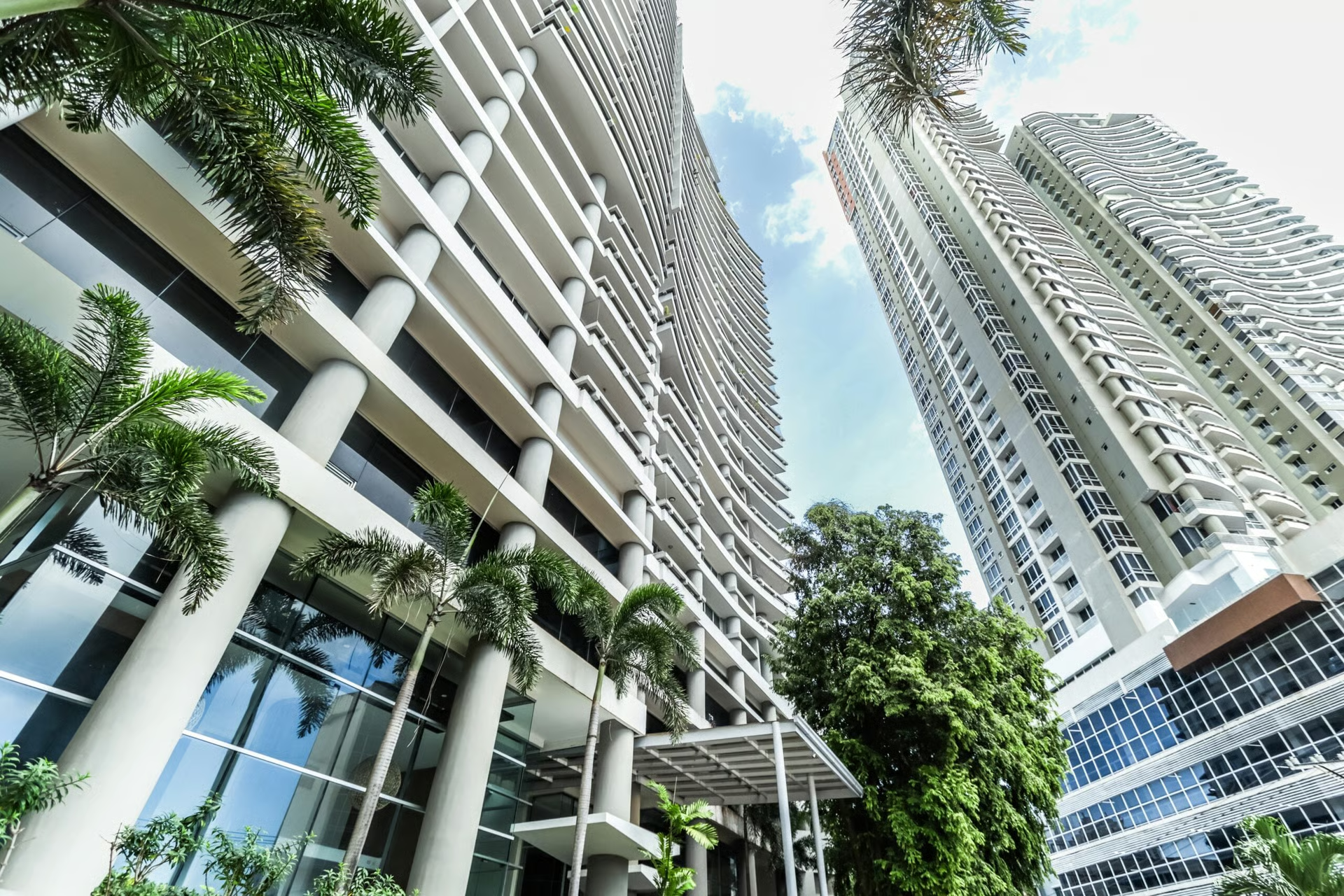
Panama City is a market where many expatriates work for international companies. These workers are generally on short-term assignments, so they are not property buyers. However, they are a large group of renters for long-term furnished apartments.
They are on international salaries, and the company sometimes includes rent as part of their contract. This means you don’t have to worry about paying your rent.
Long-term furnished apartment yields are usually lower than short-term rentals, but in Panama City, rentals of less than 45 days are prohibited.
A complication in Russia
The story of the last place in St. Petersburg is more complicated.
The apartments were rented out well to local tourists during the pandemic. With travel restrictions on Russians in place, as well as no one visiting Russia at the moment, apartments continue to rent well for Moscow’s wealthy tourists.
In fact, according to my colleague, despite the economy in Russia at the moment, occupancy rates in apartments remain high and have increased significantly in value.
The issue is that he cannot take his money out of Russia due to all the sanctions.
This leaves him with no real option but to rent and deposit the rubles in his Russian bank account.
Build a diversified portfolio of assets
During the pandemic and now, the good news for their portfolio is that they have diversification – three different markets with very different economics around them and rental income in three different currencies.
They’ve built their portfolio over 20 years, starting before Airbnb even existed as an option for finding renters. For the initial apartments in their portfolio, they used local rental managers to keep locations filled, including in Panama before the 45-day short-term rental limit was implemented. As new options like Airbnb emerged, they adapted their management strategies.
However, he did not actually change his investment strategy. He wanted diversification but knew he had to avoid being in too many markets or he would face administrative challenges.
In fact, for me, St. Petersburg is an outlier in terms of location because of the distance from the other two markets where they have invested. He liked the opportunity in St. Petersburg, and it went well until Russia invaded Ukraine. Ultimately, he should be able to liquidate his stake in Russia and get his money out.
Meanwhile, other markets generating good cash flow are accessible.
Be flexible to maintain cash flow
Besides diversification, flexibility has helped his portfolio continue to generate good yields. He created some flexibility himself. Some of this was natural in the markets. Some of this had to be worked on.
Moving from local rental managers to Airbnb and being able to manage the properties themselves (for the most part) allowed them to keep more of their rental income and improve their net yields.
Although that’s because he’s spending more of his time managing. He put together local teams for the property management side, since he’s not there to do things like repairs or restocking toilet paper.
Transferring from a short term rental to a long term rental in Panama is the type of flexibility you should look for in every market you are thinking about investing in. Over the years I have been able to shift from one direction to another in many markets as the market or my needs have changed.
In argentina 20 years ago, we moved from short-term to long-term for an apartment because it was easier to manage, and it didn’t change the yield at that time.
We changed from short term to long term in Paris because our HOA did not allow short term rentals.
The apartment we bought in Lagos, Portugal was a long-term rental when we bought it, and we converted it to short-term to improve the yield.
If you’re buying in a place that doesn’t have a great long-term rental market, like Santa Marta, Colombia, having both local and international tenants as an option gives you some of the flexibility that my colleague found when the pandemic shut down international travel.
Short-term rental markets that rely solely on international tourists, and especially international tourists coming from just one part of the world, do not have much flexibility.
At a minimum, you want a market that attracts people from different countries to help avoid occupancy gaps if an economic downturn occurs in only one country and that is the country all your tenants come from.
In Russia, my colleague had to build his own resilience… at least from a cash flow perspective.
He’s stuck with rubles in a Russian bank and can’t get them out right now. It could sell, but its proceeds would remain stuck in Russia. Therefore, he is continuing to rent out locations and hoard ruble cash until the situation changes. This requires some flexibility in his thinking and planning.
Like all investments, not everything goes according to plan in real estate. The market, exchange rates, management, weather and market popularity can all change.
Being diversified helps keep your portfolio from collapsing, and flexibility can help you adjust so you can continue to earn yield by changing the way you manage your assets.